

Primary campus
Sir George Williams (SGW)
Social media, streaming platforms and affordable home studio equipment have made self-production and distribution more accessible to musicians of all levels. Wondering how to produce music at a professional level? Gain the essential techniques for songwriting, production and recording needed to pursue a professional career in music.
The microprogram in Songwriting and Music Production provides musicians with intensive training to write, record and produce their own music. Over two terms, you will solidify professional competencies in songwriting courses, beat-making, arrangement, editing, mixing, mastering and digital distribution. Our program takes a hands-on approach, allowing you to create original works and graduate with a polished portfolio suitable for release.
Courses are designed with flexibility for working professionals in mind, featuring evening classes and part-time availability to accommodate daytime commitments.
Professional competencies in songwriting, beat-making, arrangement, editing, mixing and digital distribution, in addition to a polished portfolio of tracks.
Creators interested in learning songwriting and music production who are not yet ready to commit to a full bachelor’s degree, as well as artists with some prior experience. Working professionals and students with other daytime commitments.
The microprogram in Songwriting and Music Production takes place over the course of one academic year, from September to April. Courses are offered in the evening.
Students may opt to complete the microprogram part-time over two years, with MPRD 201/202 in the first year, and MUSI 263/363 in the second year.
The microprogram is composed of four courses for a total of 12 credits:
Since this microprogram takes a practice-oriented approach, you will be ready to apply your skills in professional contexts upon successful completion. Fast-track your career for technical roles or begin working as an independent creator in a variety of roles, including:
For those interested in pursuing a career as an independent artist, your completed portfolio will be ready for distribution and will allow you to apply for arts grants.
You will also be prepared to further your education in a Bachelor of Fine Arts program or graduate studies if you already have a bachelor's degree.
This microprogram welcomes candidates from diverse educational backgrounds who are interested in songwriting and music production.
In addition to the university application, admissions to the microprogram also requires:
Advanced technical training is not required. We're looking to see your creative potential through recorded songs or tracks, basic musical literacy and familiarity with digital audio tools.
You may upload documents to your application even after submitting it. However, we cannot complete the assessment of your application until we receive all required documents.
The cost of the microprogram is a combination of university tuition and compulsory fees.
The cost of tuition per credit depends whether you reside in Quebec or the rest of Canada. This is a 12‑credit microprogram.
| Residency | Tuition | Compulsory fees | Estimated program total |
|---|---|---|---|
| Quebec resident | $1,247.04 | $766.24 | $2,013.28 |
| Non-Quebec Canadian | $5,194.20 | $766.24 | $5,960.44 |
Note: Microprogram students do not qualify for financial assistance, awards, fee waivers, bursaries, or scholarships internally to Concordia or externally at the provincial/federal levels.
For questions about the microprogram in Songwriting and Music Production, please contact Dr. Georges Dimitrov at georges.dimitrov@concordia.ca.
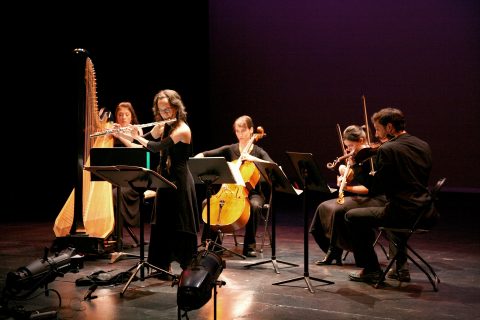
Whether you want to compose, write songs or perform, become a music therapist or an arts manager, Concordia’s music programs give you the flexibility to create your own musical future.
Department
Faculty
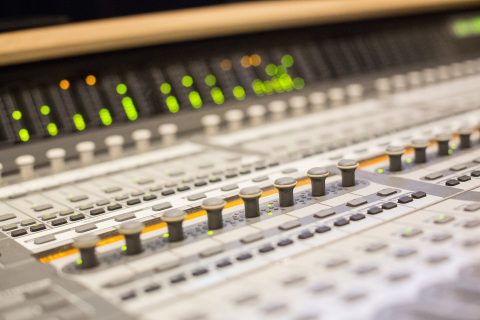
As an electroacoustic artist, your ear is your instrument. As a student, you will explore the possibilities for sonic creativity through electroacoustic composition, sound design and recording, while training your inner and outer ears.
Department
Faculty