

Primary campus
Sir George Williams (SGW)
Religion has played a defining role in Quebec’s history and continues to influence contemporary social and cultural realities. In our increasingly globalized world, we often interact with people from many diverse religious, cultural and ethnic backgrounds.
The Microprogram in Religious, Cultural and Ethnic Literacy examines religions and cultures through critical, historical and sociological perspectives, giving students the tools to better understand today’s diverse world. You will examine profound aspects of human experience through a modern intersectional lens focusing on multiple groups, including Indigenous, East, South and Southeast Asian, Latin American, Middle Eastern, North African, Jewish, Christian, Muslim, Hindu, Buddhist and queer communities. Learn how to navigate intercultural challenges, understand the link between beliefs and identity and create a more inclusive workplace for diverse perspectives and cultures.
Professionals with public-facing clientele and those who work regularly with diverse populations, including healthcare professionals, HR professionals, social workers, tech product & UX designers, hospitality/tourism/airline staff, school administrators, teachers and student service staff.
Students will choose three courses to complete this microprogram.
Choose nine credits from the following:
A new course in Cultural Diversity is currently being developed. Additional RELI courses may also be deemed appropriate for this microprogram. Please consult with the Undergraduate Advisor.
Move towards a more compassionate and just society by bridging gaps in cultural understanding. After the Microprogram in Religious, Cultural and Ethnic Literacy, you will possess the communication and interpersonal skills to work in a variety of fields that interact with diverse populations, including:
You will also be prepared to further your education in a bachelor's program related to culture or religion, or graduate studies if you already have a bachelor's degree.
The cost of the microprogram is a combination of university tuition and compulsory fees.
The cost of tuition per credit depends whether you reside in Quebec or the rest of Canada. This is a 9‑credit microprogram.
| Residency | Tuition | Compulsory fees | Estimated program total |
|---|---|---|---|
| Quebec resident | $935.28 | $547.37 | $1,482.65 |
| Non-Quebec Canadian | $3,895.65 | $547.37 | $4,443.02 |
Note: Microprogram students do not qualify for financial assistance, awards, fee waivers, bursaries, or scholarships internally to Concordia or externally at the provincial/federal levels.
For questions about the microprogram in Religious, Cultural and Ethnic Literacy, please contact Dr. Sowparnika Balaswaminathan at sowparnika.balaswaminathan@concordia.ca.

When you study religious traditions and the impact they have on the world, you acquire an informed appreciation of the beliefs and values of other cultures
Department
Department of Religions and Cultures
Faculty
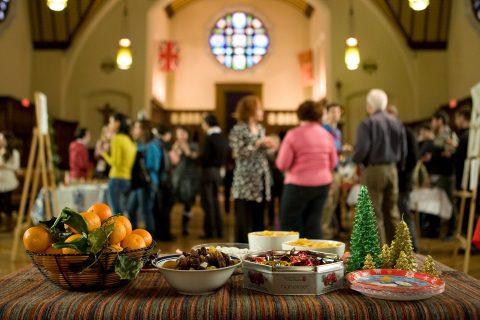
Theological Studies gives you the tools to have an informed discussion about God, and to address the 21st century challenges transforming religious faith.
Department
Department of Theological Studies
Faculty

Expertise in human relationships in the community and the workplace sets you on a path towards the helping professions.
Department
Department of Applied Human Sciences
Faculty