

Primary campus
Loyola (LOY)
For many years, physicists have used mathematics to describe how energy and matter shape our world. When complex problems require turning those descriptions into solutions, computation is often the answer.
As large-scale computational facilities and AI workflows become more commonplace in the modern workplace, having a strong understanding of how computers and algorithms work is increasingly important. Modern professionals must learn to think critically about these tools and determine which can be relied on in each situation.
The Microprogram in Computational Physics is an interdisciplinary credential designed to bridge the gap between theoretical science and practical software programming. This program equips learners with a quantitative scientific approach to problem-solving specific to science and engineering, while providing strong programming experience.
Students will develop key competencies in:
Interdisciplinary audience, including:
The microprogram takes place over the course of two terms. PHYS 236 is completed in the first term, and PHYS 440 is completed in the second term.
PHYS 236 is a prerequisite for PHYS 440, so they cannot be taken at the same time.
PHYS 236 Numerical Methods in Physics with Python
PHYS 440 Computational Methods in Physics with Python
Completing this microprogram will equip you with computational literacy and prepare you to critically evaluate and work with AI-based tools related to science and engineering. With the analytical skills of a physicist and the technical skills of a programmer, you will be prepared to pursue careers in:
You will also be prepared to further your education in a Bachelor of Science program or graduate studies if you already have a bachelor's degree.
You may upload documents to your application even after submitting it. However, we cannot complete the assessment of your application until we receive all required documents.
The cost of the microprogram is a combination of university tuition and compulsory fees.
The cost of tuition per credit depends whether you reside in Quebec or the rest of Canada. This is a 6‑credit microprogram.
| Residency | Tuition | Compulsory fees | Estimated program total |
|---|---|---|---|
| Quebec resident | $623.52 | $416.38 | $1,039.90 |
| Non-Quebec Canadian | $2,597.10 | $416.38 | $3,013.48 |
Note: Microprogram students do not qualify for financial assistance, awards, fee waivers, bursaries, or scholarships internally to Concordia or externally at the provincial/federal levels.
For questions about the Microprogram in Computational Physics, please contact physics-advising@concordia.ca.
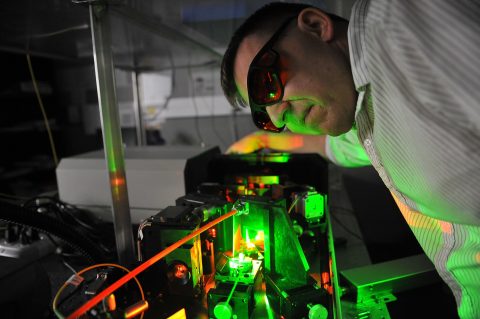
Today physicists build lasers, design medical imaging machines and develop applications for nanotechnology.
Department
Faculty

The Computer Applications option gives doubly passionate students the flexibility to combine a traditional computer science degree and with a non-traditional field. Though many students complete a Major in Computation Arts or a Major in Mathematics and Statistics, students may declare a major or minor in any area outside the Faculty of Engineering and Computer Science.
Department
Department of Computer Science and Software Engineering
Faculty
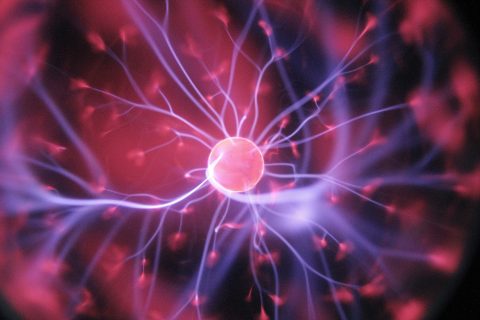
The Certificate in Science Foundations is a non-degree program that caters to students who wish to develop the necessary background for further study in undergraduate degree programs in Science.
Department
Faculty