

Program option
Major
Want to know how we're training the next generation of engineers and computer scientists? Join us to learn about the Gina Cody School's undergraduate programs and plans to advance integrated technologies in a socially responsible manner.
Cybercrime is one of the fastest growing threats in today’s digital world. From personal data to cloud infrastructure, everything needs protection. In Canada alone, more than 25,000 cybersecurity jobs remain unfilled.
Concordia’s Bachelor of Science (BSc) in Cybersecurity is designed to build a strong foundation in cybersecurity theory and practice. Learn how to secure systems, detect threats and respond to real-world incidents. You will study secure software development, security management, network security, security auditing and more.
This program is ideal for students who want a focused and accelerated path into technical and strategic roles in the cybersecurity workforce or graduate studies. With access to co-op placements and internships, you will graduate with both skills and experience.
Guaranteed $4,000 entrance award for students in Canada who demonstrate academic excellence.
The Bachelor of Science in Cybersecurity takes a minimum of three to four years (90-120 credits) of full-time study, depending on your academic background.
Indigenous students seeking to complete prerequisite courses for entry into a Bachelor of Science program may begin their studies in the Kaié:ri Nikawerá:ke Indigenous Bridging Program. Students will complete necessary courses and automatically transition into their preferred science program upon successful completion of the bridging program.
The curriculum is made up of 30-40 courses, including:
All Cybersecurity students can apply to the Co-op program through Concordia’s Institute for Co-operative Education.
You’ll gain valuable paid work experience while completing your degree through one of three pathways:
These programs connect you with employers in the cybersecurity industry and public sector, helping you build your resumé before graduation.
You can also explore summer research or industry internships through programs like Mitacs Accelerate, the National Sciences and Engineering Research Council of Canada's Undergraduate Student Research Awards and the Concordia Undergraduate Student Research Awards. Internships may be available with partners such as Ericsson, Hydro-Québec or Concordia’s own Security Research Centre.
Minimum cut-off averages should be used as indicators. The cut-off data may change depending on the applicant pool. Applicants who meet the stated minimum requirements are not guaranteed admission to these programs.

Deadline: March 1
U.S. and international applicants: Apply no later than February 1 to allow time for immigration document processing. However, applying earlier is strongly recommended. Immigration processing times vary by country and delays could prevent you from starting your studies on time.

Deadline: November 1
U.S. and international applicants: Apply no later than August 1 to allow time for immigration document processing. However, applying earlier is strongly recommended. Immigration processing times vary by country and delays could prevent you from starting your studies on time.
We reserve the right to close admission to a program at any time after the official deadline without prior notice.
United States students: A U.S. Federal Student Aid-eligible version of this program is offered. This version meets all U.S. regulations (such as no co-operative education or e-courses) for eligible programs.
This program prepares you for direct entry into a range of technical and strategic cybersecurity roles, including:
Graduates are in demand in sectors like:
Many also go on to pursue master’s or PhD studies in cybersecurity, information systems or engineering.
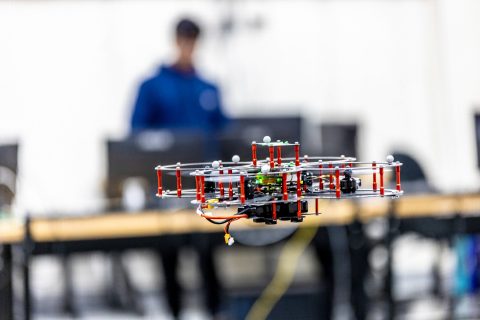
Discover Concordia's Bachelor of Engineering in Cybersecurity. Learn how to secure networks, defend critical systems and design safe digital solutions.
Department
Department of Cybersecurity and Intelligent Systems Engineering
Faculty
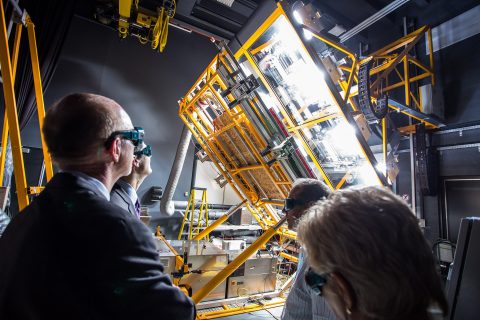
Protect water resources. Design buildings, bridges and tunnels. Improve transportation and traffic flow. As a civil engineer, your expertise in urban and environmental planning lets you guide municipalities to create the structures and systems that have a positive impact on everyday community life.
Department
Department of Building, Civil and Environmental Engineering
Faculty
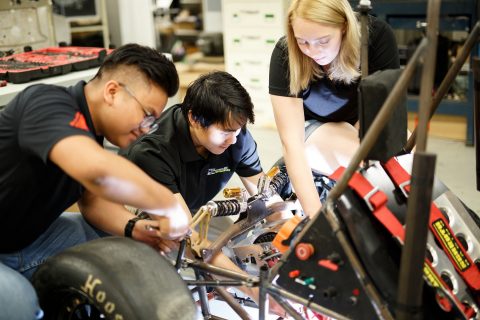
Build engines. Design robots. Control explosions. As a mechanical engineer, you will create, construct and control machines. Whether it’s a vehicle, an aircraft engine or an assembly line, mechanical engineers know how to fit that square peg into a round hole, and do it with a little finesse.
Department
Department of Mechanical, Industrial and Aerospace Engineering
Faculty
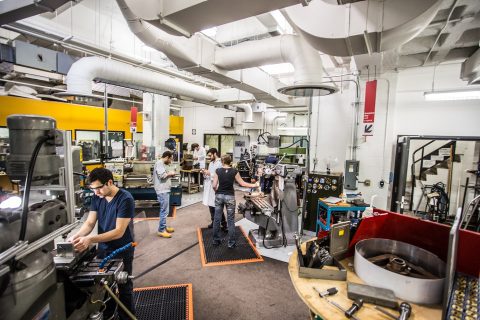
Use your knowledge of human behaviour, equipment, information and modes of communication to develop processes that work. Industrial engineers are experts in optimization who apply mathematics, engineering and psychological principles to improve productivity, safety and quality. A knack for project management can lead to a career in many different economic sectors.
Department
Department of Mechanical, Industrial and Aerospace Engineering
Faculty