

Program option
Course-based
The Master of Engineering (MEng) in Environmental Engineering is a course-based program focused on advanced sustainable technologies for environmental protection. Students address key challenges in water and wastewater treatment, air pollution control, waste management, climate resilience and resource recovery.
As communities modernize infrastructure to reduce their environmental footprint, engineers are increasingly called on to deliver practical, climate-responsive solutions.
This program prepares students to design, assess and implement approaches that support nature-based solutions, circular economy practices, greenhouse gas mitigation and improved environmental impact assessment and life-cycle analysis in Canada and internationally.
The requirements described here are in addition to the general degree requirements for the Master/Magisteriate in Engineering (MEng) Master’s programs in the Gina Cody School of Engineering and Computer Science.
Fully-qualified candidates are required to complete a minimum of 45 credits.
Please see the Engineering Courses page for course descriptions.
| 5 | credits of Core Courses: |
| 28 | credits minimum chosen from the groups listed below, to facilitate the selection of courses in a particular area of interest: Water Resources (Environmental Engineering MEng) |
| 12 | credits maximum chosen from the Engineering Courses section. Four credits maximum (i.e.: one 4-credit course or four 1-credit courses) can be selected from Topic Area E09 - Professional Leadership Skills. Graduate courses outside engineering require GPD approval prior to registration. |
This program offers a co-op option — a paid, full-time internship of four or eight months where you'll put classroom learning into practice.
Proficiency in English. Applicants whose primary language is not English must demonstrate that their knowledge of English is sufficient to pursue graduate studies in their chosen field. Please refer to the English language proficiency page for further information on requirements and exemptions.

July 1 (Canadian resident)
March 1 (U.S. and international)

November 1 (Canadian resident)
July 1 (U.S. and international)

March 1 (Canadian resident)
November 1 (U.S. and international)
Priority will be given to complete applications submitted by the deadline. In some cases, programs may continue to accept applications as long as there is space available. Consult the list of programs open for applications.
U.S. & International students: Considering the waiting period involved in meeting the entry requirements to Canada and Quebec, we strongly encourage U.S. and international applicants to apply early and submit supporting documents prior to the deadline.
Tuition and fees of the program may depend on your student status, among other key factors. Estimate these costs based on the most common situations.
Funding packages are generally available for students in thesis-based programs. Course-based students may be eligible for a number of donor awards, and may consult with their department for program-specific opportunities.
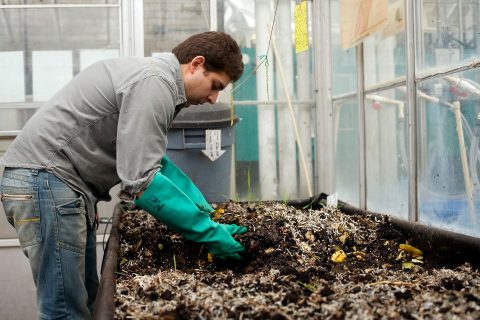
Develop your expertise in environmental engineering focusing on industrial waste management, environmental auditing, and modelling in environmental systems.
Department
Department of Building, Civil and Environmental Engineering
Faculty