

Alumnus/Alumna profile
Share:


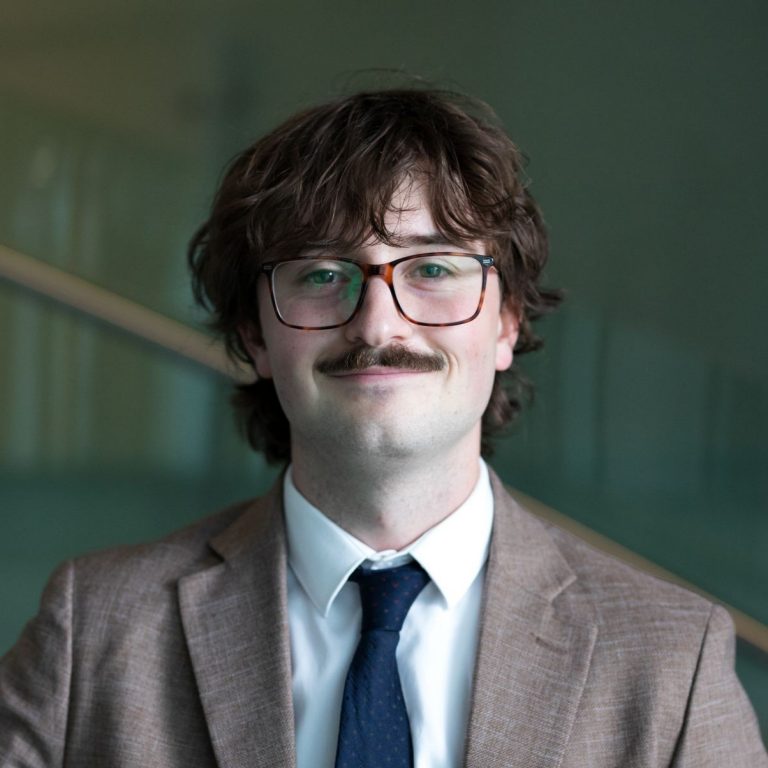
Charles-Etienne Sirois
BA Economics 25
Energy and climate economist, pursuing a PhD
Your undergraduate degree is a place where you engage with new ideas, build a general base of understanding for a given topic, are given the liberty to explore it deeper, and collaborate with people that may know more, or want to know more.
Career questions with Charles-Etienne
What do you love most about your work, and what inspired you to pursue this career in the first place?
It started at some point during my teenage years when I stumbled on a quote from Alfred Marshall in which he talks about the need to send out into the world economists with cool heads and warm hearts, committed to using their specialized expertise to grappling with the social suffering around them. I wished to be one of those cool-headed, warm-hearted economists.
Looking back, what skills have been the biggest gamechangers in your career?
By far the most crucial to me was storytelling. It is a tradition as old as we are, and we have not managed to outgrow it. We still gather around, listen to, and admire good storytellers. Think of the global admiration of Mark Carney's well-spoken Davos speech or the lasting impact of the writing of James Baldwin.
Bringing it back down to the personal, the real, and the daily: storytelling, done right, has helped me convey who I am in interviews, bring data to life and the message I want to convey in presentations, and rally people towards a common goal or project.
How did Concordia prepare you for your career?
You will be shown the basics of macro and microeconomics, data manipulation, and statistical analysis methods, and there will be more interesting elective options than you can take. You will learn important concepts like sunk and opportunity costs, revealed preference, thinking marginally, and many more that are both useful to the study of economics, but that can also be applied in general decision-making and business strategy.
Your undergraduate degree is a place where you engage with new ideas, build a general base of understanding for a given topic, are given the liberty to explore it deeper, and collaborate with people that may know more, or want to know more. That is what Concordia did for me.
What is a standout memory from your time at Concordia?
For me, it was starting the EconomicSense Journal with someone that at the time was a complete stranger to me, but who became a good friend. Seeing that project take off, the team grow and participating students shine, filled me with immense happiness and an equal dose of pride. I will never forget the conversations I had with my co-founder in the Hive Cafe, or the conversations with my econometrics professor on how he could be of help.
There are plenty of existing projects and communities that shape the Concordia experience. Join one, or if it doesn't exist, create it! Support and passion are there.
If you could give your younger self one powerful piece of advice, what would it be?
My only regret is not having taken a minor in some sort of related or complementary discipline. Economics pairs well with math, statistics, psychology, computer science, finance and sustainability. I highly encourage aspiring economists to tack on such a minor, depending on their interests.
What’s the most exciting shift happening in your industry right now?
The recent positive tipping point that renewables seem to have crossed is very exciting. In the climate space, good news is savoured, and this is one of them. It excites me to imagine what a fossil-free world may look like, and to think of what new economic configurations – of the energy cooperative type – that might come from modern distributed energy systems. How will our economies and supply chains adapt? How might we ensure a greener economy is also a fairer economy? So many questions remain in need of answering, and solutions in need of implementing.
It reminds me of what a professor at Concordia once told us. He said that if it feels like so much is happening right now, it is because we are quite literally living through the Industrial Revolution of our time. This idea has stayed with me, and it excites and scares me in equal measure.
Feeling inspired?
- Join the Economics Student Society or explore other clubs.
- Learn how to tell impactful stories with FutureBound’s storytelling and public speaking series.
- Consider customizing your degree with a minor or an elective group.
- Present your research at a conference or get it published in the EconomicsSense Journal.
- Connect with Career Counselling & Education Transitions to start planning your career path.