Climate Measures and Reporting

Research and educational activities

Research outputs in the form of industry reports focus on a variety of themes related to climate measures and reporting. In addition, initiatives to advance education and training in climate business, called Impact Activities, are a key component of the impact lab.


Executive Summary

Looking back to 2025, companies continued to operate in a dynamic and developing ESG reporting landscape. The first two Canadian Sustainability Disclosure Standards (CSDS) came into effect. Likewise, companies were exposed for the first full reporting year to the anti-greenwashing Bill C-59 (passed in 2024), which has been recently subject to proposed amendments (Bill C-15, 2025). At the same time, the Canadian Securities Administrators (CSA) has effectively paused developing any new mandatory sustainability-related disclosure rules as of April 2025, in alignment with the US Securities and Exchange Commission. This means that ESG reporting continues to operate in a voluntary reporting environment.

2025 has also been the first year, in which companies subject to the initial implementation phase of the Corporate Sustainability Reporting Directive (CSRD) in the European Union provided their sustainability reports for the reporting period 2024 under the European Sustainability Reporting Standards (ESRS). In addition, the International Sustainability Standards Board (ISSB) issued updates to ISSB S1 and published their exposure draft on the proposed amendments to the Sustainability Accounting Standards Board (SASB) Standards. These examples underline the evolving context, in which companies inform stakeholders about their ESG practices.

The present 2025 ESG Reporting Radar offers spotlights on the most recent ESG reports of the TSX 60 companies to provide a snapshot on the ESG reporting practices of Canadian industry leaders. Through a series of seven spotlight topics, ranging from an analysis of the sustainability reporting standards used to questions of ESG assurance, stakeholder analysis, and reported Greenhouse Gas (GHG) emissions scopes, the 2025 ESG Reporting Radar captures current ESG reporting trends and affords outlooks to inform practitioners, standards setters, and other policymakers.

The Xperiential Decarb Suite is an Impact Activity under the Climate Measures & Reporting Impact Lab to advance education and training in climate business.

The objective is to embed sustainability into the curriculum through offering a suite of educational games, catered to the specific curriculum requirements and course learning outcomes. 

This led to the development of a series of educational games and learning activities on decarbonization: 

  • Business Decarbonization Game "Race to Zero"

Player teams select decarbonization and resilience projects, while watching their cashflow to stay in business. Will the business reach zero emissions? 

Embedded into ACCO 330: Cost and Management Accounting from Summer 2026 onwards

  • Sustainability Reporting Game: Les Fermes Cluckwork Farms

Player teams experience the preparation of a sustainability report and make communication choices to engage with stakeholders.

Used in ACCO 400: Accounting Theory, piloted in Fall 2025 (Professors Rucsandra Moldovan and Charles Draimin), played Winter 2026 (Professor Luo He

  • Responsible Consumption Decisions "Thanks Godness Its Saturday"

The player is confronted with trade-off consumptions decisions which impact their daily carbon bank to different degrees. What will be their carbon footprint on this beautiful summer Saturday? 

  • ChampSite Case: Looking with Energy at ChampSite

Learners are looking into ways to find cost savings for the chemical park by evaluating alternative energy supplies under different carbon pricing mechanisms. 

Used in COMM 305: Managerial Accounting since Fall 2023 

All games will be further embedded in the Business & Climate Action Summer School in June 2026. 

Concordia collaborators: Lab for Innovation in Teaching & Learning, Centre for Teaching and Learning, Department of Accountancy

About the director

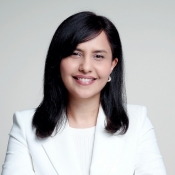
Matthäus is an associate professor and the chair of the Department of Accountancy. His research focuses on organization’s risk management and management accounting and control practices. Matthäus teaches courses on managerial accounting and enterprise risk management in the MBA and bachelor programs.

Impact lab members

Hussam Al Maleh

Hussam Al Maleh

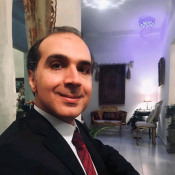
Al Maleh is a PhD candidate in the Department of Accountancy. A project manager by trade, he investigates how innovation and entrepreneurship are impacted by management control in the uncertain field of sustainability in business. His research portfolio includes the topics of sustainability disclosure and the application of ESG in performance evaluation. Hussam’s research methodology consists of qualitative analysis (interviews, documents, and observation) using social psychology as the basis for interpreting findings.
Sophie Audousset-Coulier

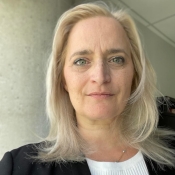
Audousset-Coulier is a professor in the Department of Accountancy. Her research focuses on auditing, accounting practices, diversity, and sustainability (including fossil-fuel divestment movements, Environmental, Social and Governance disclosures, and ESG ratings). She is the co-editor in chief of the journal Comptabilité Contrôle Audit / Accounting Auditing Control.

Bianca Grohmann

Bianca Grohmann

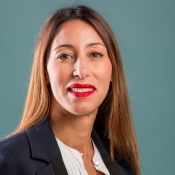
Grohmann is a professor in the Department of Marketing. Her research examines branding, social responsibility, and gender-related topics from a consumer psychology perspective. She is the founder of Concordia University's Laboratory for Sensory Research. 

Luo He

He is an associate professor in the Department of Accountancy. She holds a PhD in Accounting from Queen’s University, an MBA from Wake Forest University (USA), and a BA in Economics from Sichuan University (China).

Her research interests include sustainability accounting, financial reporting quality, corporate governance, and voluntary disclosure. Her work has been published in peer-reviewed journals, including European Accounting Review and Journal of Business Finance & Accounting. Her research has received funding from provincial (FRQSC) and national (SSHRC) agencies.

Rucsandra Moldovan

Rucsandra Moldovan 

Moldovan is Associate Professor in the Department of Accountancy. An award-winning researcher, Moldovan’s work focuses on how financial and non-financial corporate disclosures are interpreted in practice and on issues related to the labor market in accounting. She teaches financial accounting and reporting at the undergraduate level, supervises PhD students in accounting and auditing, and teaches in Concordia’s PhD program. She is a member of the Canadian Accounting Standards Board.

Xiaodan Pan

Xiaodan Pan

Pan, an academic scholar and industry veteran, joined the John Molson School of Business at Concordia University in 2018. Her research applies business analytics to enhance societal well-being, with a focus on retail and service operations. She investigates areas such as retail strategy, consumer stockpiling, disaster resilience, last-mile logistics, and technology innovation.

By examining these topics in the context of economic volatility, natural disasters, public health crises, and social inequality, her work offers insights that promote more efficient, resilient, and responsible business practices.

Begüm Sener

Sener is an assistant professor in the Department of Marketing. Her research focuses on digital communications and natural language processing.

Marziyeh Talebian

Marziyeh Talebian

Talebian is a PhD candidate and part-time lecturer in the Department of Management. She conducts research at the intersection of entrepreneurship, innovation, and sustainability. Her research exploring business model innovation as a strategic response to grand challenges has been published in the Strategic Entrepreneurship Journal (FT 50). Marziyeh’s ongoing research explores how equity crowdfunding shapes the governance and performance of entrepreneurial firms as they grow and progress through their life cycles.

Yuyan Wei

Yuyan Wei

Wei is an assistant professor in the Department of Marketing. Her research focuses on corporate sustainability strategies, word-of-mouth (WOM), and the marketing-finance interface. Her current work examines how firms adopt responsible and green innovation practices, respond to ESG-related media buzz and how these factors shape firm performance.

Back to top

© Concordia University