

Sixty years of communication
The Department of Communication Studies leads the study of media, culture and society for more than 60 years
Established in 1965, we proudly stand as Canada’s pioneering institution in Communication Studies, marking six decades of transformative impact.
From our inception, we've embraced change with a discerning eye, continually shaping the discourse on media and culture.
Our esteemed faculty have left an indelible mark, influencing every corner of the cultural and media landscape. The legacy of our graduate scholars resonates globally, as they continue to drive innovation in media, culture, and power dynamics.
As we commemorate our 60th anniversary, join us on a journey through time, exploring the profound influence our department has wielded across Canada and beyond.
Spring 1964
Reverend John E. O’Brien, S.J. proposes a Department of Communication Arts
After receiving a doctorate in communication from the University of Southern California, Fr. John E. O’Brien returned to his alma matter, Loyola College, with the ambitious goal of founding Canada’s first Department of Communication. In a proposal to the Dean and the President of Loyola in April 1964, Fr. O’Brien provided a two-fold rationale to launch a program akin to those offered in over 140 American universities at the time: to imbue “the spirit of Christian humanism” over the development of mass media in Canada and to close the gap in Canadian communication studies scholarship. From the outset, Fr. O’Brien advocated for the simultaneously theoretical and practical approach to the curriculum that remains in the Department today.
Autumn 1964
Loyola College offers First Communication Course
Though the College did not accept his first proposal, Fr. O’Brien offered a single communication course in Fall 1964, which could be taken as a substitute for an English course requirement. Expectations for enrolment were low, from six to ten students. But after seventy-five students registered for the course, Loyola College began the process of implementing Canada’s first Department of Communication Arts.
March 1965
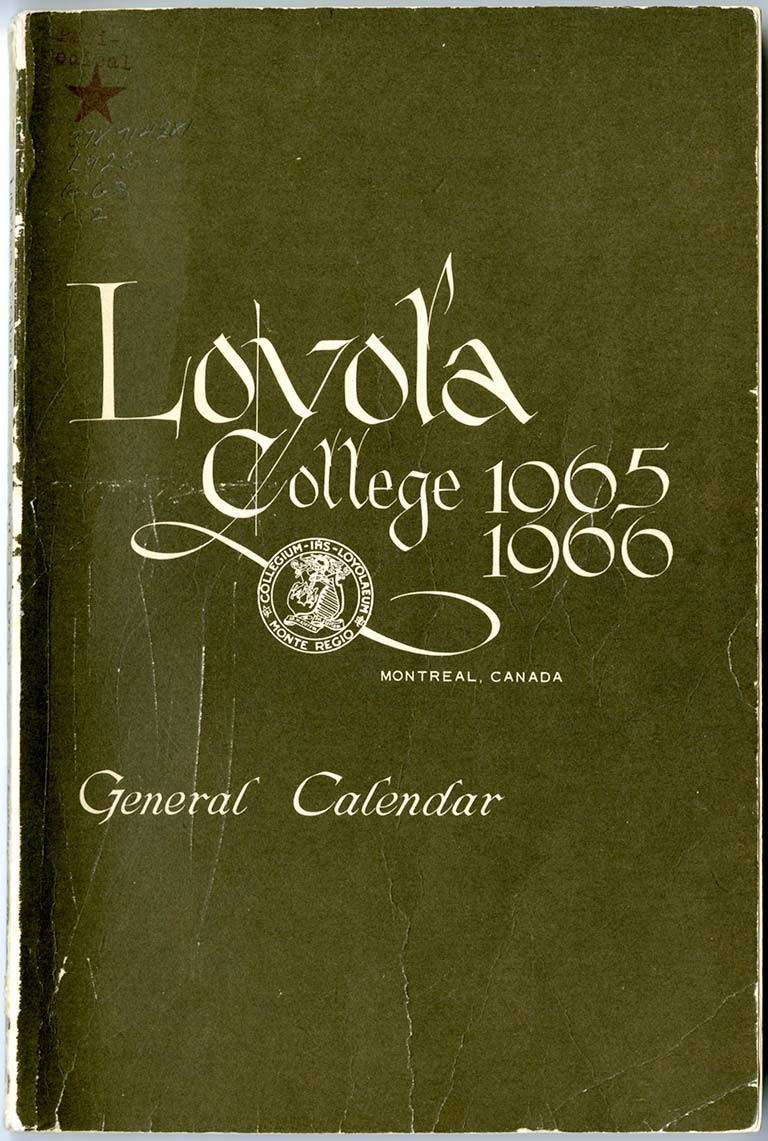
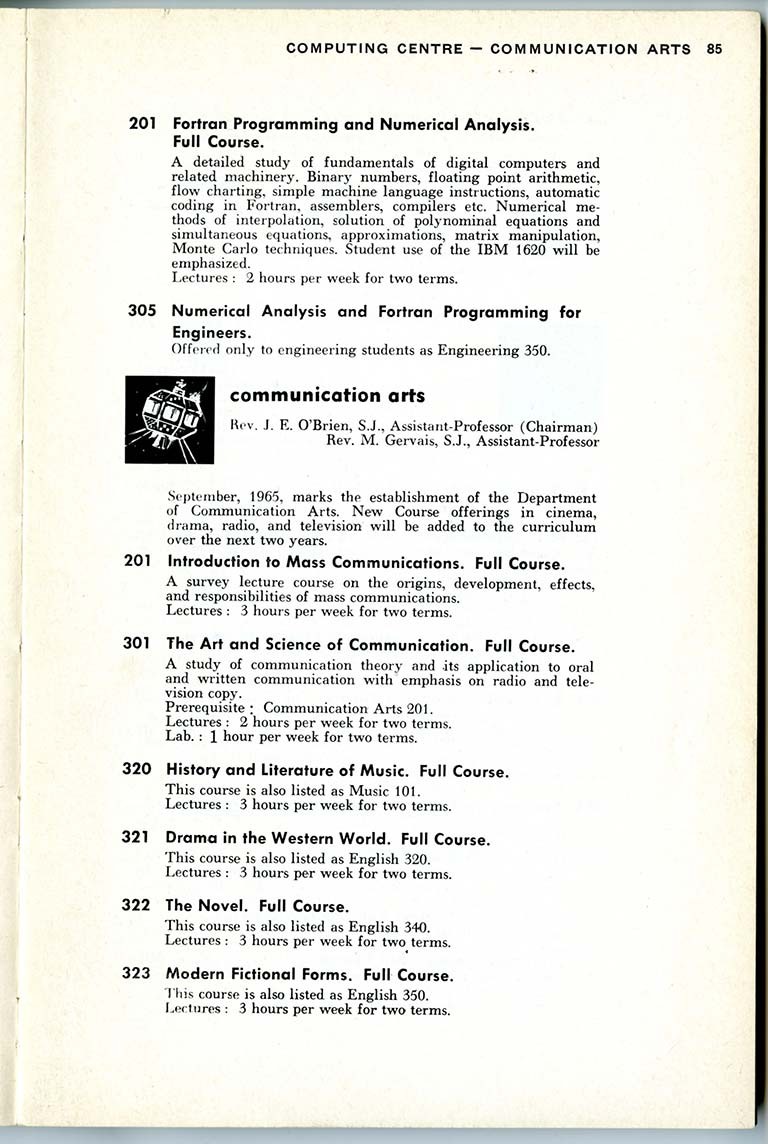
Loyola College the First Canadian Post-Secondary Institution to Establish Department of Communication
- Officially inaugurated in Fall 1965, the Department of Communication Arts at Loyola College mirrored existing American programs.
- The program offered a BA major that included seven courses of 22 to be taken inside the new Department.
- The course structure developed students in both the scholarly and creative facets of contemporary media.
November 1966
Film Lending Library Opens
A project initiated by the Department of Communication Arts, forty-three National Film Board productions formed the core of the facility.
Source: Memo from Communication Arts Department to Loyola College Department Heads, 17 November 1966, I147/16A – Office of the President Fonds – Internals Relations, Academic, Department of Communications, 1964-1968, Folder #1: 1964-1968)
April 1967
Father O’Brien spreads Word of the New Department
At a symposium entitled “The Present Position and Future Development of Canadian Communications Research and Teaching” held at the University of Saskatchewan, Fr. O’Brien presented about the new Communication Arts Department at Loyola College before an audience of fellow scholars and university administrators.
Source: O’Brien, John E. Presentation at Symposium on “The Present Position and Future Development of Canadian Communications Research and Teaching.” April 24-25, 1967.
Spring 1967
Department Faculty Doubles in Size Following Expo ’67
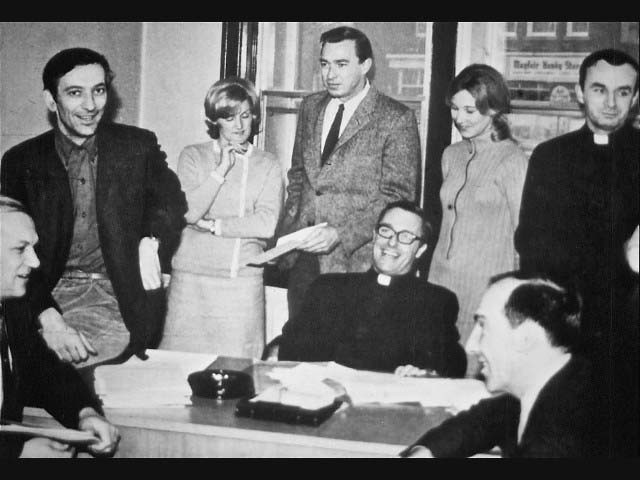
For the first few years, four faculty – Fr. O’Brien, Dr. John Buell, Ross Dolinsky and Don Clark – formed the core teaching and technical staff of Communication Arts. After Montreal’s Expo ’67 wrapped up, however, Fr. O’Brien capitalized on the general interest in new media to recruit some of the Expo’s celebrated artists. Charles Gagnon, the renowned artist and filmmaker for Expo 67’s Christian Pavilion, became a professor and the Department’s artist-in-residence. Dr. Miroslav Malik, who was executive director for the Czech pavilion at Expo, joined the Department, initially as a visiting professor. That same year, the Department also welcomed its first female faculty member, Dr. Gail Valaskakis, as well as film scholar Fr. Marc Gervais.
Sources: Seaton, Beth. “Communication Studies began twenty years ago,” 25 April 1985. Pg. 8. Letter, Patrick G. Malone, S.J., President, Loyola College to Gail Valaskakis, 16 May 1967. P-125 – Gail Valaskakis Fonds, CUA.
Spring 1967
First Graduate Program Begins
The Department launched its first graduate program, the Graduate Diploma in Communication, in 1967, designed specifically for people with Bachelor of Arts degrees from other disciplines.
February 1968
Bryan Building Opens
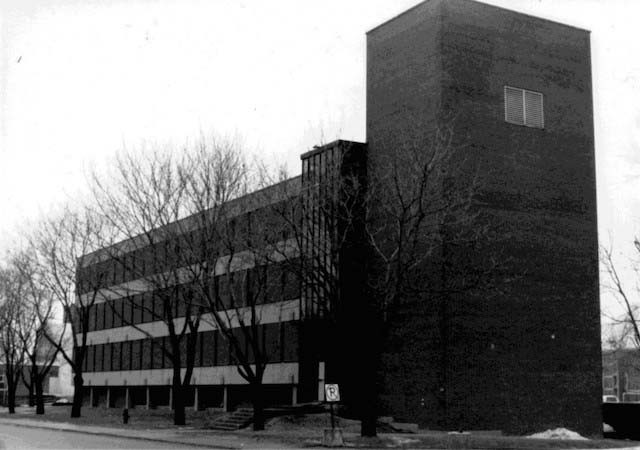
Named for Fr. William Xavier Bryan, S.J. (1892-1947), a distinguished teacher of economics, sociology, French, and philosophy, and Dean of Studies at Loyola, the Bryan Building opened in the winter of 1968. The Bryan Building provided ample space not only for classrooms and offices, but also a combined television-film studio, two radio studios and control booths, a multi-media room, a photo studio-graphics room, an editing room, and a dark room. These modern facilities were considered a bold step forward for an academic program, and were instrumental in establishing the program reputation for curricular and scholarly innovation.
Sources:
“Bryan Building.”
“WOULD YOU BELIEVE?” pamphlet, 18 September 1967. I147/16A – Office of the President Fonds – Internals Relations, Academic, Department of Communications, 1964-1968.
April 1970
Faculty Calls for Shift from Teaching to Scholarship
Changes were in the works. In April 1970, faculty members petitioned the Department to shift the focus from teaching to research. Department Chair Fr. O’Brien received a request from Dr. Buell for research funds, writing, “With some five years behind us, I believe it is now time for the Department to make its contribution on the wider levels of media theory and practice per se, and to arrive at a performance level commensurate with our capacities.” Charles Gagnon reiterated Buell’s sentiment in an October 1970 report to R.P. Duder, Assistant to the President of Loyola College, arguing for more time and resources to be dedicated to scholarly and artistic pursuits.
Source: Letter from John Buell to John E. O’Brien, S.J., 11 April 1970. I147/16A – Office of the President Fonds – Internals Relations, Academic, Department of Communications, 1964-1968, CUA, Concordia University.
Summer 1970
Department offers Summer Institute in Europe for students
Communication Arts experimented with novel forms of teaching. In 1970, the Department offered a Summer Institute in Europe for students. The first of its kind for Canada, the Summer Institute aimed to provide added dimensions to the normal courses of Communication Arts study at Loyola. For the eight-week summer session, students in Communication Arts received concentrated and varied instruction through lectures, seminars, and exposure to leading communications authorities in seven different European countries. Students also visited many museums, art galleries and festivals, and met with authors, film directors, and foreign students to discuss their different concepts and theories of communication and mass media.
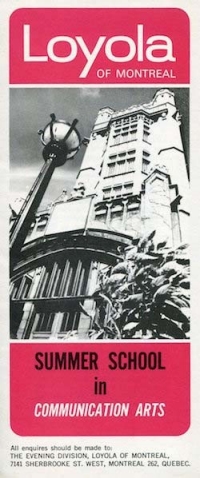
Source: Ernhofer, Ken. “Loyola Communication Arts summer institute in Europe.” Loyola News 46.22 1970/2/20. Pg. 3.
1970 onward
A Tradition of Campus Visits from Luminaries Begins
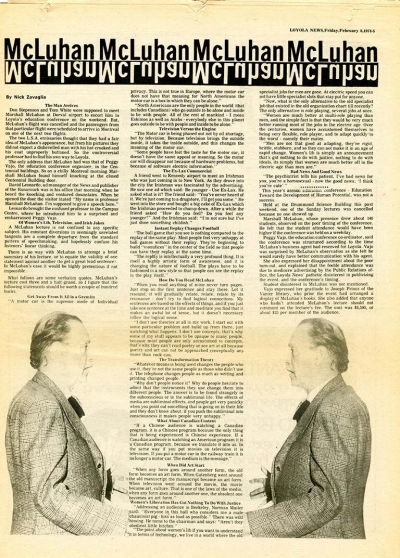
Notable on-campus events included a visit by the influential first director of the National Film Board, John Grierson, in December 1970, and a talk by Marshall McLuhan in February 1974. McLuhan appeared as keynote to a conference on “education as development of human potential” and spoke alongside Communication Arts faculty member Tom McPhail.
February 1974
Executive Communication Symposium
Representatives of industry, business and government attended this full-day symposium hosted by Dr. Miroslav Malik. The day’s events included discussions about information design, communication analysis and the future of communication studies in Canada, as well as practical demonstrations by Communication Studies faculty.
May 1974
First Research Lab Opens
A significant turn toward research transpired when the Myer F. Pollock Communication Research Laboratory opened in the Bryan Building. Led by Dr. Malik until his retirement in 1988, this facility, one of the first research labs in the field of biometrics, provided up-to-date media technologies for research, including biometric monitoring equipment, a fifty-channel multimedia programmer, and instruments for television scenography testing.
Source: Thwaites, Hal. “IN MEMORIAM: Miroslav Malik, 1931-1998,” Concordia Thursday Report, 1998.
April 1975
Media Man and the Creative Process
The Department brought together academe and industry to talk to students about the state of media in Canada and the world for this three-day conference.
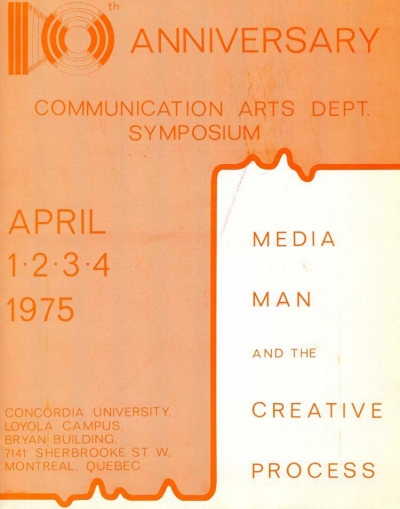
Source: Media Man and the Creative Process symposium pamphlet. April 1975. Sheelah O’Neill, personal collection.
October 1976
Department becomes Communication Studies
After a decade of operations, and following the merger of Loyola College and Sir George Williams College to form Concordia University in 1974, the Department of Communication Arts becomes the Department of Communication Studies in October 1976. The change reflected the more common name for equivalent departments in universities across Canada and the United States.
Source: Savoie, Pierre-Olivier, “Pop culture is serious,” The Link, 2001/1/23. Pg. 12.
September 1979
Communicating Non-Traditionally
Co-sponsored by the federal Department of Communications and Concordia’s Department of Communication Studies, guests from local broadcasting stations across the country, as well as representatives of the CBC and CTV, attended this three-day seminar. In discussion groups, guests recounted their experiences with innovative broadcast experiments in their localities, which included Vancouver, Inuvik and Yellowknife, Saskatoon, Kitchener-Waterloo, Chicoutimi-Jonquière and Halifax. Central questions for the conference concerned how media could meet the needs of people at a local level and how people in small communities could access programming relevant to them.
Source: Smith, Beverly. “Broadcast reps to attend conference: Communicating non-traditionally.” The Thursday Report. 13 September 1979. Pg. 6.
Fall 1983
Department launches MA in Media Studies
The launch of advanced graduate programs in the 1980s signaled the maturity of the Department as well as the recognition of its advanced standing in the scholarly community. The Master of Arts in Media Studies program began accepting students for 1983-1984, introducing its innovated research-creation project option in 1991. This option, which allows students to develop extended research projects in a medium other than print with a creative or documentary intent, has since been emulated by other graduate programs and has helped to establish the Department of Communication Studies as a national leader in “research-creation” in the humanities.
Source: Lalonde, Mark. “Masters program to be introduced in Poli Sci,” Loyola News 56.2. 9 September 1979. Pg. 1. And Tourneur, John. “Arts and Science faculty council ok’s Communication Studies M.A.” The Georgian 43.29. 15 January 1980. Pg. 5.
Summer 1985
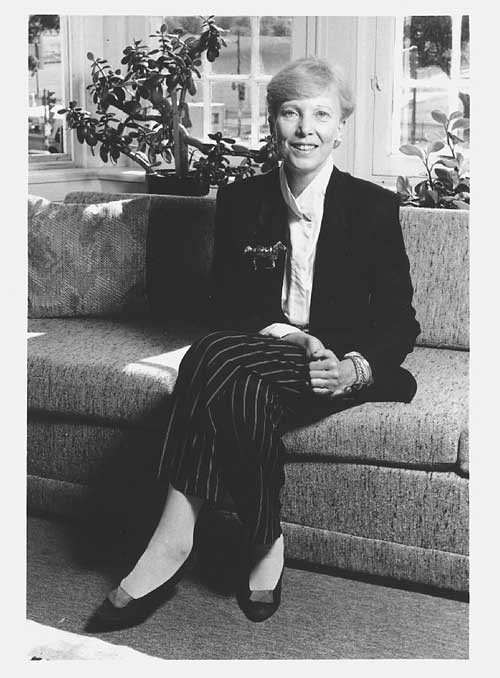
Gail Valaskakis becomes President of the Canadian Communication Association
Faculty have held influential positions in the Canadian Communication Association, the field’s main national scholarly association, with Dr. Valaskakis (1985-86) and Dr. William Gilsdorf (1990-91) both serving as president, a position that was later held by Dr. Leslie Reagan Shade (2004-06).
Faculty members have also been involved in leadership roles in many academic organizations beyond the Canadian Communication Association, including the Film Studies Association of Canada, the International Communication Association, the Association of Internet Researchers, and the Digital Games Research Association.
September 1985
20th Anniversary of the Department
Celebrating the Department’s 20th anniversary, past and present faculty contributed to a book collection titled Humanism in a Technological Age. The book grouped essays under five interrelated themes that demonstrated the specific strengths of the Department: Communication Studies history, Marshall McLuhan’s ideas, visual media, media and social/political contexts, and communication pedagogy. In his introduction, former Department Chair Dr. Bill Gilsdorf noted that while the Department had grown significantly in all respects, its focus on humanism in theoretical and production practices has remained a constant.
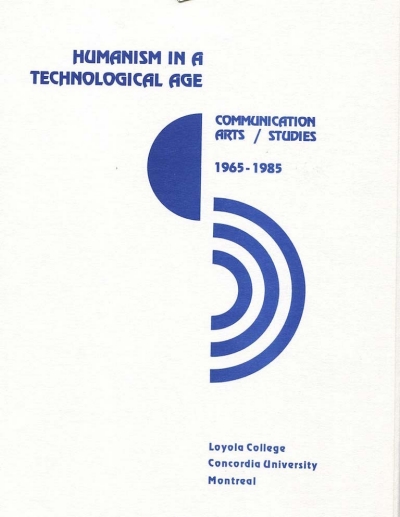
Source: Department of Communication Studies, Humanism in a Technological Age, Concordia University. September 1985. Sheelah O’Neill, personal records.
Fall 1987
PhD Established
The success of the MA in Media Studies prompted further expansion at the graduate level. In 1987, under the auspices of Concordia University, Université de Montréal, and Université du Québec à Montréal, the Joint Doctorate in Communication Studies began its offerings.
The program was both the first inter-university and bilingual program of its kind in Canada. It was also the largest, in terms of participating students and faculty members. The PhD program was accorded permanent status in 1994.
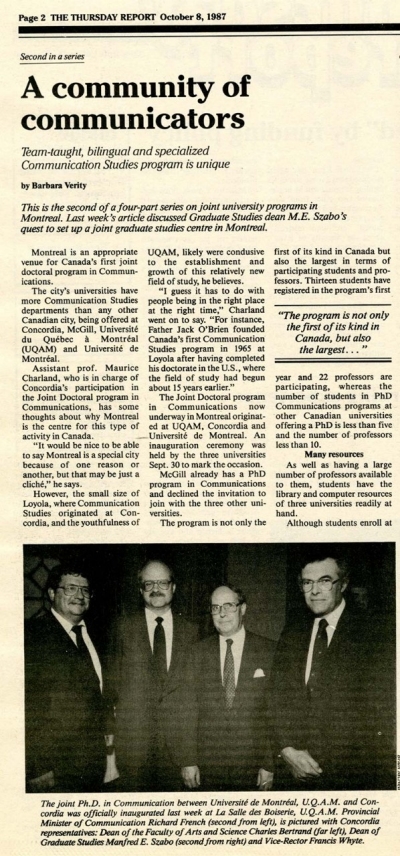
Source: Savoie, Pierre-Olivier, “Pop culture is serious,” The Link, 2001/1/23. Pg. 12.
Spring 1989
3Dmt
Organized by faculty members Dr. Hal Thwaites, Christine Davet and Dr. William Gardiner, the 3Dmt conference involved an international audience of practitioners, academics, students and technicians. Thirty speakers from ten countries discussed topics including holography, 3D film, television and sound, and the final day of the conference featured hands-on demonstrations of 3D techniques.
Source: Greenway, Kate. “3D conference to give university spotlight.” The Thursday Report. March 9, 1989.
October 1994
Harold Innis and Intellectual Practice for the New Century: Interdisciplinary and Critical Studies
The conference was organized by Dr. William Buxton and Dr. Charles Acland. It included discussions with over 30 visiting scholars on a number of papers related to Innis’s work, an evening of films featuring themes of interest to Innis, and a keynote address by the influential communication theorist and historian, Columbia University professor James W. Carey. This conference and the subsequence book Harold Innis in the New Century: Reflections and Refractions (1999) effectively recast Innis’s legacy with a new depth and humanity that earlier renditions, concentrating on a relatively small sample of his work, had understood as technologically deterministic.
Source: Concordia Thursday Report. 8 September 1994.
Spring 1998
Archival Research Conference
Dr. Sawchuk led the “Textual Encounters of the Archival Kind,” a conference on archival research and practice. The event notably prefigured the more recent ‘archival turn’ in humanities scholarship and influenced research that followed over the next decade.
October 1998
Sex on the Edge: An International Symposium on Sexuality and Marginality
This event brought together more than 150 scholars, representing a wide range of disciplines, from Europe, North America and Australia to tackle complex issues such as sexual politics, identity and marginalization. The conference was led by Dr. Thomas Waugh (Mel Hoppenheim School of Cinema) and Dr. Chantal Nadeau. Keynote address came from Concordia University Communication Studies alumna Dr. Elspeth Probyn (University of Sydney) and Dr. Michael Warner (Rutgers University).
2002 onward
Dr. Maurice Charland awarded Major National Book Prize
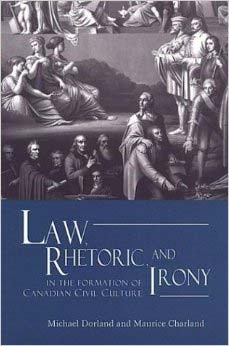
The most prestigious book award for communication scholarship in Canada is the Gertrude J. Robinson Book Prize, awarded annually by the Canadian Communication Association. Dr. Charland was the Department’s first recipient with Law, Rhetoric, and Irony in the Formation of Canadian Civil Culture (2002), co-authored with Michael Dorland (Carleton University and alumnus of our Communication PhD). Dr. Charles Acland was the next recipient for Screen Traffic: Movies, Multiplexes, and Global Culture (2003). Dr. Peter van Wyck has been a dual recipient of this honour, for his books Signs of Danger: Waste, Trauma, and Nuclear Threat (2004) and The Highway of the Atom (2010).
Dr. Fenwick McKelvey is the Department’s fourth winner of the Robinson Book Prize for his Internet Daemons: Digital Communications Possessed (2018).
2004 onward
Department Bolsters Reputation with Research Chairs
The national and international reputation of the Department of Communication Studies was enhanced by several major research chairs. Dr. Charles Acland held the Concordia University Research Chair (CURC) (Tier II) in Communication Studies from 2004 to 2015. Dr. Mia Consalvo holds the Canada Research Chair in Game Studies and Design (Teir I) starting in 2011, and Dr. Krista Geneviève Lynes was Canada Research Chair in Feminist Media Studies (Tier II) from 2013-2024. Dr. Arseli Dokumaci began her tenure as Canada Research Chair in Critical Disability Studies and Media Technologies in 2018. Dr. Kim Sawchuk has held the CURC (Tier I) in Mobile Media Studies since 2012, and Dr. Yasmin Jiwani’s CURC (Tier I) in Intersectionality, Violence and Resistance from 2017-2022. Dr. Stefanie Duguay CURC in Digital Intimacy, Gender, and Sexuality (New Scholar) began in 2021.
August 2005
Visible Evidence
Visible Evidence is an annual international and interdisciplinary conference on the role of film, video and other media as witness and voice of social reality. Concordia University’s Mel Hoppenheim School of Cinema and the Department of Communication Studies hosted visible Evidence XII, and Dr. Martin Allor of the Department was instrumental in its success. The keynote speaker was Anand Patwardhan, an internationally celebrated Indian documentarist.
Fall 2005
Department moves into the CJ Building
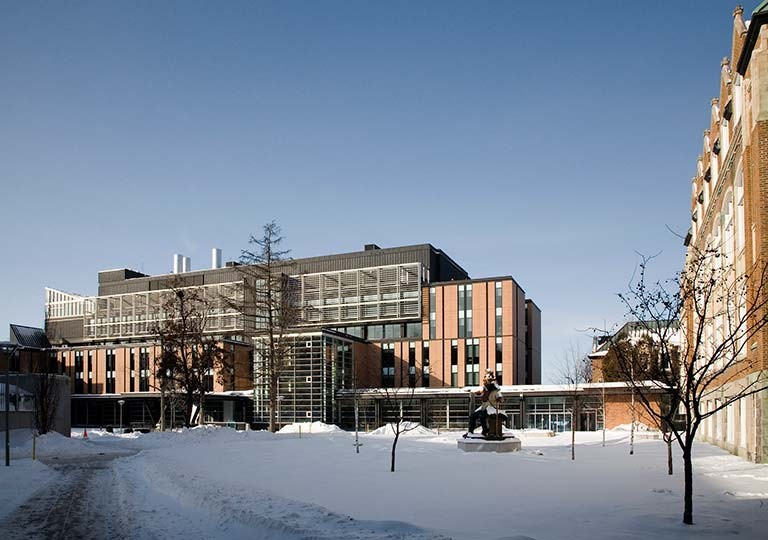
Following a move out of the Bryan Building, and a temporary stint in Hingston Hall, the Department moved into its new home, the Communication Studies and Journalism (CJ) Building on the site of the former Drummond Science Complex. The CJ’s opening, overseen by departmental representative Dr. Martin Allor, coincided with the 40th anniversary of the founding of the Department. The Communication Studies and Journalism departments that share the building now had more classrooms, more offices, state of the art technological infrastructure for teaching, and most importantly additional laboratory and research space for newly expanded needs and future innovations.
Summer 2006
Major Scholarly Journals Arrive
The Department’s contributions to the national scholarly scene have extended to journal editorship. Two leading peer-reviewed journals were housed and edited here for six years: Canadian Journal of Communication (with participation from Simon Fraser University, 2006-2012) edited by Dr. Kim Sawchuk, Canadian Journal of Film Studies (with participation from Cinema Studies at Concordia University, 2008-2014) by edited Dr. Charles Acland, and Critical Studies in Media Communication (2018-2022) edited by Dr. Mia Consalvo.
Summer 2007 - 2008
Professors Marty Allor and Liz Miller collaborated with the non-profit Witness to run the Advocacy Institute (VAI) that was hosted by the Communications Studies Department. Witness developed the VAI to create unique training and networking opportunities for human rights activists from around the world who were working on wide-ranging issues that included human trafficking, indigenous rights, HIV/AIDS, and internally displaced peoples. With the support of the Witness staff, the international participants developed an advocacy project over the course of the week and reinforced their skills in media production with the guidance of Miller, Allor, and participating students. The institute ran for two years and is described in this report below.
Miller, Allor, “Strategies of Representing the Pain of Others: The Video Advocacy Institute,” Canadian Journal of Commuinication, Volume 34 Issue 1, March 2009, pp. 137-141.
November 2009
International conference
Jeremy Stolow convened an international conference named Heritage, Authenticity and the Politics of Religious Identity.
2010
Annual meeting
The department hosts the annual meeting of the Canadian Communication Association, as part of the congress which took place at Concordia.
April 2010
Art + Religion Conference
Jeremy Stolow is the co-convenor of Art + Religion, a major international conference held with with the Musée d’art contemporain.
September 2010
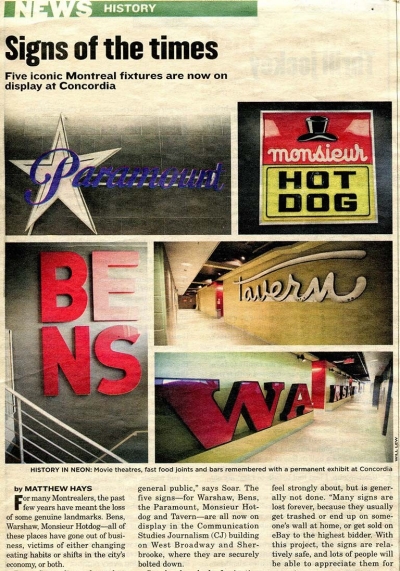
Iconic Montreal Signs hung on Walls of the CJ Building
Dr. Matt Soar and Concordia Archivist Nancy Marrelli unveiled their Montreal Signs Project, which salvaged and restored iconic signs from Montreal businesses, in conjunction with the Communications Studies program’s 45thanniversary celebrations. Beginning with signs for Ben’s Restaurant, Monsieur Hot Dog, Warshaw Supermarket and the Paramount Movie Theatre, the walls of the CJ Building have been increasingly populated with additional colourful reminders of Montreal’s visual heritage.
October 2010
Media Gallery opens in the CJ Building
As Department Chair, Rae Staseson began the Media Gallery in order to exhibit artwork and creative productions. Since opening, the Media Gallery has showcased professional, local, national and international artists.
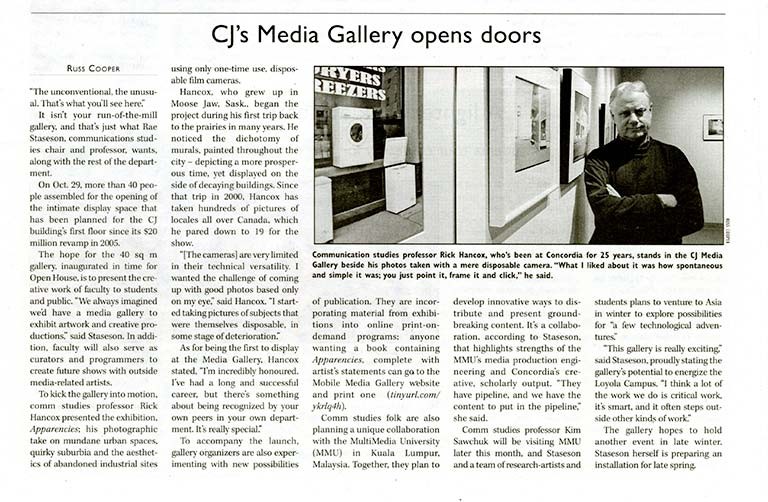
Source: Hays, Matthew, “Communication Studies Media gallery,” Concordia University Journal, 31 January 2011. Pg. 7.
May 2011
Database | Narrative | Archive Symposium
Dr. Matt Soar and Dr. Monika Kin Gagnon hosted this international conference to explore new methods of interative media practice, focusing on database documentary, interactive narrative, and experimental archiving. A collection of essays emerging from the conference later appeared on the Scalar platform, and itself was an experiment in open access, interactive scholarship.
October 2011
Fr. O’Brien receives Prestigious Loyola Medal
The Loyola Alumni Association and the administration of Loyola College created the Loyola Medal in 1961 to pay tribute to outstanding leadership and contributions to society. It remains one of the highest honours awarded by Concordia University. In October 2011, Fr. O’Brien received this honour in a ceremony attended by friends, colleagues and alumni.
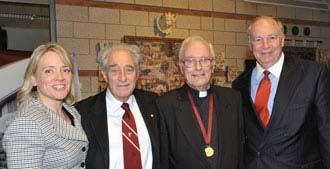
Source: “Loyola Medal.” Concordia University Magazine Vol. 35, No. 4 (Winter 2011/12). Page 26.
October 2011
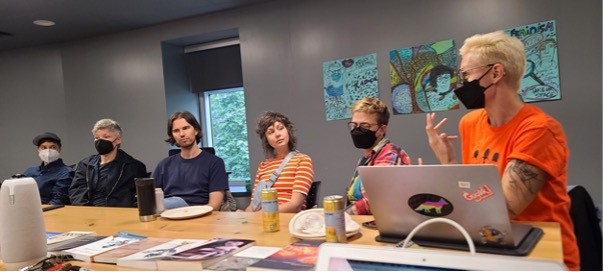
Feminist Media Studio Opens in Redesigned Space in the CJ Pod
CRC in Feminist Media Studies Dr. Krista Geneviève Lynes led a major renovation and redesign of the CJ pod to create the Feminist Media Studio (FMS). This unique and active research centre asks how artistic action can do political work, focusing on mediating gendered and queer social life in different contexts around the globe. With a commitment to collaborative research and research-creation work, the FMS has generated many events that involved key scholars and artists who have shaped the field of feminist media, including Ariella Azoulay, Lauren Berlant, Tina Campt, Wendy Chun, and Trinh T. Minh-ha. FMS participatory projects with student and faculty members have include “Doing Feminism in the Pandemic” as well as major exhibitions and symposia, such as the “Trespassing Europe Summer Institute.”
May 2013
Differential Mobilities: Movement and Mediation in Networked Societies
Mobile Media Lab co-directors Dr. Kim Sawchuk and Dr. Owen Chapman hosted the international mobilities conference, which was sponsored by the Pan-American Mobilities Network in collaboration with the European Cosmobilities Network. The focus of the 2013 conference, ‘differential mobilities,’ challenged participants to conceptualize movement, mobility, or flows within spaces and places, while accounting for the systemic differences within infrastructures and terrains that create uneven forms of access.
September 2013
Canada Research Chair in Game Studies and Design Opens Research Lab
Dr. Mia Consalvo, CRC in Game Studies and Design (Teir I), launched mLab, a space dedicated to developing innovative methods for studying games and game players. Since then, the mLab has served as a hub for graduate students and the game industry as well as game players more generally. It has hosted national and international speakers and visiting scholars. The mLab is a distinctive site for naturalistic observation of game play, offering technical capabilities to make and stream games, and has played a major role in making Concordia and Communication Studies a leading venue for scholarship in games.”
November 2013
Media History Research Centre Launched
Dr. Charles Acland and Dr. Darren Wershler (English) founded the Media History Research Centre (MHRC), a Faculty of Arts and Science-accredited research unit, as an interdisciplinary hub and accelerator for media history scholarship at Concordia University with participation from other universities in Montreal. Along with its many research initiatives, over the years since its launch, the MHRC has hosted a significant number of symposia and visits from major scholars including Dr. Wolfgang Ernst, Dr. Johanna Drucker, Dr. John Durham Peters, and Dr. Sarah Sharma.
February 2015
World of Matter: Extractive Ecologies and Unceded Terrains
Dr. Krista Geneviève Lynes and Darin Barney (Canada Research Chair in Technology and Citizenship, McGill University) organized this symposium, which asked how the fields of contemporary art and media studies, Indigenous studies, and critical environmental studies might bring into focus the globalizing dynamics of extractive ecologies. In doing so, it sought to build substantive discursive grounds for resisting incursions into sovereign land, denials of the rights of nature, and the persistent dispossession of Indigenous and First Nation peoples.
May 2015
Arclight Symposium
Dr. Charles Acland, along with collaborators from the University of Wisconsin-Madison, hosted this international conference on the relationship between media history and digital humanities. Presentations ranged from critical examinations of “big data” in historical research to demonstrations of new on-line methods of scholarly analysis. This event was part of the interdisciplinary work of the Media History Research Centre.
September 2015
50th Anniversary of the Department of Communication Studies
The Department launched its 50th Anniversary at Concordia University’s Homecoming 2015 with founder Fr. Jack O'Brien in attendance. The day featured an open house showcasing the department media facilities, research labs, and student projects. Alumnus filmmaker Nicolas Zavaglia's film Journey to Ithaca provided a nostalgic look back at the Department's history. Key celebratory events also include a vernissage for the year-long exhibition “Living Imprints”, coordinated by Dr. Monika Kin Gagnon, with Dr. Matt Soar, Prof. Elizabeth Miller, Dr. Peter van Wyck, and alumnus Dr. Cheryl Sim, and The President's Homecoming Dinner
September 2015
Communication Studies Distinguished Alumni Speaker Series with Emmy, Peabody, and Edgar Award Winning René Balcer
René Balcer returned to the Department as part of the ongoing Distinguished Alumni Speaker Series. Mr. Balcer, who graduated with a B.A. in Communication Studies in 1978 and received an Honorary Doctorate from Concordia University in 2004, is one of the most successful television writer-producer-directors in the United States, most notably recognized for his years as a showrunner for Law & Order. Other Distinguished Alumni Events over the years have included Barry Julien (Emmy-winning Late Night with Stephen Colbert producer), Pierre Evan (Film producer, Oscar-nominated for Rebelle), Don Carmody (feature film and television producer, including Oscar-winning Chicago), and award-winning journalist and author Maziar Bahari. Distinguished Alumni Scholars Editions have included the esteemed scholars Dr. Judith Nicholson, Prof. Maureen Bradley, Dr. Anna Friz, and Dr. Sheryl Hamilton.
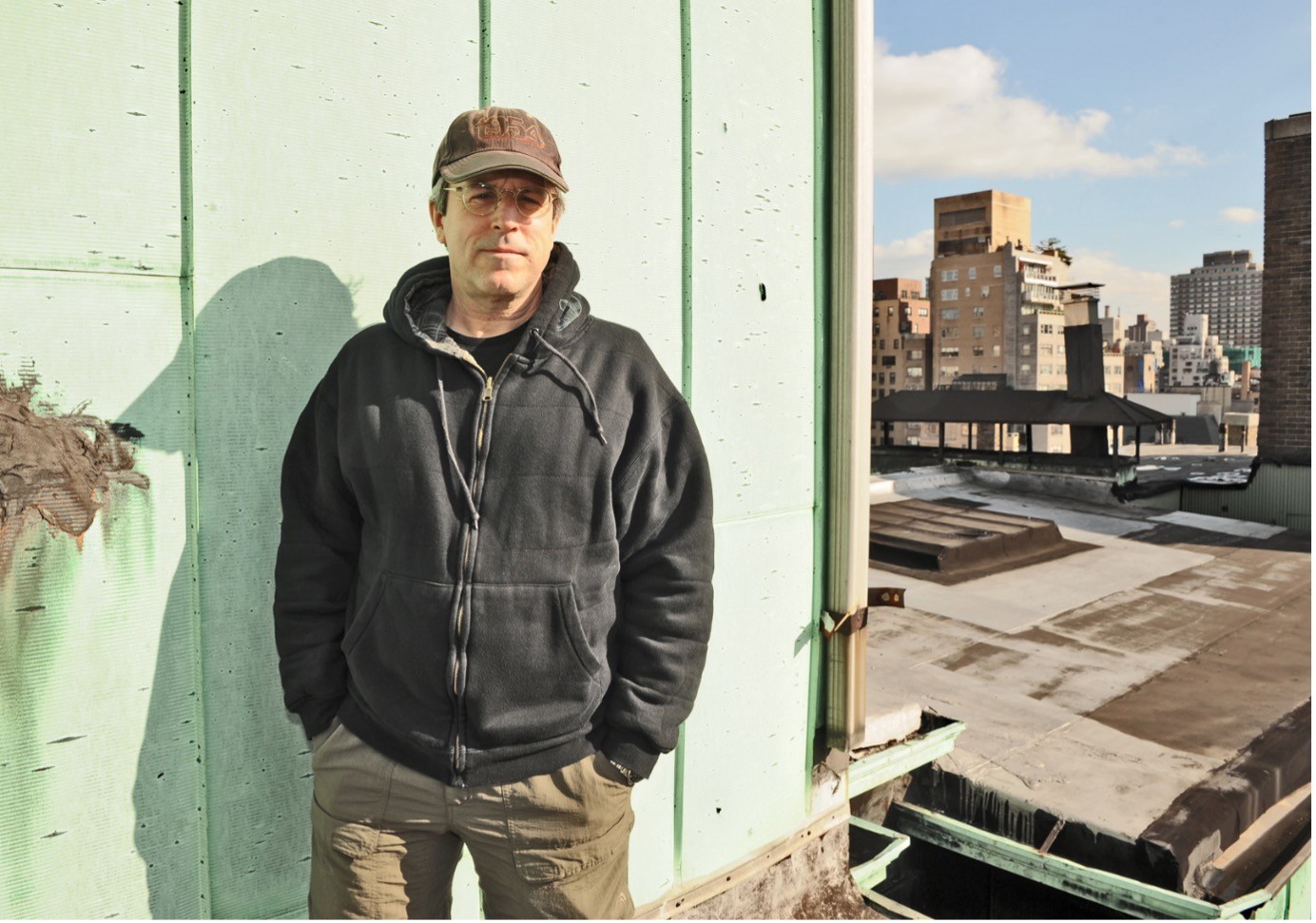 René Balcer - Photo: Jessica Burstein
2016
PhD program
Communication Studies starts our own stand-alone PhD program.
July 2016
Circle Visions
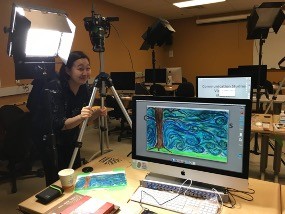
Professor Liz Miller and Kester Dyer launch Circle Visions, a week-long summer workshop for Indigenous filmmakers created in collaboration with Wapikoni Mobile and with the support of the Concordia Documentary Centre. For five consecutive summers (2016 to 2020), the Communications department hosted the workshop involving up to six Indigenous filmmakers each year from various nations and communities. Filmmakers worked alongside participant-mentors including artists like Cherry Smiley (Nlaka’pamux/Diné) and Daphne Boyer (Métis) and learned skills in 360 filmmaking, projection mapping, chroma-key, multi-camera studio film set ups, script-writing, animation, game logics, and more. Several Indigenous and non-Indigenous guest professors contributed to the Summer Institute from academic departments including Communication Studies, Journalism, Cinema, Art Education, Design and Computation Arts, and First Peoples Studies. The summer workshop was an opportunity to foster relations, networks and new work and some of the filmmakers went on to win awards for the work produced in the workshop.
August 2017
Master Class with Renowned Hollywood Showrunner Peter Lenkov
The Department offered a special Master Scriptwriting Class from August 24 to September 1, 2017, led by Peter Lenkov, Executive Producer of Hawaii Five-0, MacGyver, and other hit American television shows. Mr. Lenkov had attended Communication Studies as a B.A. student in the 1980s.
October 2017
Opening of New Research Centre engAGE
Concordia University introduced "engAGE," a research centre designed to challenge stereotypes about aging, led by Dr. Kim Sawchuk. This transdisciplinary initiative involves researchers from various fields, partnering with older individuals, community groups, professionals, and industry partners and boasts a roster of 25 members from all four faculties at Concordia University. They have hosted many events over the years, including those on such topics as ageing and urban life, elder abuse, and older women performers and popular music.
July 2019
Roundtable Discussion on Racial and Social Profiling Features Performance by Landscape of Hate
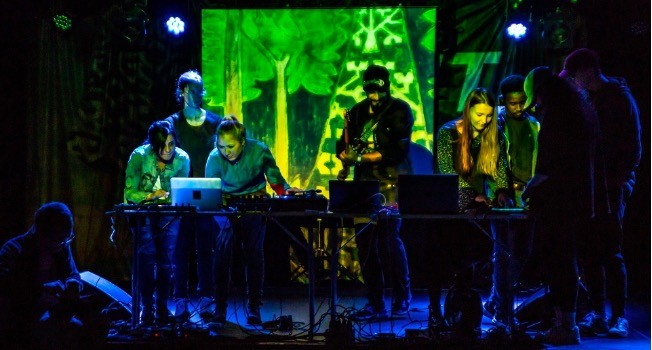
Just before the start of the Heavy Montréal music festival, Concordia University hosted a special event exploring how underground cultures like metal communities engage with racism and profiling. The event highlight was a music performance by the collective research/activist initiative Landscape of Hate, led by Dr. Owen Chapman and Dr. Vivek Venkatesh (Concordia University’s UNESCO co-Chair in Prevention of Radicalisation and Violent Extremism). Landscape of Hate has taken its improvised multi-media live music performance and installations to several international venues. Their efforts help engender and guide discussions on difficult topics, such as racism and hate speech, have been supplemented by a parallel initiative, Landscape of Hope, which in 2021 secured significant funding from the Fonds de recherche du Québec, Canadian Heritage, and the Michaëlle Jean Foundation.
July 2019
M.A. Media Studies Alumnus Maize Longboat Wins Best Emerging Digital/Interactive Work at the imagineNATIVE Film + Media Arts Festival
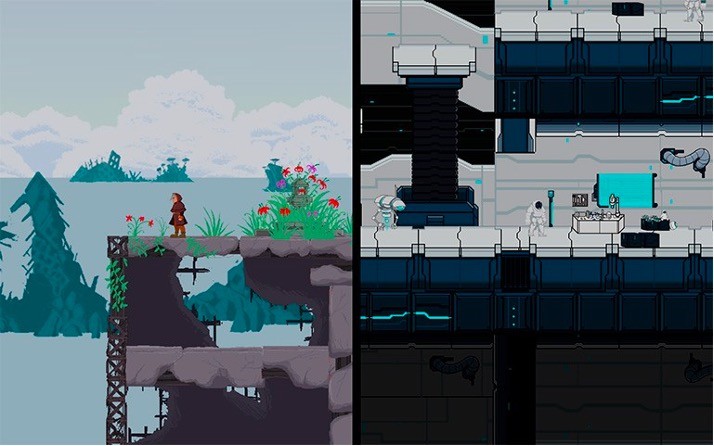
Maize Longboat received recognition for his Indigenous-focussed video game, "Terra Nova," which was initially developed as part of his M.A. research, at imagineNATIVE Film + Media Arts Festival. "Terra Nova" explores a post-apocalyptic future on Earth and delves into the complexities of first-contact situations between settlers and Indigenous people. Mr. Longboat aimed to highlight the nuanced perspectives and challenge conventional binaries, drawing inspiration from his mixed ancestry and historical narratives.
2020
An Uncommonly Active Year for Book Releases – Communication Studies Faculty Together Publish 5 books in 2020
The Department celebrated the publication of five diverse books by its faculty members. The books span various topics and research domains, showcasing the Department's influential interdisciplinary approach. They five are: Hacked Transmissions (University of Minnesota Press) by Dr. Alessandra Renzi, which explored the intersection of social movements and technology; Dr. Charles Acland’s American Blockbuster (Duke UP), delving into the history and dynamics of blockbuster films; Dr. William J. Buxton’s Harold Innis on Peter Pond (McGill-Queen’s UP), examining the writings of Harold Innis on fur trader Peter Pond; Moving Images: Mediating Migration as Crisis (transcript Verlag) edited by Dr. Krista Lynes, alumus Dr. Tyler Mortgenstern, and Dr. Ian Alan Paul, which investigates contemporary European perceptions of migration and refugees; and In Search of Expo 67 (McGill-Queen’s UP) edited by Dr. Monika Gagnon and Lesley Johnstone, which explores connections between archive and memory through original artworks and essays. These publications are just a sample of the Department's ongoing vibrant and impactful scholarly contributions.
June 2021
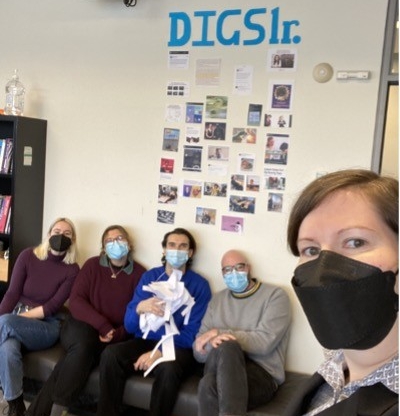
Digital Intimacy, Gender, and Sexuality (DIGS) Lab Founded
Dr. Stefanie Duguay helped consolidate and advance scholarly engagement about how digital media and culture are shaping intimate relationships, gender, and sexuality with the launch of the DIGS Lab. Through empirical research, theory, and creative innovation, the DIGS Lab equips new scholars and industry leaders with digital research skills, explores how digital technologies affect sexual activity and relationships, studies new forms of digital self-representations and expressions of affiliation, and examines the effects of rendering of sexuality into data for automated and artificial intelligence systems.
June 2022
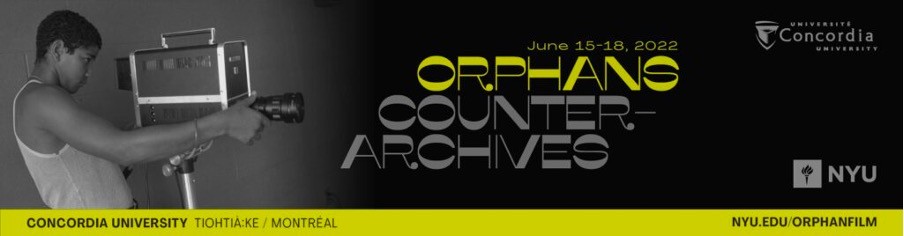
Archive/Counter-Archive and the Media History Research Centre host Orphans Film Symposium
Concordia University hosted a major international film event, the 2022 Orphans Film Symposium in collaboration with New York University. This event brought together a global community dedicated to preserving, studying, and screening neglected moving image artifacts. The focus of Orphans 2022 was "Counter-Archives," highlighting forgotten, recently retrieved, or restored films that give voice and visibility to underrepresented stories, themes, and communities. The symposium featured screenings, discussions, presentations, and some live music accompaniment collections worldwide, showcasing a diverse range of orphaned works, including silent, experimental, educational, industrial, and more.
January 2023
Donat J. Taddeo, Former Professor of Communication Studies, receives Order of Canada
Donat J. Taddeo served Concordia University in various roles for over 25 years, including teaching communication studies, leading the engineering and computer science school, and co-chairing the university's capital campaign. Taddeo later became the president and CEO of the McGill University Health Centre Foundation and held positions at the Université de Montréal and Loyola High School in Montreal.
May 2023
Concordia’s Applied AI Institute Offers Interdisciplinary Summer Institute
Concordia University's Applied AI Institute, led by co-director Dr. Fenwick McKelvey, launched a three-week interdisciplinary Summer Institute titled "The Social Life of Artificial Intelligence." The program explored the AI’s ethical, technical, and social impacts, including data ethics and algorithmic impact assessments. Participants attended a two-day international symposium at Concordia University’s Milieux Institute, featuring expert panels and keynote speakers from prestigious universities.