Kelly Jazvac is an award-winning researcher at Concordia University
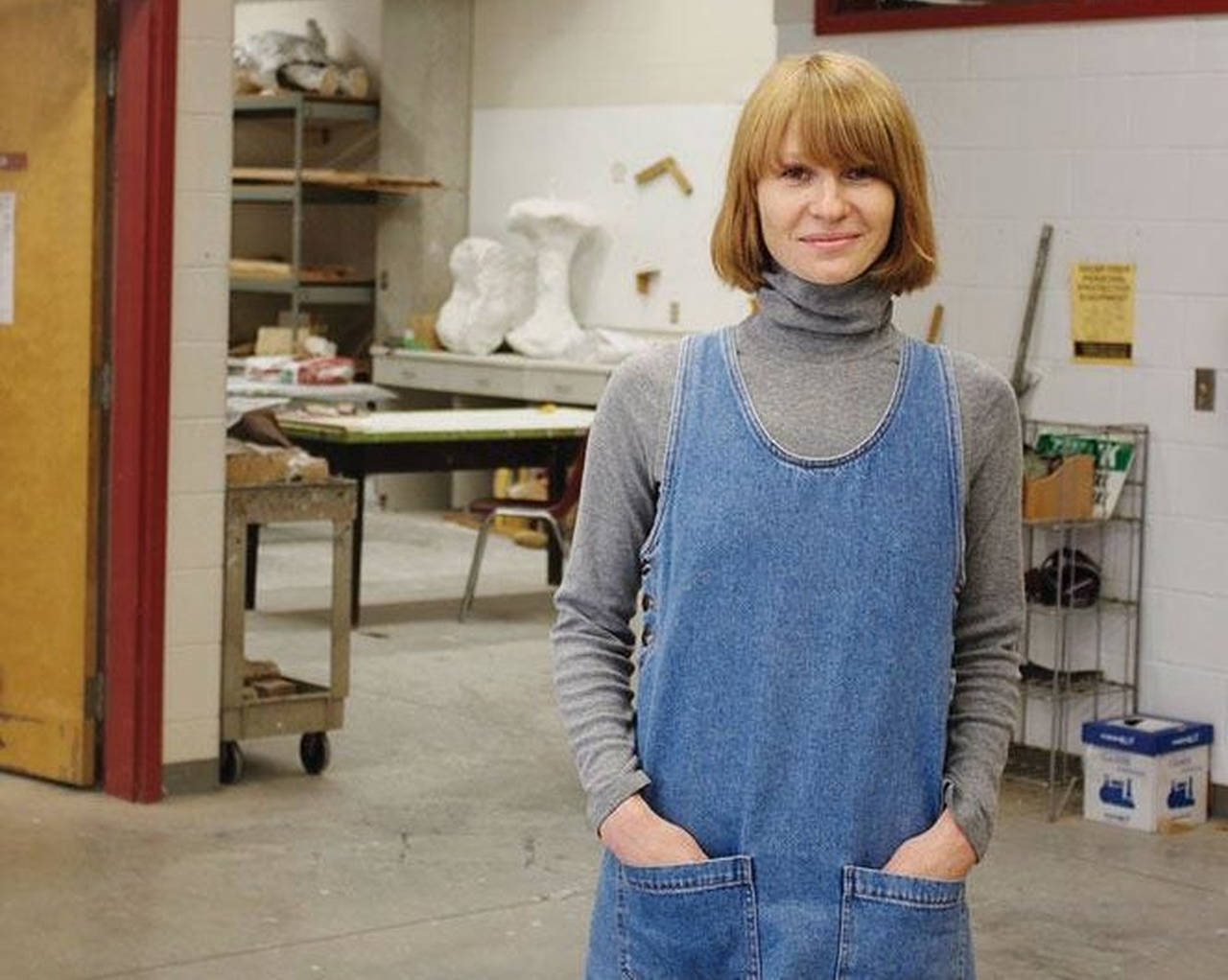
Kelly Jazvac, a Concordia researcher and associate professor of studio arts, works with plastic waste to probe the permanence of disposability. Knowing that plastics can take hundreds of years to decompose and can have a dramatic effect on the health of an ecosystem, Jazvac's work challenges viewers to think about our relationship to plastic and the way it has pervaded our culture and environment.
Within this scope, she collaborates with a plastic pollution research team called The Synthetic Collective, which includes scientists, artists, art historians, philosophers and writers. The group's most recent scientific publication can act as a tool for industry to see where their pre-consumer, industrial pollution is ending up in the Great Lakes watershed, as the paper visually characterizes all 12,595 plastic pellets found on 66 beaches across the Great Lakes. A current exhibition organized by the Synthetic Collective at the Canadian Cultural Centre at the Canadian Embassy in Paris takes this publication as a starting point to examine how art and science based research methods can be mutually beneficial when tackling wicked problems such as plastics pollution.
Jazvac has had exhibitions at The Musée D’Art Contemporain (Montréal), The Museum of Modern Art (New York), and The Art Museum at the University of Toronto. Her work has been written about in National Geographic, e-flux Journal, Hyperallergic, Art Forum, The New Yorker, Canadian Art Magazine and The Brooklyn Rail. She has also co-authored, collaborative art/science research that has been published in scientific journals including Nature Reviews, GSA Today, and Science of the Total Environment.