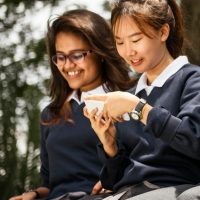
Theme 2.2: Disciplinary Learning and Competency Development

Photo by thestandingdesk on Unsplash

The content and requirements of school curricula evolve in response to societal changes and advances in knowledge. These changes affect all subject areas, as illustrated by the recent development of Quebec’s Culture and Citizenship (CCQ) program. In this context, one of the main challenges facing educators is to adapt curricular content and teaching approaches to make them relevant and accessible to students without compromising their richness or the specific requirements of each discipline.


CSLP members examine how educators can address sensitive political issues in the classroom and develop teaching and assessment resources related to freedom of expression and citizenship education. Researchers are particularly active in French language and literacy education, investigating approaches to developing students' vocabulary and morphological knowledge, as well as strengthening the connections between grammar instruction and oral communication in teacher education. In mathematics education, researchers conduct systematic reviews and meta-analyses of teaching practices at the preschool, elementary, and secondary levels. Across these areas, collaboration with educators and educational partners helps ensure that research takes into account the concerns and needs of school communities and produces knowledge directly relevant to improving teaching practices and supporting student learning.

Projects

Neurophysiological understanding of student performance in science

This project aims to test the often-stated idea that placing science problems in real-life contexts helps student performance and engagement in trying to resolve the problem, as opposed to posing it in an abstract way. With different neurophysiological captors to indicate cognitive and emotional engagement (such as eye-tracking and electroencephalography), Dr. Charland hopes to empirically determine how student performance is affected by added context and what this can say about student learning in general.

Researcher: Patrick Charland

Integrated teaching of grammar in French first-language teaching and English second-language teaching

This study, lead by Dr. Gauvin and funded by a SSHRC Insight Grant, examines the effects of integrated teaching of grammar in French as a language of instruction and English as a second language in Quebec on verb complements. In Quebec, all students learn French and English from Grade 1 onwards: early on in their education, they build a plural linguistic knowledge base. Since the languages spoken by a speaker are interrelated, the teaching of first and second languages must be decompartmentalized. However, this teaching often takes place in a vacuum, with language teachers rarely working together to help their students understand the similarities and differences between the languages they are learning. Thus, because all Quebec students develop knowledge of French and English from the beginning of their schooling and because language teaching, including grammar teaching, is done in isolation, it is relevant to describe the effects of integrated grammar teaching on the development of learners' metalinguistic thinking, their knowledge of the properties of verb complements, as well as its usefulness in writing tasks.

Researcher: Isabelle Gauvin

Exploring the benefits of weak social ties for international students' wellbeing

Dr. Trofimovich leads this project, funded through a SSHRC Insight Development Grant, that examines the links between international students’ wellbeing (feelings of happiness, belonging) and patterns of their verbal and nonverbal communication. The project’s goal is to develop and assess a brief communication-centred intervention which capitalizes on the positive value of people’s brief, low-intimacy conversations with acquaintances, coworkers, and strangers, collectively known as weak social ties.

Researcher: Pavel Trofimovich

Identifying and mitigating discrimination in higher education settings

Together with Dr. Kim McDonough, Dr. Trofimovich is also working on a SSHRC Insight Grant-funded project Identifying and mitigating discrimination in higher education settings. This project is exploring students’ experiences with discrimination at Concordia and examining the impact of bridging programs on the recruitment and support of first-generation, mature entry, and lower socioeconomic status students.

Researcher: Pavel Trofimovich

Not seeing ourselves as others see us: Exploring the role of metaperception in lingua franca communication

Dr. Trofimovich leads this project, supported through a SSHRC Insight Grant, exploring barriers to lingua franca communication which stem from assumptions that speakers make about their interlocutor and themselves (collectively known as metaperceptions); these assumptions (such as a fear that the interlocutor does not like or respect them) can lead to avoidance behaviors, hurt feelings, and conflict. The project examines metaperception as a source of communication difficulty for speakers of English and French as a lingua franca in order to enhance understanding of intercultural contact and help raise speakers’ awareness of the interpersonal dimension of oral communication.

Researcher: Pavel Trofimovich

Portrait of elementary first-graders’ abilities in reading comprehension

This project will follow a cohort of elementary first graders for the latter half of the school year and regularly execute various reading comprehension tests. This is to determine how this skill develops in this grade — what serves as particular challenges to students’ understanding, what comes easier, etc. — something about which there is currently little information and could prove extremely beneficial for teachers and resource room teachers. The tool to measure reading comprehension at the first-grade level was developed and validated by Drs Côté and Laplante, with plans to digitize it in the future. Dr. Côté also hopes to be able to have a subgroup of students with learning difficulties to follow in order to illuminate the particularities of their learning process as well.

Researcher: Marie-France Côté

The Use of Speech Technologies for Pedagogical Purposes

Within this area of research, Dr. Cardoso investigates what speech technologies that are free, easily accessible, and not originally designed for pedagogical purposes can be used to extend the reach of the classroom, serve as a complement to the classroom, or allow for autonomous learning outside the classroom. Such technologies are capable of text-to-speech, speech-to-text synthesis and include intelligent personal assistants (IPAs, for instance, Google Home, Alexa, and Siri). Cardoso is interested in equipping teachers and students with strategies to utilize speech technologies to overcome some of the hurdles that language learners may face, namely a lack of time, or access to paid resources or native speakers of the second language. In Intelligent personal assistants: can they understand and be understood by accented L2 learners?, Cardoso found that when Alexa could not understand participants, they developed strategies to be understood by the IPA: they practiced, repeated their requests, and rephrased their questions. These strategies are some of the affordances of speech technology for second language learners that fuel the desire to research further in this area.

Researcher: Walcir Cardoso