

Theme 3.2: Polarization and Divides in Education

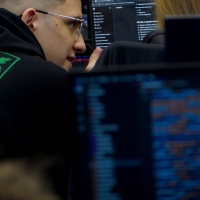
Photo by Sam Balye on Unsplash

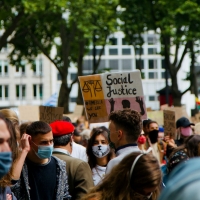
Quebec's educational environments are experiencing tensions that reflect broader societal changes and divisions. Alongside ongoing debates about religious and cultural differences, there is growing political polarization and increased visibility of reactionary, antifeminist, and extremist discourse.


These developments raise important questions about the role of schools in fostering citizenship and democratic dialogue. How can students be encouraged to discuss controversial issues, engage with differing viewpoints, and develop their critical judgment in an environment conducive to learning?

Projects

Designing pedagogical resources for teaching freedom of expression in Culture and Citizenship in Québec

This project, in collaboration with David Waddington (Concordia), Stéphanie Tremblay (UQAM) and Bruce Maxwell (UdeM), focuses on the development of a pedagogical guide and two teaching resources to support teachers addressing freedom of expression as part of the Culture and Citizenship in Québec (CCQ) program. The guide translates legal and educational frameworks as well as recent research into pedagogically robust guidelines. The resources are designed to foster students’ critical thinking through sociological inquiry and ethical dialogue into concrete cases (e.g., dress codes). The project aims to equip teachers with practical tools to facilitate nuanced discussions on freedom of expression, helping students develop informed, responsible, and context-sensitive understandings of this central democratic value.

Researcher: Baptiste Roucau
K-12 teacher free expression

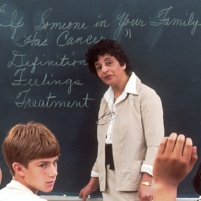
Dr. Waddington has been conducting research on teacher free expression since 2010, when he became interested in the case of Richard Morin, a PEI teacher who had fought a successful but ultimately pyrrhic legal battle for his right to a reasonable degree of free expression in the classroom. Since that time, the research team, which includes fellow CSLP member Kevin McDonough, has greatly expanded the scope of the project, analyzing the philosophical, legal, and empirical dimensions of teacher free expression within the classroom. The team is currently working on several distinct projects, including a survey of American and Canadian teachers’ classroom practices, as well as a qualitative project involving interviews with teachers who have been involved in free expression controversies. This project has received support from the Centre for Ethics and Education at the University of Wisconsin.

Researcher: David Waddington

Teacher impartiality and responses to unacceptable student speech

This project, conducted with Bruce Maxwell (UdeM), examines how secondary teachers in Quebec and France navigate the tension between maintaining impartiality and protecting student dignity when addressing politically sensitive issues in class. Drawing on interviews with teachers, the study explores a range of reported responses to student speech deemed unacceptable (e.g., discriminatory or derogatory comments), from dialogical engagement to more directive strategies. Using reflexive thematic analysis, the project identifies how teachers justify their interventions, how they interpret the boundaries of acceptable discourse, and how contextual factors (legal frameworks, school culture, perceived severity of comments) shape their decisions. The findings contribute to debates in citizenship education by clarifying how impartiality is enacted in practice, and by proposing a nuanced framework to support teachers in responding to potentially harmful speech while sustaining meaningful classroom dialogue.

Researcher: Baptiste Roucau
Spirit and Power: The Global Reach and Political Influence of Pentecostal and Charismatic Movements

Dr. Gagné’s research examines how Global Pentecostal and Charismatic Christianity intersects with politics, society, and culture. He is particularly interested in how these movements influence public life, political discourse, and social norms, both in Quebec and internationally.

He co-hosts a bi-monthly podcast with his doctoral student, Zackari Bourgeois, called “Spirit, State and Society”, available on Spotify, Substack, and YouTube, where we explore the intersections of religion, politics, and society.

Dr. Gagné’s recent books include American Evangelicals for Trump: Dominion, Spiritual Warfare, and the End Times (Routledge, 2024) and Chrétiens en quête de puissance. Présence globale et politiques des pentecôtismes (Labor et Fides, 2026). 

He regularly contributes to media discussions on religion and politics, particularly regarding evangelical movements. Dr. Gagné’s research has been featured over 400 times across media outlets. He is a strong advocate for religious literacy as a key to understanding society and political dynamics.

Currently, Dr. Gagné is part of the funded MuRel project at l'Université de Montréal. The project examines changes in the religious landscape and local expressions of state neutrality and secularism in Quebec; how citizens and religious or non-religious groups understand and use urban space, how municipalities address religious diversity in daily practices; and how religious groups participate in urban life.

Researcher: André Gagné

From Hate to Hope Massive Open Online Class (MOOC)

Dr. Venkatesh is the director of Project Someone. With the help of Project Someone collaborators, Dr. Venkatesh developed the From Hate to Hope MOOC. Designed with different community stakeholders in mind, this MOOC addresses current issues surrounding hate and radicalization head on. Starting with an exploration of the distinction between hate speech and free speech, the content moves on to look at how social media can be used to both traffic and challenge hateful messages. This MOOC is distinguished by its integration of multiple voices and perspectives on these issues. It also addresses hot topics like fake news, filter bubbles and tactics used by hate groups, which are analyzed with examples. More importantly, tangible solutions for prevention, resilience, and advocacy, online and offline, are presented as participants are called upon to make a difference in their own sectors. Each module offers a wealth of varied, current, and actionable knowledge, exchanges with peers, as well as interactive exercises.

Researcher: Vivek Venkatesh

Director and Founder of the Canadian Practitioners Network for the Prevention of Radicalization and Violent Extremism (CPN-PREV, funded by Public Safety Canada)

This evidence-based network aims to address violent radicalization in Canada by recommending and highlighting effective practices in a variety of fields and by creating a community of experts from a variety of practical backgrounds. This is done through systematic reviews that include mapping available services in Canada to determine what practices are effective and why, as well as organizing projects and events that strengthen connections between members of communities of practice from all backgrounds (e.g., community work, education, social work, law enforcement, etc.). Thus, education is at the heart of its mission, which is defined by a goal of ongoing personal and professional development for all those working in a practical way to prevent radicalization, based on their experience and research.

This training is not limited to communities of practice, c also generates accessible content such as videos, posters and newsletters for the general public. In addition, the CPN-PREV team works with members of the student community who are not yet in the field to connect them with different people from the fields of research, practice, and policy to help them develop and share their own ideas. In addition, the tools and field knowledge that Ghayda Hassan develops and organizes through this network are added as contributions to the UNESCO-PREV Chair, of which she is a co-holder with Vivek Venkatesh, David Morin and Marie-Ève Carignan, also members of the CSLP.

Researcher: Ghayda Hassan

Social polarization during the COVID-19 “infodemic”

This project, funded by Canadian Heritage’s Digital Citizen Contribution Program, aims to explore the ways in which disinformation and conspiracy beliefs online have evolved since the start of the COVID-19 pandemic. In order to do so, Miconi and her team have launched this longitudinal research project investigating the evolution of COVID-19 related disinformation and how it relates to time spent online and online experiences, psychological distress and support for violent radicalization over a six-month period. This project will inform future prevention programs to combat disinformation and the associated legitimation of violence, which will, in turn contribute to making the post pandemic world safer and more democratic.

Researcher: Diana Miconi

Disinformation and adherence to conspiracy theories

Through various subsidized projects, Dr. Carignan, in her capacity as UNESCO-PREV Chair, is studying different aspects of the phenomena of disinformation and conspiracy theories such as the ways adhesion to theories takes place, the links between this belief and sympathy for victims of violence, or the behaviour of people who share conspiracy theories online. With this extensive research, which is looking at these phenomena in 8 different countries, the team hopes to better understand the conditions of the concerning rise of conspiratorial thought. This will be crucial information for future interdisciplinary work on how to deal with the phenomenon.

Researcher: Marie-Ève Carignan

Hope Network and its Impact

The Hope Network is an online discussion community for adult Canadians moderated by educators and researchers. Funded through donations, the network was established in 2019 under the name Civic Literacy Youth Network (CLYN) in response to concerns raised by young adults about rising levels of racial and religious discrimination. The initiative provides a national forum where participants from across Canada can discuss questions related to religion, spirituality, and secularism while engaging with a full range of viewpoints. The network brings together individuals from both urban and rural contexts and from diverse social and cultural backgrounds, including Indigenous, agnostic, Buddhist, Christian, humanist, Jewish, Muslim, and Sikh perspectives, among other religious, spiritual, and secular affiliations.

In addition to facilitating dialogue, Dr. Tiflati’s research examines the impact of the Hope Network as an online, non-traditional educational initiative. Funded by the Canadian Network for Research on Security, Extremism, and Society, this research project evaluates the outcomes and broader significance of the network. Specifically, it investigates how the development of religious literacy within this setting may contribute to strengthening resilience to extremist narratives among young Canadians. The project also examines how participants’ religious literacy informed, or failed to inform, their interpretations of Islamophobia and antisemitism in discussions surrounding Israel and Palestine following the events of October 7.

Researcher: Hicham Tiflati

Homeschooling Practices Among Montreal’s Ultraorthodox Jewish Communities

Since 2018 this project has focused on the implementation of new regulations for home education and the impact of this regulatory framework on Hasidic Jewish communities in Montreal, both pedagogically and socially.

The project has two main components: 1- Documenting the pedagogical practices through which the various initiatives put in place encourage Hasidic boys to complete their secular education, as well as a mapping of the social representations of the parents and staff who attend and work in these centers. 2- An analysis of the regulatory and legal frameworks, as well as their media treatment, which allow these various centers to offer their services to home-educated children.

An international perspective will be added to a historical analysis of the legal framework, in order to better understand the legislative approaches chosen by the Quebec government as well as how the particular context of Montreal's ultra-Orthodox Jewish communities was considered when developing this new legislation.

Researcher: Bruce Maxwell

Equity-oriented pedagogy in Creative Arts Therapies (CATS) education

Annabelle Brault’s research program explores how participatory arts practices, particularly musicking, can foster well-being, community resilience, and capacity for change.

In her recent publication, The Role of Pluralism in Fostering an Ethic of Social Justice: Policy Recommendations for Music Therapy Education and Training, Annabelle Brault, together with Cynthia Bruce and Vivek Venkatesh, argue that music therapy programs in Canada should intentionally include dissension in their curriculum to help students meet professional standards and social justice principles. They also emphasize the importance of valuing diverse perspectives, lived knowledge, and arts-based approaches in socially just music therapy education.  

Researcher: Annabelle Brault

Intersections of the arts, digital culture, and social change

Annabelle Brault’s SSHRC-funded doctoral arts-based research examines how group musicking shapes perceptions of digital well-being for post-secondary students. Annabelle Brault also co-founded BANAL with José Cortés, Veronica Mockler, Léah Snider, and Vivek Venkatesh, an art collective that works with music, images, and performance art to explore how extremity becomes commonplace in everyday life. An important project of the collective has been Dark Diplomacy, involving a series of workshops, residences, and performances both nationally and internationally, exploring Canada-Mexico relations and perceptions.  

Researcher: Annabelle Brault