Theme 3.1: Plurilingualism and Pluriculturalism

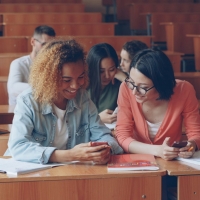
Photo by Sam Balye on Unsplash

The concept of plurilingualism refers to the use of the multiple linguistic resources that make up an individual's dynamic and integrated linguistic repertoire. In Quebec, this increasingly prevalent reality is situated within a sociolinguistic context in which the promotion and vitality of the French language are central to collective aspirations.


Research at the CSLP examines how learners' plurilingual repertoires can be drawn upon to support language learning and learning across other school subjects. It also explores the intercultural dimensions of education and the conditions that foster recognition of linguistic, cultural, and religious differences.

Projects

Post-method Teacher Training

Dr. Querrien’s Montreal-based project focuses on French as a Second Language (FSL) teacher training. This project is in its third year of using integrative strategies to help train pre-service and in-service teachers in a post-method approach which entails a context-embedded vision of meeting students' needs. A “one size fits all approach” can no longer be accepted if teachers are to respond effectively to globalization and a plurilingual reality of the 167 languages spoken in Montreal. As such, Querrien’s research documents teacher training closely to examine how teachers engage or disengage with the training with a particular focus on challenging traditionally held beliefs about language learning in a way that fosters respect and understanding.

Researcher: Diane Querrien

ChatGPT in French as a Second Language Instruction

Dr. Lira-Gonzales and her colleague investigate how French as a Second/Foreign Language (FLS/FLE) teachers can effectively integrate AI tools, such as ChatGPT, to optimize corrective feedback for students. This study is guided by two research questions: (a) What are the differences between the written feedback produced by ChatGPT and that provided by teachers for texts written by FLS/FLE learners? and (b) How do FLS/FLE teachers perceive ChatGPT-generated feedback when used to respond to students’ work?

Building on the previous study, Dr. Lira-Gonzales and her colleague further examine the impact of collaborative interactions among teachers, students, and ChatGPT on learners’ engagement with corrective feedback. The study is guided by two interrelated objectives: (1) to examine how the collaborative interplay among teachers, students, and AI influences different dimensions of learner engagement with feedback, and (2) to explore how AI-mediated teacher–student interactions can potentially enhance ESL students’ writing development.

Researcher: Dr. Maria-Lourdes Lira-Gonzales

Integrated Plurilingual Teaching and Learning for Critical Literacy and Intercultural Responsibility

Dr. Lau is currently involved in multiple research projects, both as a principal investigator and as a co-researcher.

One of her projects, Cross-language and Cross-curricular Teacher Collaborations: Plurilingual Instruction and Assessment for Critical Engagements, supported by SSHRC Insight Grant (2023-2027), investigates how cross-language and cross-curricular collaborations between elementary English and French teachers in intensive or immersion language classrooms in Quebec (QC) and British Columbia (BC) foster cognitively challenging and meaningful learning, particularly among students of immigrant backgrounds.

Dr. Lau is also a lead researcher for the Entente Canada-Québec project (2025-2026), Pédagogies plurilingues : Co-développer la capacité des enseignants à soutenir les étudiants en français et en anglais langue seconde dans les programmes du Cégep. Through close collaboration with two pedagogical counsellors, she engaged disciplinary teachers in action research to design and implement plurilingual pedagogies that leverage students’ full communicative repertoires to enhance academic and discipline-specific literacy skills in both official languages. The initiative aimed to address the bilingual demands of the college programs brought forth by Law 14 while advancing language inclusive practices that encourage cross-linguistic transfer and integrated understanding across languages and subject areas.

As a co-researcher, Dr. Lau is also involved in several ongoing projects, including Developing a Community of Practice of Educators and Researchers Engaged with Plurilingual Learners in the Estrie (PRESE, 2025-2026, led by Erin Quirk, Université de Sherbrooke), the SSHRC Connection Project, pē-kiyokētan: Centering Indigenous Languages in Rethinking Multilingualism in Education (led by Dr. Belinda Daniels, University of Victoria) in raising greater awareness about and strengthen efforts in incorporating ethically and respectfully Indigenous languages within the larger context of multilingual education, among others.

Researcher: Dr. Sunny Man Chu Lau

PluriDigit: Plurilingual, Decolonial and Digital Pedagogy

PluriDigit was a research project created by Dr. Galante that followed two main goals: 1) equip language teachers with relevant plurilingual and decolonial pedagogy, and digital tools for improving language learners' speaking skills; 2) assess the effectiveness of PluriDigit on students' speaking skills and plurilingual competence from a bottom-up approach. PluriDigit has enabled language teachers to feel supported and secure when using VoiceThread, an online platform, in their online teaching during the COVID-19 pandemic. It has also allowed adult language learners to become empowered plurilingual users. Her website contains the pedagogical resources used in the study and the study results. Dr. Galante and colleagues have published two open-access articles from this project, available to interested readers: The DARE pedagogical model: Innovating language teaching in the Global South through plurilingual, decolonial, and digital pedagogy and Decolonizing language learning in digital environments through the voices of plurilingual learners in the Global South.

Overall, Dr. Galante’s research objectives are to influence how language research is conducted and to promote more inclusive pedagogical approaches. As such, Dr. Galante developed the Plurilingual and Pluricultural Competence (PPC) scale, a research tool used to collect quantitative data on language instruction and learning.

Researcher: Dr. Angelica Galante

Mindfulness in Second Language Learning

Dr. Lira-Gonzales is currently leading multiple research projects. Her SSHRC Insight Development Grant–funded project investigates the effects of mindfulness meditation (MM) on ESL students’ language anxiety and behavioral engagement with written corrective feedback (WCF). By examining the relationship between mindfulness practices and anxiety, this study aims to elucidate the mechanisms through which MM can foster a more supportive learning environment, enabling students to better regulate their emotional responses to teachers’ feedback.

Closely related to this research is a PESLAU (Pôle à l’enseignement supérieur des Laurentides)-funded collaborative project that, with a focus on teacher development, explores the broader integration of mindfulness practices in second-language learning, with a particular emphasis on helping learners manage anxiety related to WCF. This component of the project implements teacher training tools, including the development of a mindfulness activity kit, training sessions led by a mindfulness specialist, and evaluation sessions to assess the toolkit’s effectiveness.

Researcher: Maria-Lourdes Lira-Gonzales

The Effect of Bias and Attitudes on Second Language Speech Comprehensibility

Dr. Kennedy is collaborating on a project where her focus is on the link between attitudes towards second language (L2) French speech and attitudes towards different minority groups and the understanding of L2 French speech. The research explores what participants understand based on what they think they are seeing and hearing.

Researcher: Sara Kennedy

Intellectual Disability, Student Agency, and Inclusive Education

In this research area, Dr. McDonough examines different conceptions of intellectual disability and how these impact educators’ perceptions of and interactions with students labelled as intellectually disabled. He also interrogates the concept of democratic citizenship, asking how we might challenge current understandings to include students with intellectual disabilities. There is presently a widespread presumption that specific linguistic capabilities are required for deliberation in political matters, and that the absence of such capabilities indicates a lack of democratic capability. When transferred to school settings, this presumption denies certain children important opportunities for citizenship education. McDonough’s work challenges this presumption by addressing often neglected or overlooked forms of political activity where people who lack certain linguistic capabilities or capacities for abstract reasoning can and do participate. For a discussion on the role of educational paternalism and its effects on students’ epistemic agency, especially as it pertains to students labelled with intellectual disabilities, see the article, Disabling Intervention: Intellectual Disability and the Justification of Paternalism in Education.

Researcher: Kevin McDonough

Young adult expressions of anger and hope

Still in its early stages of development, this is a large SHRC Partnership project done across multiple cities in Canada and Europe. With the goal of developing a considerable variety of co-creations – from journals to radio shows to hip-hop music to social media posts – with young adults between 18 and 25 years old for them to express how they live and conceptualize anger and hope, this endeavor will include collaborations of multi-disciplinary talent, such as musicians, journalists, and professionals working in and studying media. Though Dr. Mekki-Berrada’s expertise entails that a crucial element of the project will be dealing with Islamophobia, it will not be limited to it, instead exploring experiences of anger and hope in all their complexity all while developing critical media skills.

Researcher: Abdelwahed Mekki-Berrada