

Concordia earns WWF-Canada Living Campus certification for a third straight year


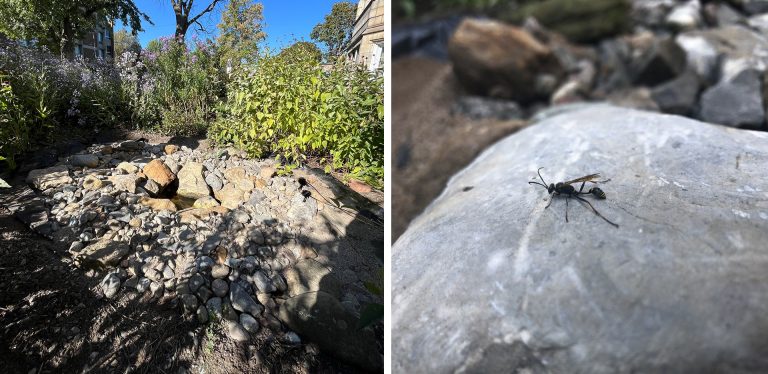
A small pond tucked into a garden on the Loyola Campus is already attracting some new visitors.
Created as a new source of water, the shallow pond includes rocks and other landing spots within an existing pollinator garden. Native ground-nesting bees have since been spotted using the area, with some appearing to prepare nesting sites for the winter.
The project is part of a broader range of biodiversity and engagement initiatives that helped Concordia earn its third consecutive Living Campus certification from World Wildlife Fund Canada (WWF-Canada).
The annual certification recognizes post-secondary institutions that take meaningful action to protect nature, advance sustainability and engage their campus communities. Concordia is one of seven Canadian post-secondary institutions to earn the certification this year.
“The pollinator pond responds to something we saw firsthand during recent dry periods,” says Jackie Martin, ecological specialist in the Office of Sustainability. “We already had flowers and grasses providing food and habitat, but pollinators also need access to water.”
Student staff member C.J. Milne led the pond’s construction.
Expanding biodiversity efforts
In confirming the certification, WWF-Canada highlighted Concordia’s BioBlitz event, as well as improvements to ecological garden sites and broader efforts to connect students with nature through hands-on learning.
At the Sir George Williams Campus, ornamental gardens at the entrances to annexes on Mackay and Bishop streets have been transformed into ecological gardens featuring native perennial plants that support insects throughout the growing season.
The redesigned terrace of the Henry F. Hall (H) Building also incorporates native plantings, with labels identifying many of the plants to help visitors learn about them.
“Creating habitats is only one part of the work,” Martin says. “We also want to give people opportunities to get involved, learn about biodiversity and contribute to what we know about our campuses.”
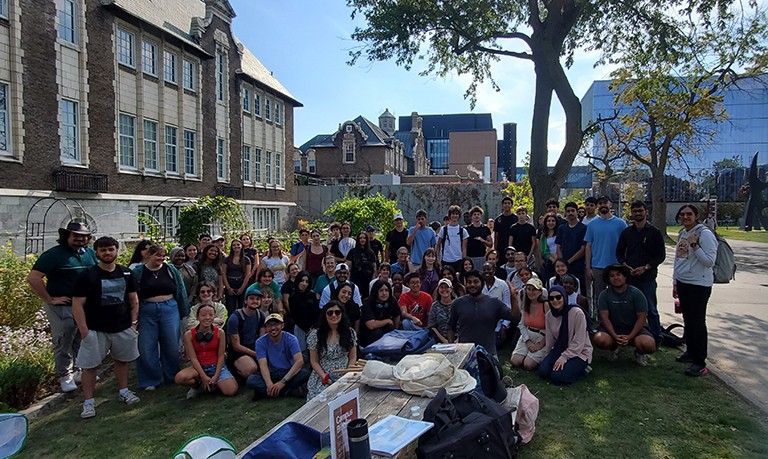
That approach was on display at the Loyola Campus BioBlitz in 2025, which brought together more than 165 participants, most of them students, to identify pollinators and document their observations through iNaturalist.
Habitat protection, learning and community involvement are also reflected in Concordia’s recently launched Sustainability Action Plan 2026–30, which makes biodiversity one of seven stream topics.
Planned actions include developing an ecological management plan for campus grounds and establishing a publicly accessible, accredited campus arboretum.
“Earning the certification for a third year shows that this isn’t about a single project,” Martin says. “It connects us with a network of post-secondary institutions that are learning from one another, sharing ideas and finding new ways to improve biodiversity on their campuses.”
Learn more about sustainability at Concordia.