

ARTH 450 Advanced Seminar in the History of Art and Architecture: Modern Art History and Sensory Studies
- Instructor: Dr. Randolph Jordan
This course explores the intersections between sound, art, and architecture framed by the field of sound ecology. One of the main objectives of the course is to challenge the vision-centric orientation of Western society in general and of art history in particular, which traditionally focuses on visual modes of representation as driven by a culture that privileges the sense of sight over all others. And so we ask: how might attention to senses other than sight reveal aspects of the visual arts otherwise left unseen? Our emphasis will be on the sense of hearing with sound ecology as our guide. We begin with an introduction to the conceptual framework of sound ecology through the field’s most prominent artistic practice, soundscape composition, which will be positioned within the broader context of eco-art. We will then move to art forms that test the boundaries between sensory demarcations, with particular attention to the transmedial genre of visual music and synaesthetic approaches to performance art and installation works. We will also consider cross-cultural differences in concepts of sound, listening, and art, with particular emphasis on the academic and creative practices of First Nations and Inuit peoples. The course concludes with a module on the role of sound in our architectural spaces and urban geographies. Here we will explore multimodal works of artists like Stan Douglas who grapple with the aesthetic and political particularities of specific locales, such as his hometown of Vancouver, BC, also the birthplace of sound ecology. We end by examining how sound ecology’s framework for studying urban sound environments can enrich our understanding of artworks across media that engage with these same environments. Course materials will draw from the interdisciplinary field of Sound Studies along with texts from Art History, Indigenous Studies, and a variety of essays that deal with the particular artworks to be examined across the semester. We will also engage in experiential learning activities, such as soundwalking and sensory deprivation exercises, and assignments will place a heavy emphasis on relating personal experience to academic concepts (and vice-versa).
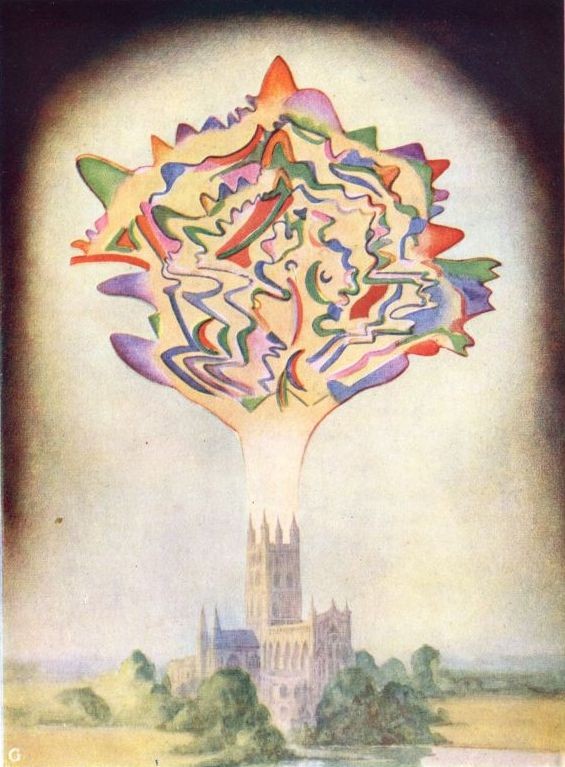 Visual representation of the music of Gounod (from the book Thought-Forms by Annie Besant and C. W. Leadbeater, 1901)