

ARTH 635 Art and Art History in Canada and Quebec: Museums and Protests
- Instructor: Dr. Gabby Moser
This course examines the relationship between art, politics and activism within museums and galleries in the territories now known as Canada. With a focus on museums as sites of social organizing, labour action, protest, and boycott, the course surveys moments and places across the twentieth century where artists, curators and publics intervened in the daily functioning of the art institution—through exhibitions, performances, interventions, or other discursive events—to make claims for rights, sovereignty and belonging. Case studies include the intersections of modernism and fascism in the 1920s and 30s; Cold War ideologies and nationalist expansion in the 1950s and 60s; feminist cultures of protest in the 1960s and 70s; the so-called “Quiet Revolution” of the Québecois sovereignty movement in the 1960s and 1970s; queer and AIDS activism in the 1980s and 90s; Black arts organizing in the 1990s and 2000s; public art and community art; Indigenous survivance and resistance; disability arts and activism; and ongoing acts of censorship by corporate interests. By examining these key moments across Canada, the seminar will examine how art clarifies and complicates our understanding of politics and ask why the museum is seen as a critical site in these struggles over the telling of history. A key question will be how artists respond to and intervene in historical moments governed by forces of modernity, settler colonialism, capitalism, fascism, socialism, nationalism, globalization, social and economic injustice, and urban gentrification.
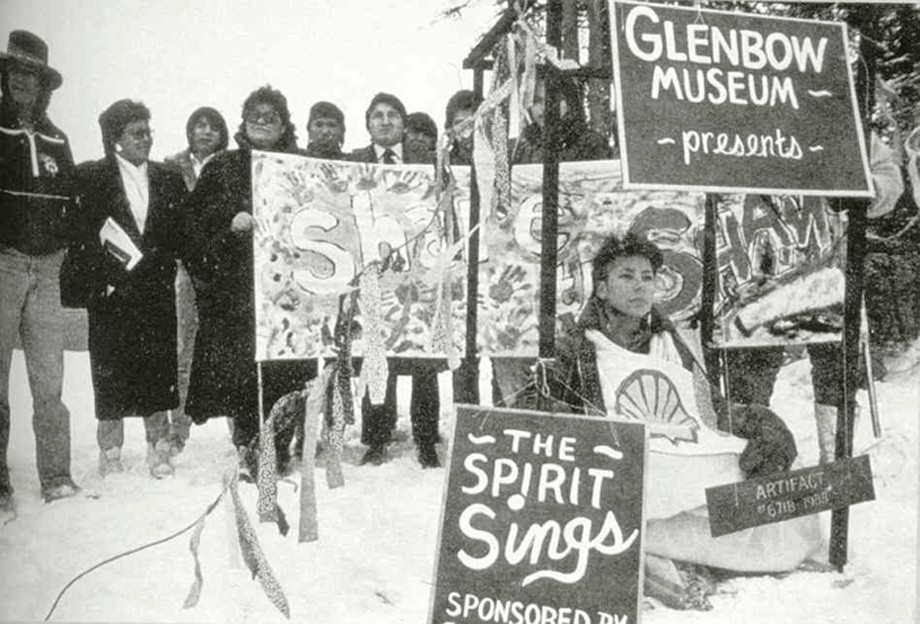 Image caption: Rebecca Belmore, Artifact #671B, 1988, Outside the Thunder Bay Art Gallery, Thunder Bay, ON