The Earth We Carry
September 8 – November 20, 2026
This exhibition brings together six Indigenous artists whose practices move across land, body, and technology, treating these not as separate spheres but as interconnected domains. We are made of earth, and we are makers of technology. We carry the earth within us and bear a responsibility for the technologies produced from its resources.
Events
Exhibition text
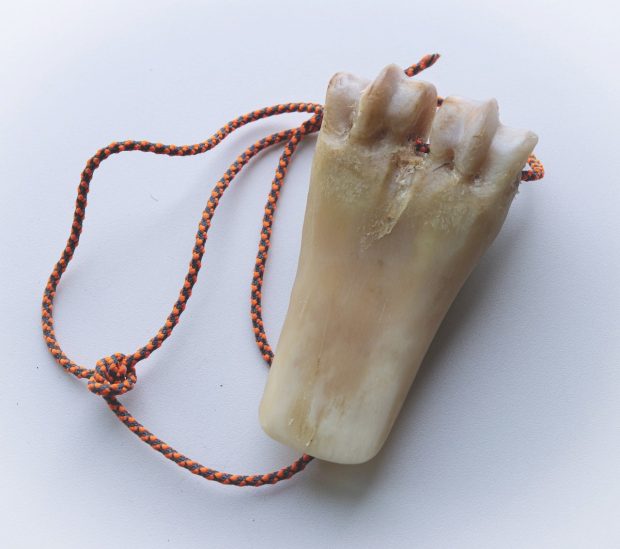
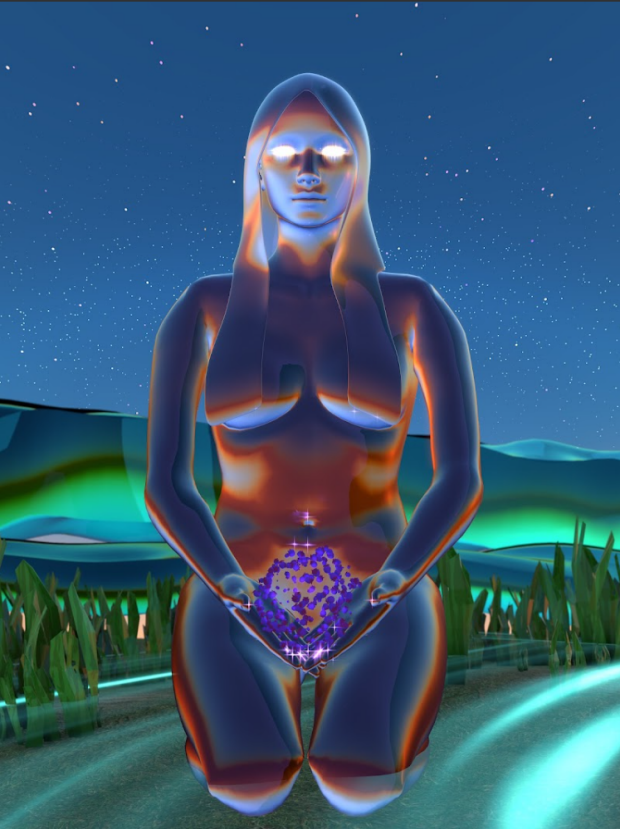
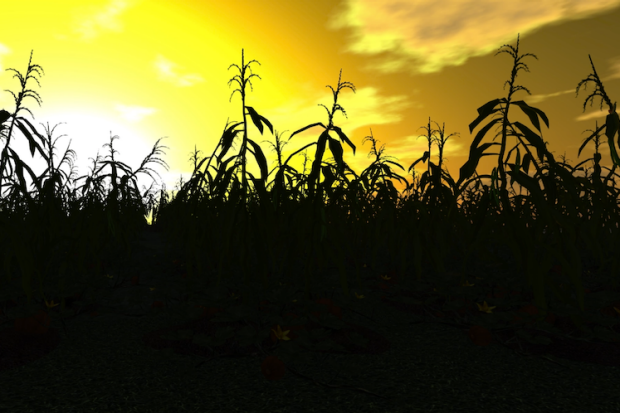
The Earth We Carry brings together six Indigenous artists whose practices move across land, body, and technology, treating these not as separate spheres but as interconnected domains. Western and colonial ways of thinking have often positioned nature and technology as opposites: nature as something outside of us, and technology as solely a product of human invention. This exhibition unsettles this division, recognizing that humans are constituted through both. We carry the earth within us and bear a responsibility for the technologies derived from its resources.
The title draws inspiration from Joy Harjo’s 1983 poem “Remember,” which calls us to recognize that we are not distinct from the ground beneath us. We are composed of the same matter, minerals, water, and stardust as the Earth. Likewise, our phones, circuits, and satellites are constructed from extracted metals and earthly elements. To carry technology is therefore also to carry transformed land.
This exhibition also challenges colonial narratives that situate Indigenous peoples as outside of modernity. Indigenous communities have long developed and adapted technologies and systems of transmitting, language, stories and ecological knowledges in relation to their environments well before colonization. Within this context, technology is not synonymous with industrialization, but it is understood as applied knowledge, innovation, and relational practice with the Earth. The artists in this exhibition extend these approaches into land-based, digital, and speculative domains, engaging technologies through Indigenous epistemologies and relationships grounded in respect, reciprocity, and accountability to place.
Indigenous understandings of the Earth encompass more than land as a physical or bounded space; they include dimensions of time, space, language, and spirituality. The works in this exhibition engage these interconnected relationships, tracing kinship and exchange among humans and more-than-human beings, between digital and material environments, and across generations. Collectively, they explore how knowledge is carried, transformed, and renewed, and examine how technologies, whether inherited, hand-crafted, digital, or speculative, can participate in ongoing practices of relation, responsibility, and care. The exhibition invites us to reflect on our understanding of technology, its origins, its impacts, and the relationships it carries.
This exhibition comes together through the networks of relations, research, and collaboration made possible within the ecosystem of the land it occupies. The artists and curator are all Concordia alumni and have been involved with the Indigenous Futures Research Centre (IFRC), contributing to a sustained history of Indigenous research, knowledge sharing, and community-making at the university. The exhibition is also informed by the FOFA Gallery’s sustainability initiative, which has guided efforts to consider the environmental impact of its production, including its digital and carbon footprints. Collaborations with Concordia research communities and partners, including the Milieux Institute for Art and Technology, Voltage, the Centre for Digital Arts, the Textiles and Materiality Lab, and the Leonard and Bina Ellen Art Gallery, have supported this approach through shared equipment, space, and resources.
- Hanss Lujan Torres, curator
About the curator
Hanss Lujan Torres is a writer, curator, and researcher of Quechua and Spanish descent (Mestizo) from Cusco, Peru, currently based in Tiohtià:ke (Montreal). His work engages with object relationalities, alternative temporalities, and future imaginaries. He holds a Bachelor of Fine Arts with a Minor in Art History and Visual Culture from the University of British Columbia Okanagan, and a Master of Arts in Art History from Concordia University. His writing and curatorial practice explore archival encounters, queer affects, and the interrelations between technology and the environment. Hanss has written for several exhibition catalogues and arts publications and has participated in writing and research residencies, including Esse Magazine, Artexte, and Celine Bureau.
Hanss has worked with several arts organizations, including serving as President of the Alternator Centre for Contemporary Art, Curatorial Assistant at the Kelowna Art Gallery, and Curatorial Intern at the Leonard and Bina Ellen Art Gallery. He currently serves as the Research Coordinator for the Indigenous Futures Research Centre (IFRC) at Concordia University.
Acknowledgements
The Earth We Carry was made possible through the support of: