

Amanda Lickers
Resource as Relative, Untitled 1 (Porcupine Quills), Untitled 2 (Moose Fray)
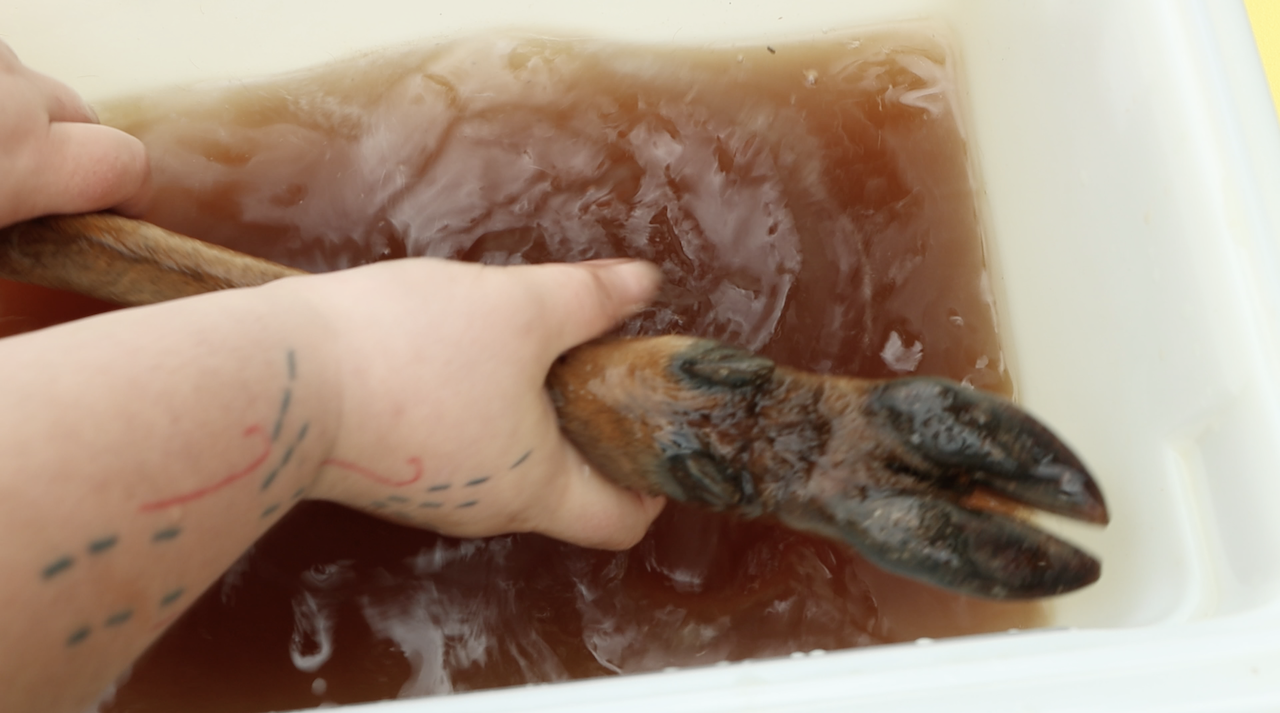 Still image from the short video SPLASH, 2026. The artist is cleaning deer legs to process and skin them in the City.
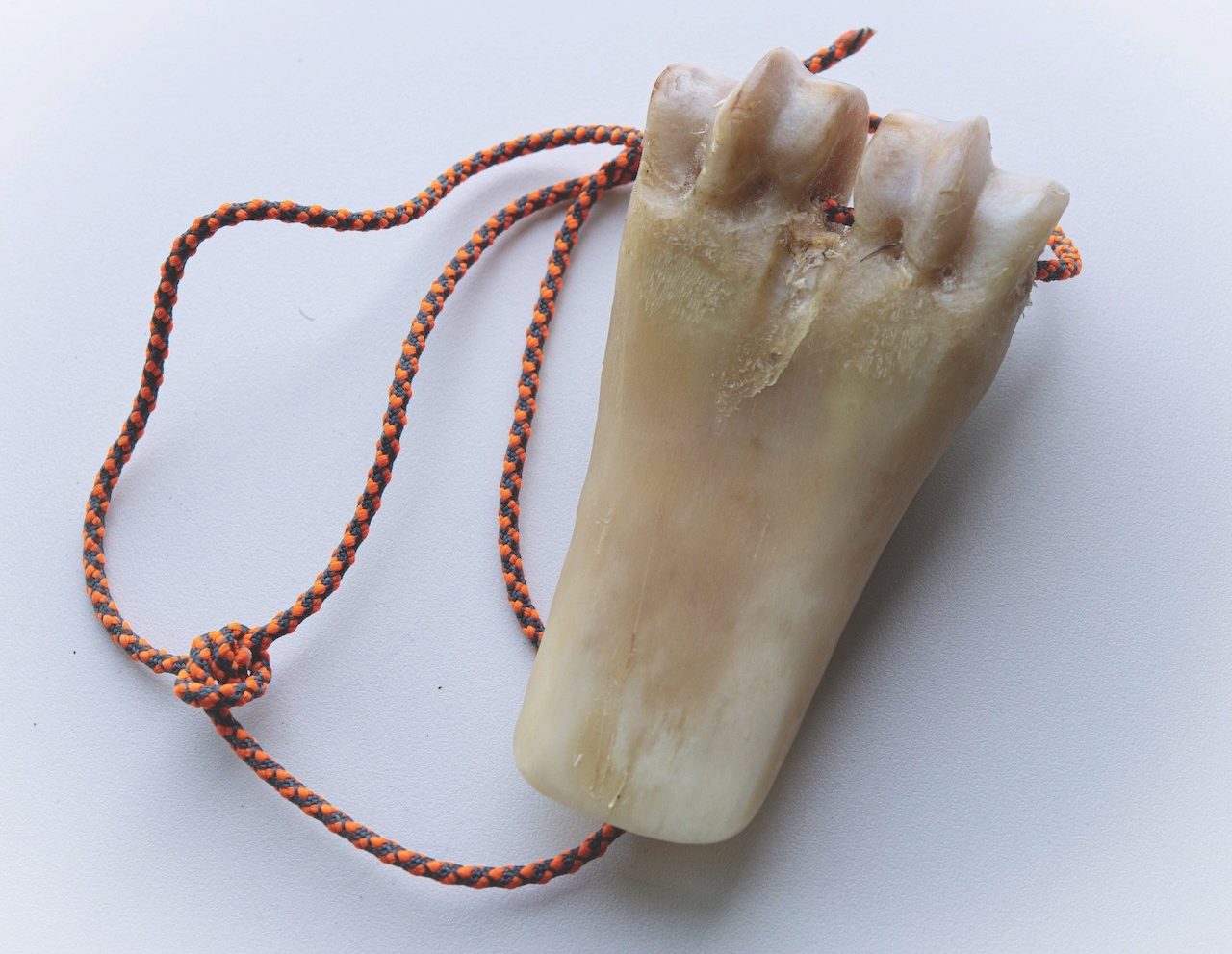
Hand honed moose bone tool used for softening hides. Created in fall 2024 at Banff Centre for Arts inaugural Hide Tanning & Parfleche Residency with support of Buffalo Peoples Arts Institute.
About the project
The installation, Resource as Relative, traces the processing of deer and moose hides within urban environments, bringing land-based practices back into spaces and contexts shared by colonial histories. As viewers move through the installation, they encounter both the processes involved in working hides and structures that mediate the transmission of land-based knowledge.
A large-scale image of intermodal containers used by the CN railway and now located adjacent Bâtiment 7 grounds the work in the urban environment. Scenes captured at Batiment 7 and the Canadian Centre for Architecture document different stages of the hide-tanning process, particularly brain tanning, a technique that utilizes materials sourced from the animal. Alongside the videos is a hide-softening tool made by the artist from moose bone.
According to Lickers, hide tanning constitutes a form of knowledge acquired through sustained, embodied engagement. While certain aspects of the process can be documented, the knowledge cannot be separated from the experience of doing it. The knowledge develops through mentorship, collective work, manual practice, and muscle memory. Such knowledge is not simply acquired through observation. It is attained through active participation, commitment, and relational engagement.
The installation’s curtains extend a gesture first developed by the artist during an earlier exhibition at the Centre for Canadian Architecture, where she draped a sculptural bust of a 19th-century rail Baron at the entrance of her exhibition with sheer red fabric. In this context, the curtains establish a physical threshold that viewers must move through. They symbolize the process of acquiring knowledge, navigating social and material barriers, and earning access to what is revealed on the other side.
Lickers created two sets of embroidered curtains for this installation. The first set features sumac, a plant that has held significance throughout the artist’s life. Sumac serves as a medicinal resource with nutritional and ecological benefits, thriving in disturbed and changing environments. Its ability to grow in degraded soils serves as a metaphor of resilience and renewal. The plant’s rhizomatic root systems also offer an analogy for community, relationship, and belonging.
The second set of curtains depicts the temporary safety fencing commonly found around construction sites in urban environments. These curtains also function as a form of safeguarding and protection, establishing boundaries around knowledge that is not freely available.
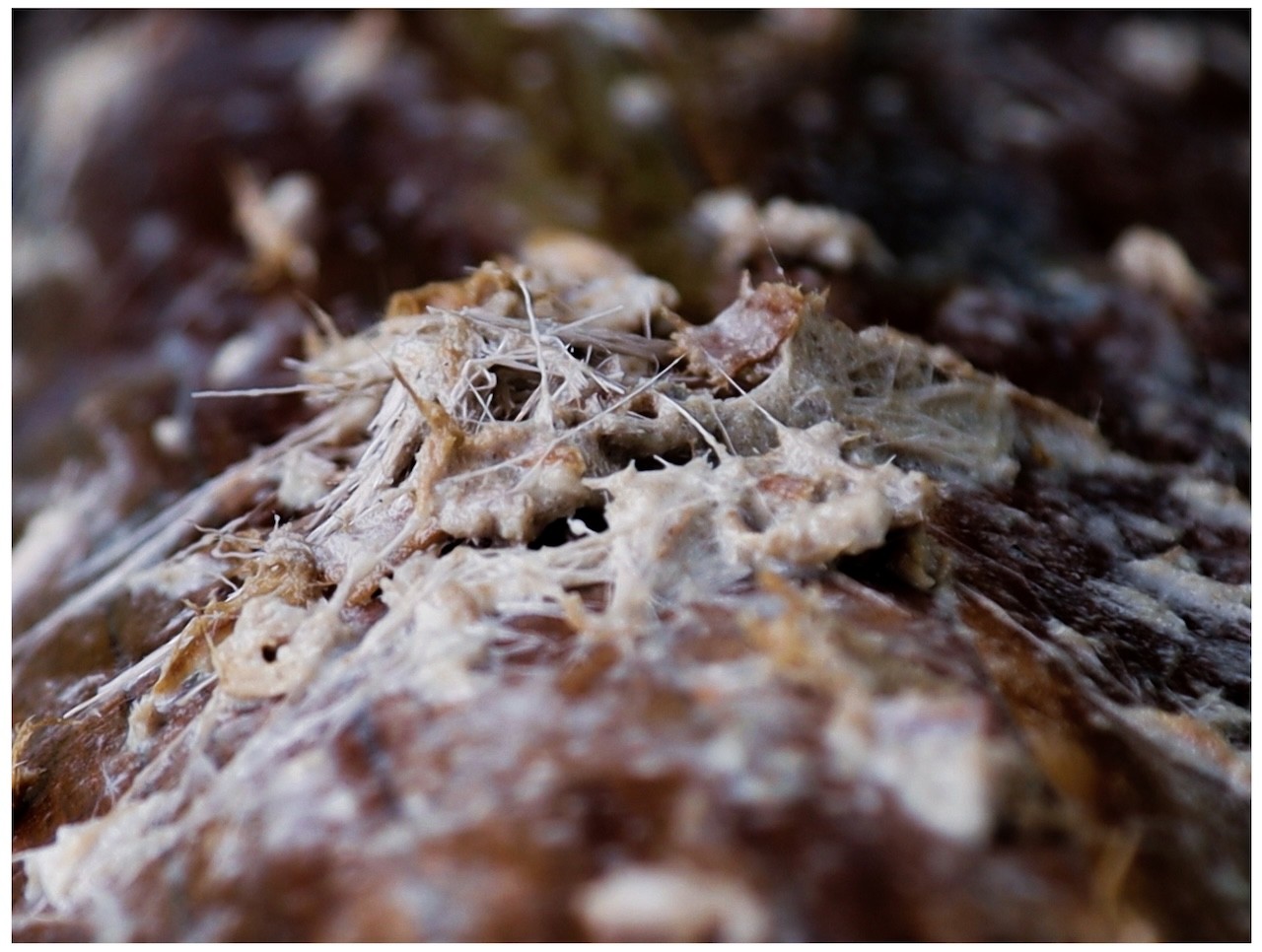 Untitled 2 (Moose Fray), 2026. Brushed aluminum print, 18" x 24".
These photographs were taken during the Buckskin Babes Urban Moose Hide Tanning Camps, located at Bâtiment 7, a community space in Montreal’s Point Saint Charles neighbourhood, where the collective is situated. They document parts of the process of working with animal materials, including washing porcupine quills and the remnants of materials scrapped off a tool used to process a moose.
For Haudenosaunee peoples, porcupine quills are among the earliest forms of embellishment and pattern work, later adapted to contemporary beadwork, and have long been used as a material for adornment and storytelling. Practices such as quillwork, tufting, sewing, and beading are integral to Indigenous artistic traditions, facilitating the transmission of knowledges and relationships carried across generations.
The fray in the second image consists of accumulated animal fibres, follicles, and fats produced during the moose hide tanning process. Instead of being discarded as waste, these materials are returned to the land, thereby contributing nutrients back to the environment. In this gesture, the work highlights principles of reciprocity, respect, relationality, and care.
Biography
Amanda Lickers (Seneca of Six Nations of the Grand River, ON based in Tiohtià:ke/Montréal, Canada) is an Haudenosaunee artist, designer and curator whose work explores the interconnected relationship of land-body sovereignty. Her work—which blends visual arts, installation and material cultures—has been exhibited across Canada and internationally. Lickers’ provocative aesthetic is rooted in relational consent-building, confronting dominant norms of consumption and access. Amanda’s lens-based practice investigates the place-keeping power of filmmaking, highlighting Indigenous technologies’ role in cultivating land-based futures. As a visitor experience designer, Lickers specializes in collaborative design that embraces the generative relationship between culture and the built environment.
Aknowledgements
- Conseil des arts des Montréal (CAM).
- Banff Centre for the Arts and Creativity and Buffalo Peoples Arts Institute.
- Indigenous Futures Research Centre and Milieux Institute.
- FOFA Gallery and their Installation Team.
- Tajima Embroidery technician: Genevieve Moisan.
- Post Image Lab technicians: Tarcisio Cataldi and Julia Fortin.
- Special thanks to Sébastien Larivière and the Canadian Centre for Architecture.
- Generous support and encouragement of Curator Hanss Lujan Torres.