

Skawennati
A Day in The Life of The Three Sisters
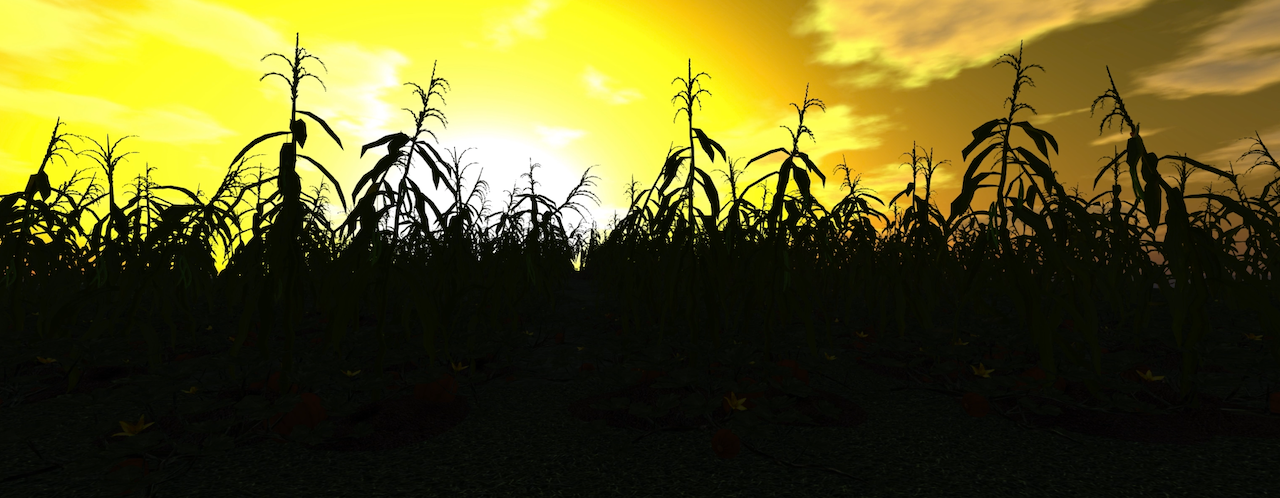 A Day in the Life of the Three Sisters, 2023, machinima, 6’30. Music by Dioganhdih
About the project
Skawennati’s practice largely explores Indigenous presence and futurity through virtual worlds, digital storytelling, and speculative narratives that imagine Indigenous Peoples thriving on their own terms.
This machinima unfolds as a time-lapse sequence from dawn to dusk, depicting the Three Sisters, Corn, Beans, and Squash, cultivated together in a garden located in cyberspace. By compressing a full day into minutes, the work draws attention to cycles of light, growth, and interdependence. This virtual garden serves as a site for considering how Indigenous agricultural practices can inform sustainable relationships among people, plants, land, and one another.
The Three Sisters are traditionally cultivated together through companion planting, an agricultural method used by many Indigenous nations across Turtle Island. In contrast to industrial monoculture, which grows single crops in isolation, companion or polyculture planting acknowledges and utilizes the mutual support developed by plants. Corn, the eldest sister, is planted first and provides a tall, sturdy structure for Beans and her vines to climb. Beans also contributes nitrogen to the soil; while Squash, the youngest sister, spreads across the ground, with her broad leaves helping retain moisture, suppress weeds, and protect the soil. Each sister fulfils a distinct role, yet their collective strength emerges from their relationships.
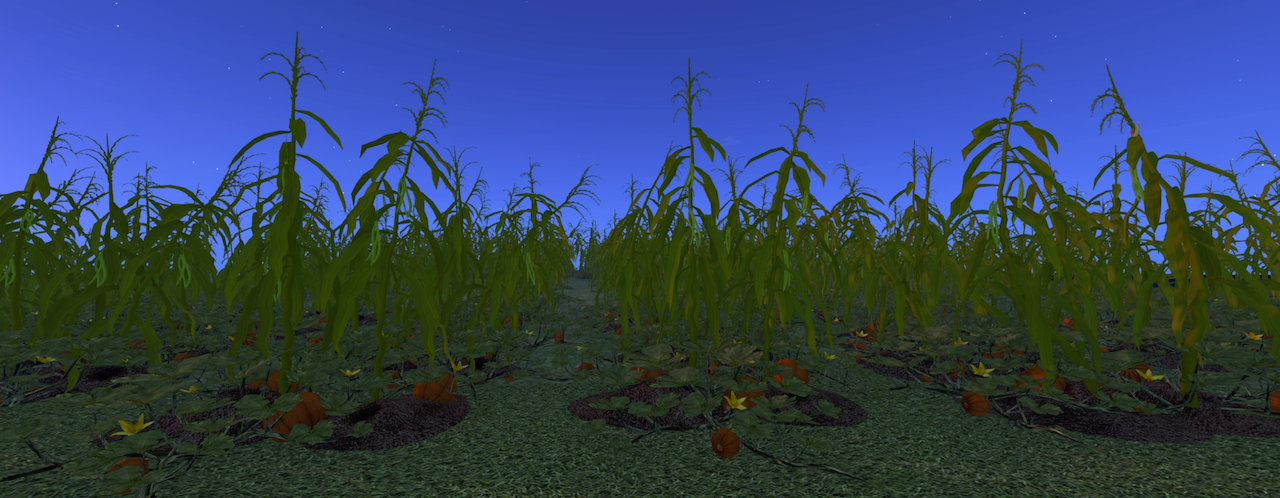 A Day in the Life of the Three Sisters, 2023, machinima.
The Three Sisters represent more than crops; they serve as teachers. Their interdependence exemplifies a model of mutual aid, reciprocity, regeneration, and collective survival. These principles take on renewed urgency in the context of environmental precarity and the ongoing effects of industrial agriculture.
Accompanying the machinima are locally sourced dried Corn, Beans, and Squash. Rather than positioning the digital garden and material elements as separate or opposing realms, the work brings them into relation. The garden in cyberspace is materially grounded in technologies, infrastructures, energy, and land, while the plants carry histories of cultivation, knowledge, care and place. Together, they suggest that both are entangled with the material and relational worlds we inhabit.
For this exhibition, the artist has agreed to present the machinima on a screen and power the work with solar energy. The screen is positioned at an angle to resemble a solar panel.
Biography
Skawennati is a visual artist. Her machinimas and machinimagraphs (movies and still images made in virtual environments), textiles and sculpture have been presented internationally and collected by the National Gallery of Canada, the Musée d’art contemporain de Montreal and the Thoma Foundation, among others.
Recipient of a 2022 Hewlett 50 Arts Commissions Grant and an Honorary Doctorate from the Minneapolis College of Art and Design, she is also a founding board member of daphne, Montreal’s first Indigenous artist-run center. She co-directs Aboriginal Territories in Cyberspace (AbTeC), a research-creation network at Concordia University. Originally from Kahnawà:ke, Skawennati resides in Montreal.