

New School of Performance course teaches students to build music tools with AI


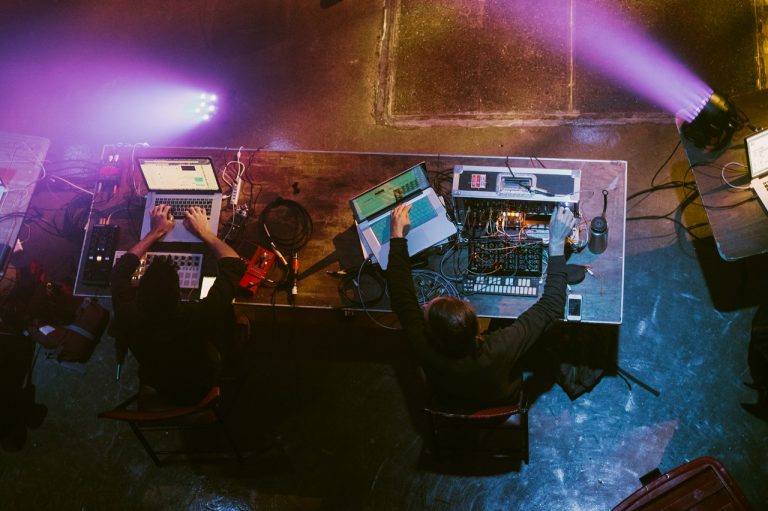
For Eldad Tsabary, professor and head of Music at Concordia’s School of Performance, AI has entered the arts as a tool, a threat and a promise — often all at once.
“It reflects our creative traditions and biases back to us while changing who can build the technologies through which art is made,” he says.
Beginning in September 2026, Tsabary will lead students in exploring this unsettled relationship through Vibe Coding (EAST 398/498), a new interdisciplinary course that places AI coding agents in their own hands — no programming experience required.
Students will learn to use coding agents to design and develop custom software for audio experimentation and music-making. The objective is to explore the technology as a collaborator while emphasizing artistic agency, authorship, ethics and critical inquiry, Tsabary says.
“It’s not an AI-created music course — it’s about using AI to build tools for you to make music,” he says. “It’s a bit like composing a piece and having other people play it. You have an idea of what you want to create, but you can’t play all the instruments, so you bring in a guitar player, a drummer, and their expertise. AI can serve you in that way, in terms of knowing how code works, how software and hardware actually work. You get to be the designer and make AI work for you.”
Tsabary notes that while some students may already be comfortable producing functional prototypes, the course begins where that first prototype ends. Vibe Coding will give students the tools to understand architecture and behaviour, test and debug their prototypes, develop them over time and remain accountable for the results.
Students will be supported in designing technologies that reflect their own artistic vision rather than relying on existing commercial tools. Projects could include digital instruments, interactive interfaces, live performance systems, audio effects, composition tools and experimental music software.
The central idea is to demystify how AI functions while taking a realistic approach to the environmental, ethical and economic risks associated with the technology. Students will be encouraged to join in class discussions, develop their critical thinking skills and take charge of their own learning.
“I’ve always sought ways to convince people to look a little more closely at AI, not because I’m trying to convert them, but because we need smart, ethical people to be involved with this,” he says. “We can’t ignore the real fears. But I think as a creator, you’re the only person who can be accountable. You have the ideas, you guide and choose, and you decide what is okay, what is not, what is aesthetically pleasing.”
While he acknowledges that courses like this one are relatively uncharted territory, he says universities have an important role to play as spaces for experimentation and research.
“One thing I’ve noticed is that as long as you share at the start of the course what you want to achieve, what you’re afraid of, and bring everybody into troubleshooting, then we are positioned with a shared goal. We need everybody’s brains to think about it.”
Vibe Coding (EAST 398/498) is now open for registration to students from across Concordia, subject to written permission from the School of Performance and available space. No coding experience is required.
Join Eldad Tsabary and Scott DeJong on September 15 for CTRL + AI: Playing with Intelligence, a free hybrid conversation exploring what games and persistent AI worlds can reveal about artificial intelligence, and about being human. Learn more and register.
Discover Concordia’s School of Performance.