

Volt-Age summit highlights people and partnerships driving Canada’s energy transition


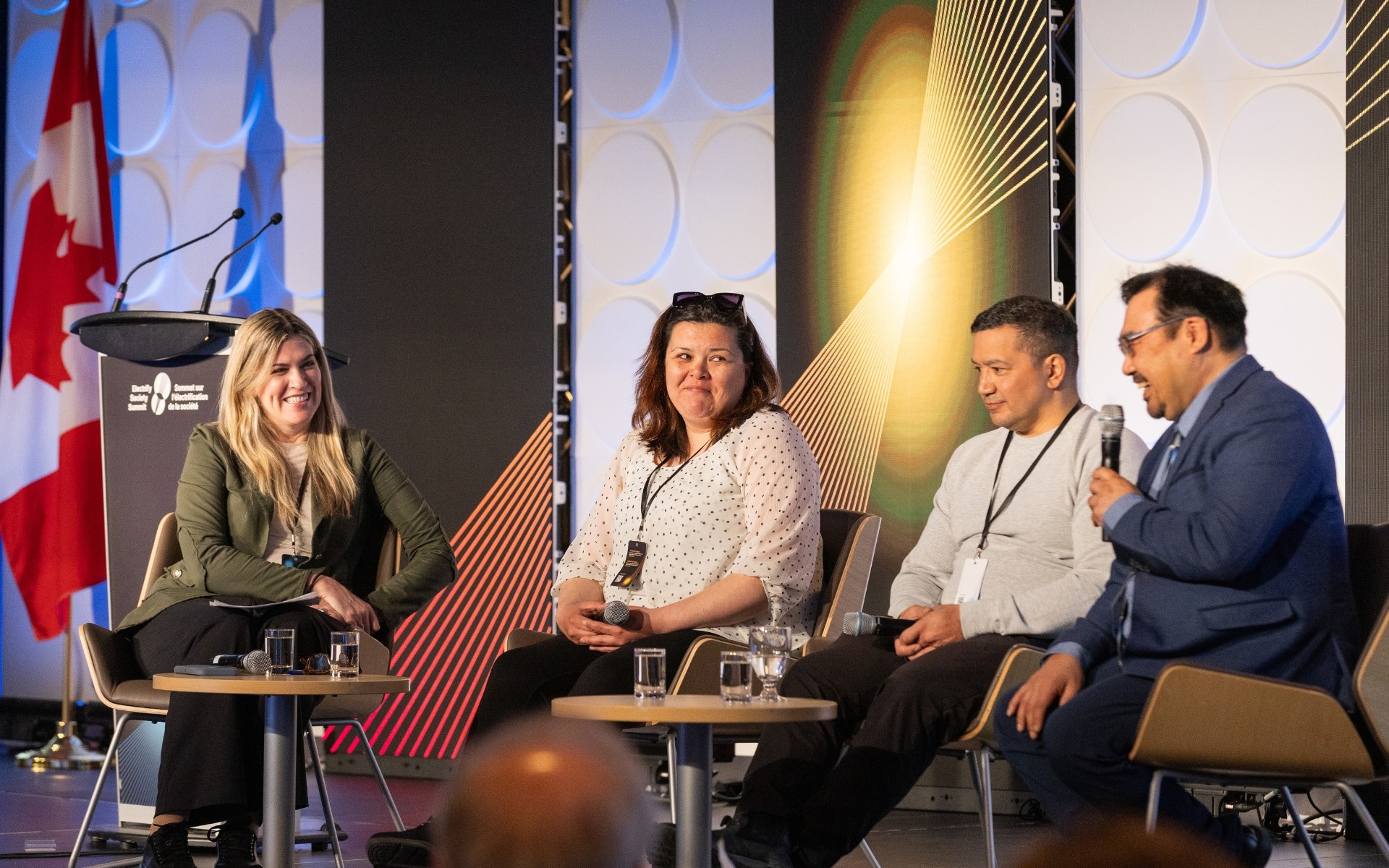 Speakers emphasized that Canada’s energy transition depends on turning innovation into action and building the workforce to support it.
Canada’s energy transition will depend as much on batteries, grids and emerging technologies as it will on the people capable of building, financing and scaling them.
That theme ran through the Electrify Society Summit, held May 5 and 6 at the Palais des congrès de Montréal. Across conversations on finance, infrastructure, research and Indigenous leadership, a consistent concern emerged: Canada needs more skilled workers and stronger collaboration across sectors to meet the pace of electrification.
For Volt-Age, that challenge is becoming central to its mission.
Building the workforce behind electrification
A recurring message from the summit was that Canada’s energy transition will depend not only on advancing new technologies, but on putting innovation into practice and building the workforce needed to support it.
The participation of Grégoire Baillargeon, President of BMO Quebec, underscored the growing role of finance in scaling electrification projects and the need for closer coordination between industry, researchers and investors.
For Volt-Age CEO Karim Zaghib, that coordination starts with people. To date, nearly 80 per cent of Volt-Age’s research funding supports graduate students, postdoctoral researchers and emerging talent working across electrification fields.
Beyond technical research training, Volt-Age offers a dedicated training program for trainees that prepares them for careers across academia, industry and the public sector through professional development and applied learning opportunities.
“Human capital is the backbone,” said Zaghib. “Volt-Age is an accelerator.”
That focus on training was evident throughout the summit, where students and early-career researchers engaged directly with leading figures in battery science and energy systems, including Jeff Dahn, Professor of Physics and Atmospheric Science at Dalhousie University.
Zaghib also emphasized the importance of deeper ties between universities, industry and Indigenous communities as Canada builds the workforce needed for the transition ahead.
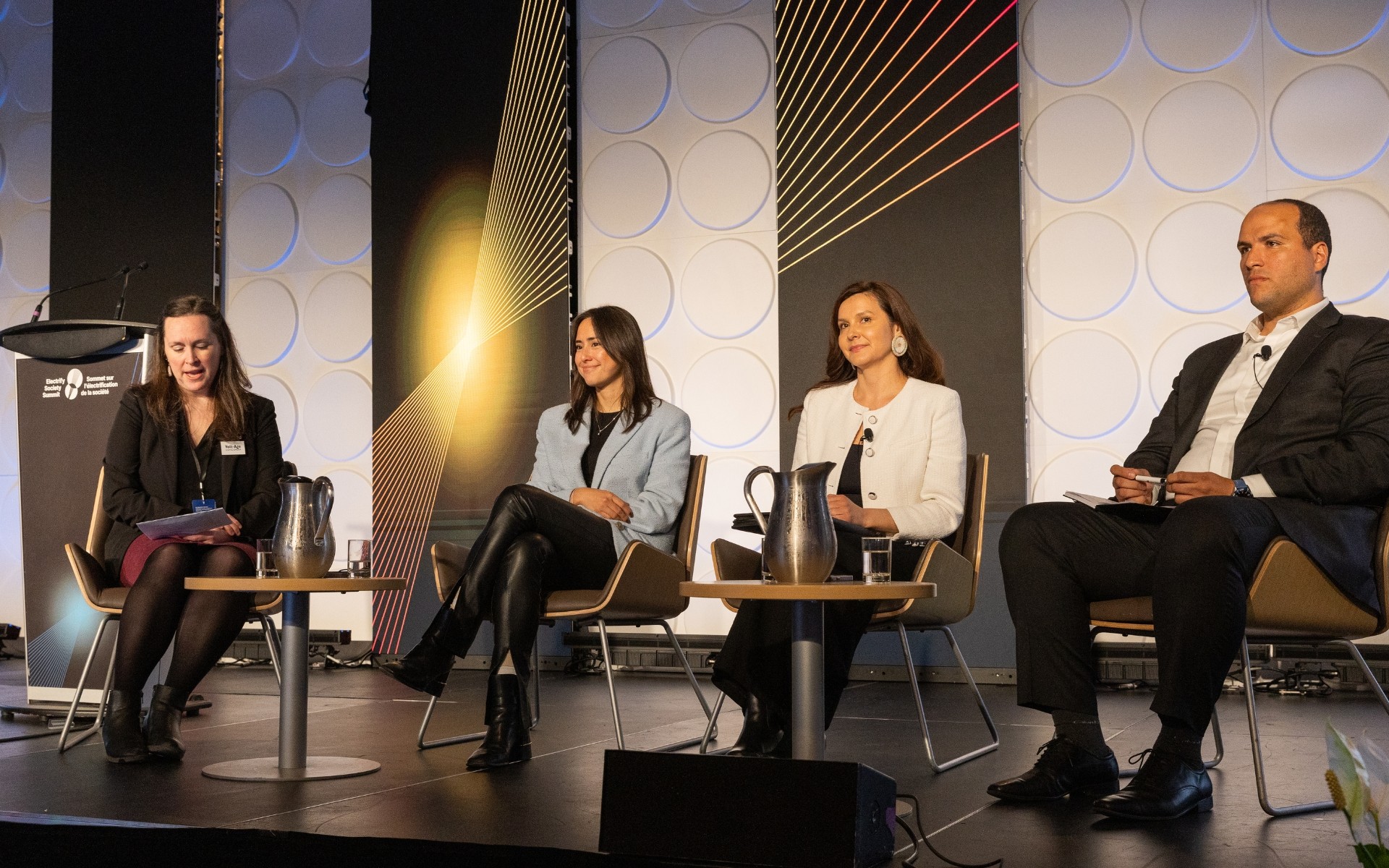 Panel on Harmonizing Science, Scale and Sovereignty. From left to right: Jennifer Garard, Vaitea Cowan, Melina Laboucan-Massimo and Ahmed Hanafy.
Indigenous leadership and energy sovereignty
Indigenous leadership and energy sovereignty were central to many of the summit’s discussions.
In a panel moderated by Jennifer Garard, Director of Engagement, Living Labs and EDI at Volt-Age, speakers explored how energy projects can be built in partnership with communities rather than imposed on them.
Melina Laboucan-Massimo, Founder of Sacred Earth, co-founder of Indigenous Climate Action and member of the Volt-Age Advisory Board, cautioned against repeating past approaches to resource development.
“We really need to have these hard, honest conversations about what we don’t want to replicate,” she said.
The discussion continued on day two with a panel and documentary screening led by Aphrodite Salas, Associate Professor in the Department of Journalism at Concordia and Co-leader of Theme 3 at Volt-Age, alongside Sarah-Lisa Kasudluak, Vice President of the Pituvik Landholding Corporation in Inukjuak; Tommy Palliser, Executive Director of the Nunavik Marine Region Wildlife Board; and Eric Atagotaaluk, Director of Pituvik Sarvaq Energie Inc.
The documentary ᑰᒃ ᑰᑦᑐᖅ The Flowing River, produced in partnership with community research partners, highlighted how an Inuit-led energy initiative in Nunavik is supporting cultural continuity, resilience and long-term well-being.
Across sessions, a common thread emerged: electrification is not only a technical shift, but a social and institutional one shaped by training, trust and collaboration. This topic particularly resonated with guest of honour Henk Rogers, co-founder of the game Tetris and founder of Blue Planet Alliance, an initiative that also leads net-zero efforts on islands in Hawaiʻi.
For Volt-Age, the takeaway was clear. Canada’s energy transition will be determined as much by people and partnerships as by technological progress.
Watch the documentary ᑰᒃ ᑰᑦᑐᖅ The Flowing River.