

William “Bill” Akin (1936–2025): ‘Maybe I’m a scholar after all’


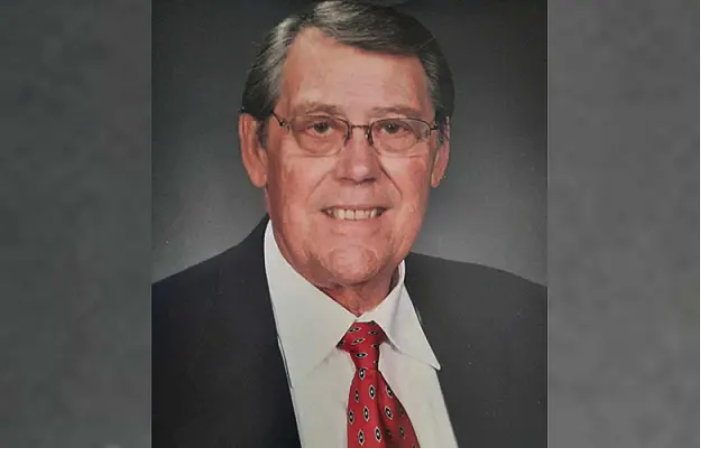 William “Bill” Akin | Photos courtesy of Ursinus College
William “Bill” Akin, former Concordia professor and administrator and one of the Faculty of Arts and Science‘s founding deans, passed away in Collegeville, Pennsylvania, on June 25, 2025.
The American-born Akin’s field of study was United States history. He came to Montreal in 1969 as an assistant professor in the Department of History at Loyola College, one of Concordia’s founding institutions, and stayed until he returned stateside 10 years later.
In his decade at the university, Akin rose through the administrative ranks first at Loyola and then at Concordia. In 1971, just two years after arriving, he became chair of Loyola’s history department, remaining in the post for five years. He then served as assistant dean of Loyola’s Faculty of Arts and Science from 1975 to 1977.
Though Concordia opened its doors in fall 1974 after Sir George Williams and Loyola merged, it took a few years to fully integrate the departments and faculties. The former institutions’ arts and science faculties remained separate until they officially came together in 1977.
The newly established faculty was split into three academic divisions and one division for colleges and small units, led by four deans who reported to the vice-rector academic (arts and science), Monsignor Russell Breen. Akin became the first dean of Division 1 (humanities).
He held that position for two years before leaving to become academic vice-president and dean of Ursinus College, a liberal arts college in Collegeville.
Akin spoke to the university’s newspaper, The Thursday Report, at the time of his Concordia departure in 1979.
“When I became dean, I set out goals. I accomplished the goals,” he said. “I think that I can walk away now, because I accomplished what I set out to do.”
Among the achievements Akin cited were integrating the academic departments and working with provost Robert Wall to get the new Liberal Arts College, Simone de Beauvoir Institute, Science College, School of Community and Public Affairs and Lonergan University College up and running.
History and baseball
Born in Chambers County, Alabama, Akin spent two years in the U.S. army before earning his BA (1961) and MA (1963) from the University of Maryland, College Park. He completed his PhD at the University of Rochester in New York in 1970 while working at Loyola.
He turned his PhD thesis into a book, Technocracy and the American Dream: The Technocrat Movement 1900–1941 (University of California Press), published in 1977.
At Ursinus College, Akin served as academic vice-president and dean from his arrival until his retirement in 1995. But he wasn’t finished yet: the following year, he took over as the school’s athletic director, leading the athletics program until he stepped down in 2002.
Yet he still kept busy.
In addition to U.S. history, Akin had a keen interest in baseball. After leaving Ursinus, he wrote three books on the subject, all published by McFarland: West Virginia Baseball: A History, 1965–2000 (2006), The Middle Atlantic League, 1925–1952 (2015), and American Legion Baseball: A History, 1924–2020 (2021).
Among his other accolades, Akin received an honorary doctorate from Tohoku Gakuin University, Sendai, Japan.
Remembering Bill
Although Akin left Concordia and Montreal more than 45 years ago, several of his former colleagues remained in touch with him.
Don Taddeo, BA 67, befriended Akin when they both worked in Monsignor Breen’s office in the mid-1970s. At the time, Akin was assistant dean of the Loyola Faculty of Arts and Science and Taddeo was Monsignor Breen’s executive assistant.
“Bill and I would get together for lunch once a week, sometimes twice a week. I never knew he was born in Alabama, but he certainly had his Southern drawl,” Taddeo recalls.
Taddeo held several positions at Concordia over 25 years, including dean of what is now the Gina Cody School of Engineering and Computer Science. Most recently, he was assistant to the president of planning and development at Loyola High School in Montreal before retiring last year.
“After Akin resigned, I went down to see him once at Ursinus, and he was very much in his element,” Taddeo says. “I think he always wanted to be dean of a small liberal arts college.”
Taddeo and Akin continued to exchanged Christmas cards every year.
“That’s how I found out about his passing,” Taddeo says. “I got a Christmas card from his wife, Libby, a few weeks ago. She wrote, ‘In case you haven’t heard, Bill passed away last June.’”
Robert Tittler, Concordia distinguished professor emeritus of history, arrived at Loyola’s history department the same year as Akin. Like Akin, Tittler was from the U.S. — which was the case for “about 50 per cent of the department,” he reports.
The same was true for many of the university’s departments. The surge in enrolment due to the influx of the Baby Boomers meant universities needed to quickly add classes and professors. And there weren't enough Canadian academics at the time to meet the demand for faculty positions.
“Bill was a bit older and brought a lot of experience,” Tittler says. “He also brought his interest in American baseball, which he soon used in his management style as department chair.”
For instance, Tittler recalls that Akin would take the department team to a Montreal Expos game at Jarry Park each year. Of fellow history department faculty member Mary Vipond, now professor emeritus, Tittler notes: “Those were the only games she ever went to.”
Tittler remembers Akin’s excitement at the strong reception Technocracy and the American Dream received when it was published in 1977. One fan was Buckminster Fuller, the high-profile architect and inventor whose futuristic designs included the U.S. Pavillion for Montreal’s Expo 67 (now the Biosphere Environment Museum at Parc Jean-Drapeau).
“Buckminster Fuller gave it a very good review,” Tittler reports. “And Bill said, ‘Maybe I’m a scholar after all.’”