

Community service showcase at the John Molson School links Concordians with local organizations


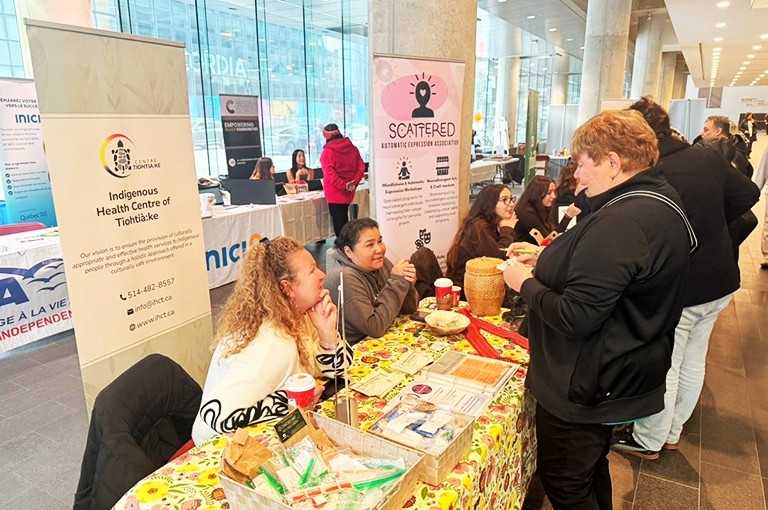
Grounded in long-term partnerships with community organizations, the Community Service Initiative (CSI) is built on a simple premise: “There are organizations who really need us, but who otherwise couldn’t afford to hire business consultants to advise and support them,” says Dave McKenzie, CSI founder and long-time Concordia staff member.
An initiative of the John Molson School of Business, CSI partners with not-for-profit organizations, social enterprises, small businesses and government agencies to offer mutually beneficial experiential learning opportunities for Concordians.
The annual CSI Showcase invites Concordia community members to make a difference through volunteering, internships, applied projects, governance positions and charitable giving.
This year, more than 35 Montreal community organizations and social-impact entrepreneurs gathered to join workshops and share expertise. By emphasizing this kind of campus-community partnership, McKenzie says, CSI creates reciprocal value for students and community organizations.
“We bring subject matter experts into the classroom, and they contribute to case studies that are used in teaching and research for publication,” McKenzie explains. “We pull knowledge in, we create knowledge, and we create community.”
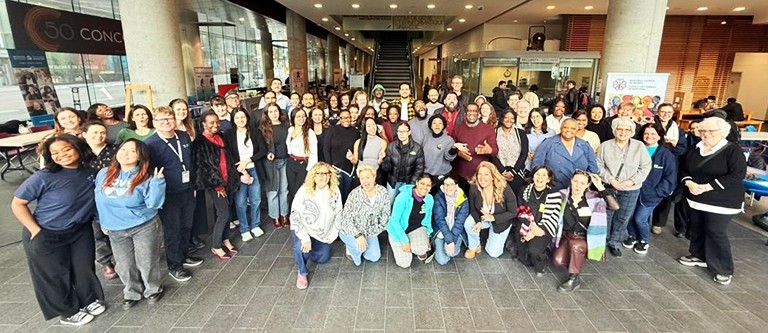 The annual CSI showcase included more than 35 partner organizations.
Learning through partnership
Marketing professor Michèle Paulin has witnessed how CSI helps students build empathy through exposure to the real world.
“It’s critical for students to open their hearts, expand their vision, and lend a hand,” she says.
This commitment to community service is integrated into Paulin’s Service Marketing course (MARK 451), where undergraduates learn in ways that can be truly transformative.
“By working with the community, students have the chance to review their approach and put their theory into practice,” she says.
Community organizations benefit as well. Many collaborate year-round through the CSI Community Roundtable, which brings together 25–30 executive directors to tackle shared challenges and connect with faculty and students.
For Kathryn Westoll, executive director of Geordie Theatre and roundtable member, CSI provided additional insight. As the organization prepared for strategic planning, two graduate students conducted an organizational audit to identify strengths and make recommendations.
Westoll says she appreciates the shared problem-solving and solidarity from CSI.
“We all have the same funding and staffing challenges,” she notes. “Learning how different organizations approach them is incredibly helpful.”
Scott Clyke, employability coordinator at DESTA Black Community Network, describes CSI as a key part of a growing partnership with Concordia. Beyond the initiative, DESTA has also built relationships with the SHIFT Research and Advocacy Program and the Black Perspectives Office.
“We’ve created real bridges in the university community. Students can volunteer, network with Black businesspeople and artists, and pursue their career and creative interests,” Clyke explains.
“People want to see themselves reflected and be surrounded by their own community — people who understand their realities.”
Putting business expertise to work
Daniel Boyer regularly offers guest lectures to John Molson students. As coordinator of community engagement at Welcome Hall Mission, he says students should be exposed to the realities of social issues.
“These are the thinkers of tomorrow. The sooner they understand these issues, the better,” he says.
Boyer also sees a natural fit between business students and non-profit organizations. He argues that smaller organizations need business expertise more than many people realize.
“The Mission runs similarly to a business in terms of efficiency and providing deliverables. That’s very attractive to business students,” he says.
“The John Molson School is uniquely positioned to provide the help these organizations need, whether in marketing, accounting or operations.”
Through CSI, students discover how business skills can drive social impact, while organizations gain partners committed to helping them thrive.
Learn more about the Community Service Initiative at Concordia's John Molson School of Business.