

What’s on your plate carries a history


A jar of preserved food sitting in the back of a family cupboard might not look like a work of art. But it can hold decades of family history.
That is one of the ideas at the heart of FOODWAYS, a group exhibition at Concordia’s Leonard & Bina Ellen Art Gallery. The show looks at food as a way of understanding culture, identity, community and the knowledge passed between generations.
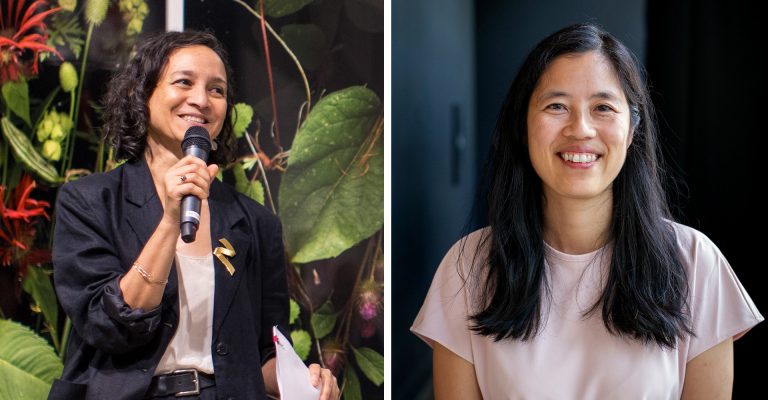
Curated by Zoë Chan, MA 08, and adapted for the Ellen in collaboration with Gallery director Nicole Burisch, MA 11, the exhibition was first presented at Richmond Art Gallery in 2024. It brings together photography, video, sculpture, installation, print and performance by 12 artists.
Chan, who studied art history at Concordia, has spent years exploring artists who use food to examine questions of identity, history and diaspora.
“Everybody's interested in food, you need food,” says Chan. “So, it's also a way to think beyond just the food itself to where it's coming from, how it's linked to geography, how it influences identity, what it says about a community.”
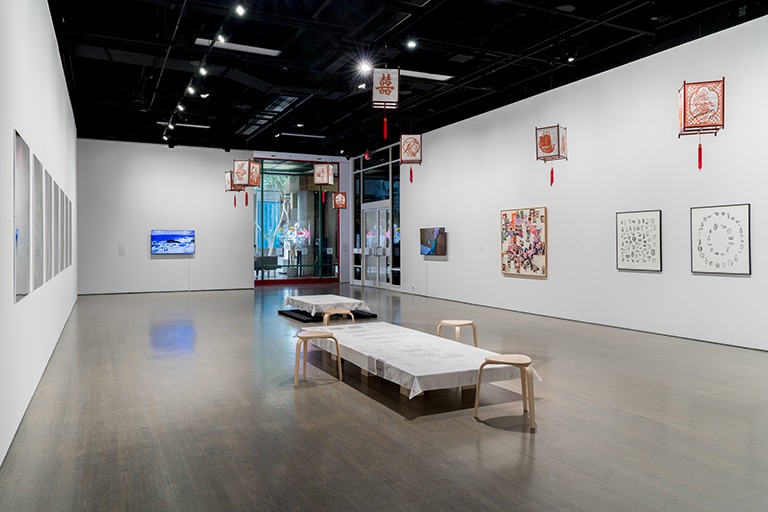 FOODWAYS exhibition view. | Photo by Jean-Michael Seminaro
Food tells stories
Montréal-based artist and curator Karen Tam, BFA 00, is one of the artists featured in the exhibition. Her work includes lanterns based on those that might be found decorating Chinese Canadian restaurants, inspired in part by her own family’s restaurant in Montréal’s east end.
When her parents began considering selling the restaurant, Tam started thinking about the role Chinese restaurants have played in Canadian communities and what they represented for generations of Chinese Canadians.
That history can be particularly visible in unexpected places, Chan says. Growing up in Alberta, she remembers finding Chinese Canadian restaurants in small towns across the province. Today, she sees how their presence is connected to the history of Chinese Canadians in the country, including the communities that formed around the construction of the railway.
The exhibition also explores the quieter forms of knowledge found in kitchens and family homes. For Chan, these everyday practices demonstrate how knowledge can be passed along without ever being formally taught.
“Cooking can involve chemistry, mathematics, creativity and physical skill, while recipes, techniques and ingredients carry memories from one generation to the next.”
Beyond the family table
The exhibition also looks beyond individual and family histories. Chan deliberately included the work of mixed Secwépemc and settler artist Tania Willard, whose practice is connected to the land, Indigenous food sovereignty and the recovery of food knowledge affected by colonization.
While the works in FOODWAYS often focus on specific cultural or family experiences, Tam says visitors don’t need to share those backgrounds to find a connection.
“While some of the pieces are talking about specific communities or specific family backgrounds, I think it allows visitors to kind of step back and think about how they can connect those experiences to their own,” she says.
For Chan, that is part of what makes food such a useful lens for artists. A meal can seem ordinary, but beneath it are histories of migration, family, geography, economics, colonialism and community.
“There's so much going on,” she says. “Every time you eat something, there's this intersection ... bringing underneath it all these different questions and histories and origins.”
Visit FOODWAYS at the Leonard & Bina Ellen Art Gallery through December 5, 2026. Admission is free.
Discover Concordia’s Department of Art History.