

New exhibition by Concordia prof reveals the living territory of Tiohtià:ke


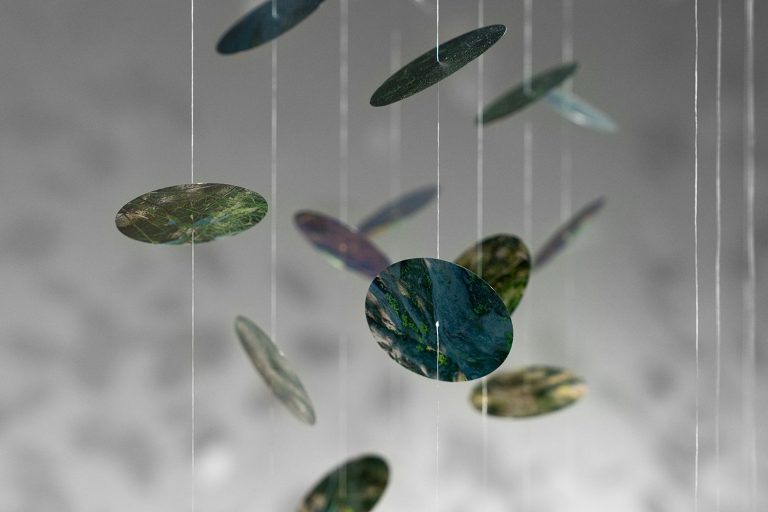
Hannah Claus (Kenhtè:ke Kanien’kehá:ka, Tyendinaga Mohawks of the Bay of Quinte) invites viewers to reconsider how they relate to Tiohtià:ke, also known as Montreal, by drawing attention to the land, water and sky that define this territory. Her solo exhibition, tsi iotnekahtentiónhatie (Tiohtià:ke), brings together sculpture, video and two-dimensional works that reflect her longstanding engagement with place through Kanien’kehá:ka ways of knowing.
Presented at Concordia’s Leonard and Bina Ellen Art Gallery, the exhibition is on view until February 7. Claus, associate professor of Studio Arts and co-director of the Indigenous Futures Research Centre, brings her expertise and perspective to this deeply resonant body of work.
Rooted in personal experience
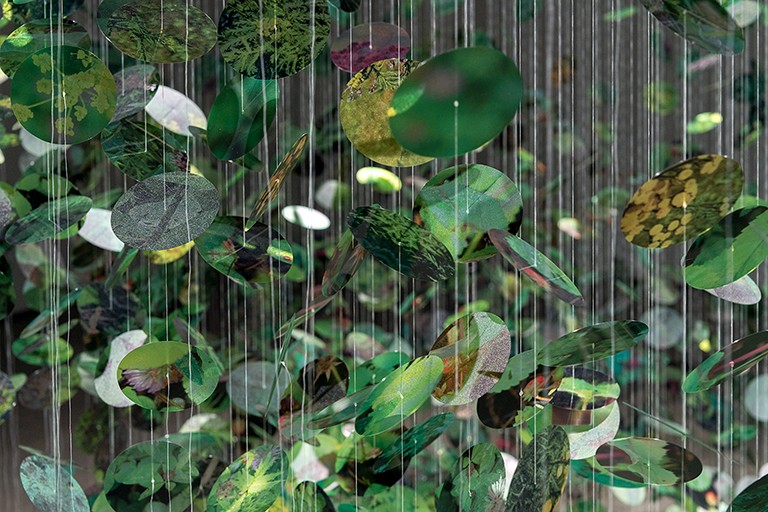
Claus created two new large-scale installations for the show, presented alongside earlier pieces that trace her relationship to the island. She says the works are grounded in lived experience, from walking on the mountain to spending time near the river.
“It’s my personal expression of my relationship to place,” she explains. “If it can help others think about looking around them a little more beyond the concrete and the urban of the city, that would be my goal.”
Honouring the river
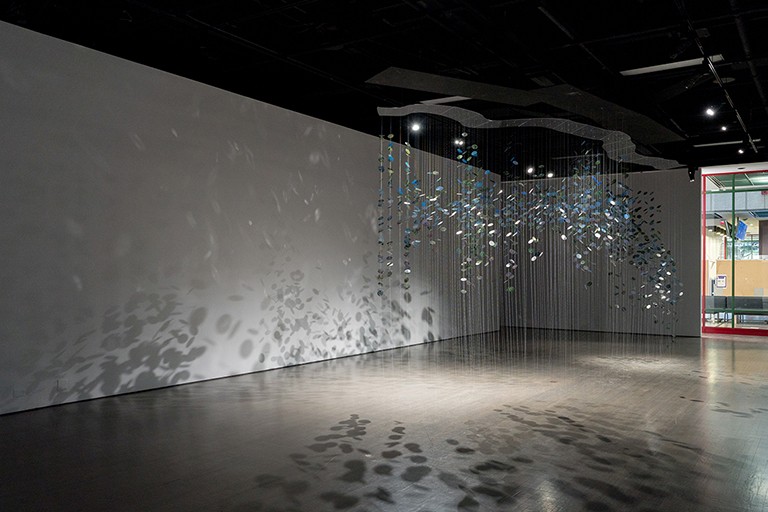
A central element of the exhibition is Claus’s ongoing series of water songs — suspended installations inspired by rivers and the histories that flow through them. She has created variations of these works in different parts of the country but always hoped to make one for the Saint Lawrence River.
“It’s immense,” she says. “I think of all the history in its waters, how long it’s been here and how it shaped the land. I wanted to honour that.”
She notes that many visitors are surprised to be reminded that Montreal is an island, even though bridges are part of daily life in the city.
“I’m very conscious of Montreal as an island and therefore the river,” she says. “I’m always looking for it when I cross.”
Seeing beyond the built environment
Urban infrastructure often obscures the natural histories embedded in the territory.
“The concrete and pavement create a disassociation with the land,” Claus says. “The territory has a personality. It’s important to remember and recognize that ”
As a Kanien’kehá:ka artist who has lived in Montreal for more than two decades, she sees her artwork as part of building a relationship with the place where she lives.
“I’m conscious every day of being in Kanien’kehá:ka territory and I look to find ways to acknowledge and respect it.”
Beauty as a point of entry
Claus’s installations are known for their beauty and delicacy — qualities she uses intentionally. Many pieces are fragile and respond to the movements of visitors, requiring care and awareness in the gallery space.
“I use beauty as a strategy to draw people in,” she says. “Visitors have to take responsibility for the work to continue to exist,” she says. “That can foster the beginning of a relationship with the ideas.”
The Ellen Gallery will host several related public programs in January, including performances by Moe Clark and Peter Morin.
Visit tsi iotnekahtentiónhatie (Tiohtià:ke) at the Ellen Art Gallery, 1400 Maisonneuve Boulevard West, before it closes on February 7.
Discover the Department of Studio Arts at Concordia.
The operations and facilities of the Indigenous Futures Research Centre are supported notably through funding that Concordia receives from the Research Support Fund (RSF). The RSF helps Concordia maintain modern labs and equipment, provide access to up-to-date knowledge resources, secure research from threats, provide research management and administrative support, meet regulatory and ethical standards, and transfer knowledge from academia to the private, public, and not-for-profit sectors.