

Concordia researchers find convenience, drinking water access and advertising drive global bottled water consumption


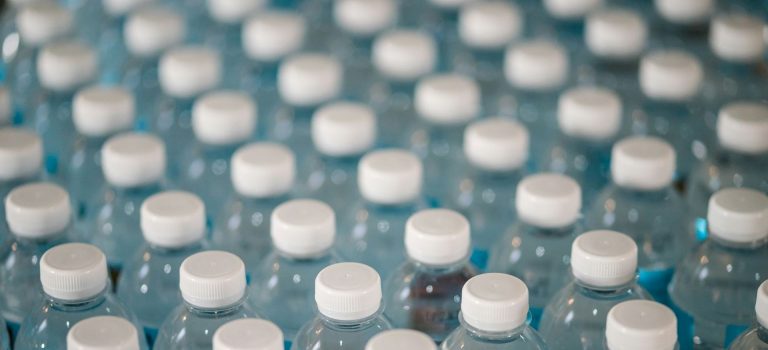
Over one million plastic water bottles are bought globally every minute. That translates into over 1.3 billion every day, and over 500 billion every year. That’s a lot of plastic, and much of it winds up in human bodies and landfills. The long-term health implications are still unknown, but preliminary research shows risks to human health, with accumulation of nano- and microplastics found in our livers, kidneys and intestines.
So what is driving this surge in plastic water bottle use?
In a survey of over 15,000 people in 81 countries, Concordia researchers found that bottled-water consumption is shaped by a mix of demographic, infrastructure and geographic variables including age, education, access to drinking water, and exposure to advertising, among others.
Unlike previous nano- and microplastics studies that focused on the health hazards they pose, this new study, published in the Journal of Cleaner Production, looks at the factors that drive single-use plastic water bottle consumption even when people are aware of the risk.
“The survey results show that awareness does not always change behaviour,” says Sarah Sajedi, PhD 2026, the study’s lead author. “There is much more at play.”
Sajedi’s supervisor, Chunjiang An, associate professor in the Department of Building, Civil and Environmental Engineering, co-authored the study.
 Sarah Sajedi and Chunjiang An: “The survey results show that awareness of the risks does not always change consumer behaviour.”
Demographic differences at play
The researchers used social media to recruit study participants. Respondents filled out a 25-question survey about their bottled-water consumption and recycling habits, refillable bottle use, drinking water access, reasons for using plastic bottles, advertising exposure, environmental and health awareness, and demographic characteristics. Most respondents were from the United States and Canada.
In general, the researchers found that younger and more highly educated respondents were more likely to use single-use bottles than older respondents, believing them to be both more convenient and safer from water-borne microbes. Older respondents were more likely to carry refillable bottles, while younger respondents were more likely to recycle their bottles.
“Interestingly, 75 per cent of respondents believed that single-use water bottles contained nano- and microplastics, and 70 per cent believed that there was a connection between these plastics and cancer,” says Sajedi. “The awareness is there — it just doesn’t appear to have sunk in.”
The study also identified three distinct groups of bottled-water consumers:
- Practical Travellers, whose use is driven mainly by convenience and mobility;
- Influenced Urbanites, whose behaviour is more strongly shaped by media exposure and social norms; and
- Active and Aware Consumers, whose use is more closely linked to necessity and circumstances.
Identifying these different groups could help policymakers design more targeted approaches to reducing reliance on single-use plastic bottles, rather than treating all consumers in the same way, the researchers say.
The study also highlights the importance of access to safe drinking water. Nearly 78 per cent of respondents said they regularly encountered places where potable water was unavailable. Limited access was significantly associated with bottled-water use.
Advertising was another important factor. People who reported seeing bottled-water advertisements more frequently were also more likely to consume single-use bottles. The correlation was particularly strong among younger and more highly educated respondents.
In addition, many consumers perceived single-use bottled water as safer and of higher quality than other drinking water sources. The researchers say this perception also appeared to be an important factor in consumer behaviour, further reinforcing consumers’ preference for purchasing and consuming bottled water.
Solutions depend on context
At a policy level, the researchers recommend expanding refill infrastructure along with targeted public education about microplastics and sustainable water consumption. They also call for greater scrutiny of bottled-water advertising and messaging.
The researchers assert that policies should reflect local circumstances. In wealthier countries, bottled-water use may be driven largely by convenience, travel and lifestyle. In lower- and middle-income countries, it may instead reflect limited access to safe drinking water.
“Our research shows that people drink bottled water for different reasons, so there is no one solution that will work for everyone,” says Sajedi, who is also a co-founder of ERA Environmental Management Solutions, an environmental, health and safety software provider. “But almost all of the respondents said that if an alternative source of clean water was readily available, they would avoid single-use plastic bottles.”
This research was supported by the Natural Sciences and Engineering Research Council of Canada and Concordia University.
Read the paper: “The plastic pulse: How global water consumption behaviors shape exposure to nano- and microplastics from single-use plastic water bottles