


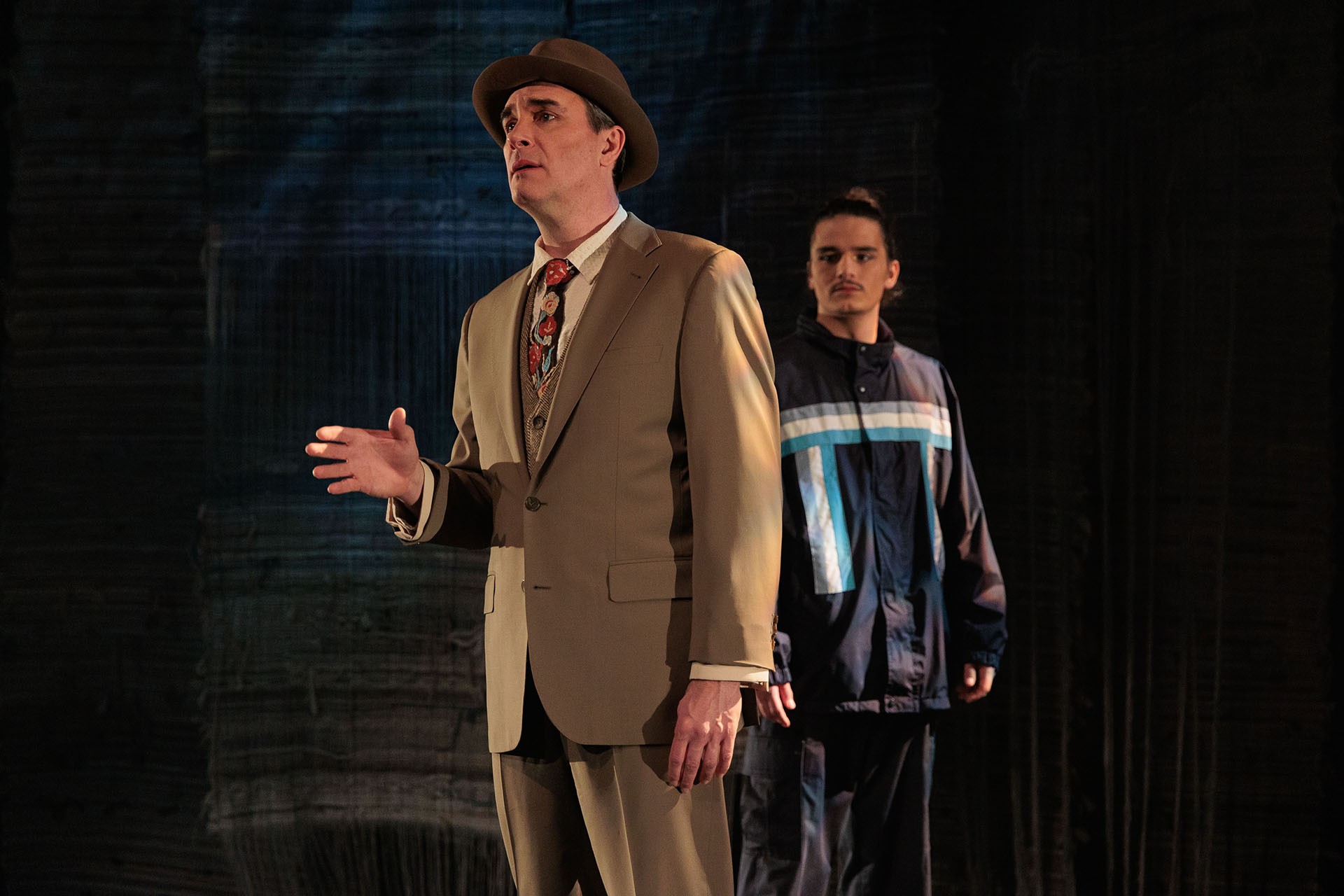
 Bender (left), pictured with actor Andawa Laveau, performing in Yahndawa’: ce que nous sommes, which was presented at Théâtre Trident and Théâtre Aux Écuries in 2024. | Photo: Najim Chaoui
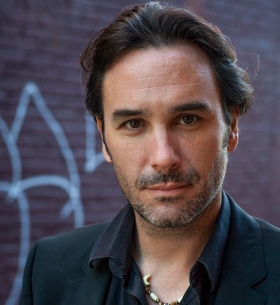 “I just want to keep doing what I do and enjoy it as best as I can,” says Bender. | Photo: Brad Gros-Louis
Bender’s own career confirms just how diverse those paths can be. For four years, he hosted APTN’s Sans Réserve, interviewing Indigenous social, political and cultural leaders. He regularly hosts Indigenous events and conferences, including National Day for Truth and Reconciliation events in Montreal and Ottawa.
Bender has served on the boards of several Indigenous and arts organizations, including Théâtre Aux Écuries, Terres-en-Vues, the Conseil Québécois du théâtre and Diversité Artistique Montréal, advocating for Indigenous artists and perspectives.
“Everything I do revolves around a commitment to bringing forward the issues of being Indigenous in Canada in this day and age,” he says.
Bender’s involvement with Ondinnok — Canada’s first French-language Indigenous theatre company — helped spark his commitment to Indigenous issues and reconnect him with his Wendat identity and roots.
Finding identity and purpose
A self-described wallflower, Bender initially had little interest in being in the spotlight and was drawn to special effects work. But after small roles in school plays, he landed a lead role in a college production of Michel Tremblay’s Bonjour, là, bonjour. It proved transformational.
“My grandfather died while we were rehearsing that play and I realized I was keeping him alive through my performance,” he explains. “I decided to go into theatre and enrolled at Concordia.”
For the first year, Bender wasn’t sure he had made the right decision. Eventually, however, he found peers and mentors such as Lucie Bertrand and Joel Miller who helped build his confidence and deepen his passion for theatre.
Bender later had an opportunity to share those lessons with a new generation of Concordia theatre students, spending a month filling in for artist-in-residence Jean-Frédéric Messier in 2019.
“It allowed me to realize the time that had passed and look back at all that I'd done since I was a student at the university,” Bender says. “You spend most of your time focusing on the next step to take. You need moments to look back, see how far you've actually travelled and determine if you’re on the path you want to be on.”
Now deep into his career, Bender still feels that same sense of connection when he steps onto a stage or speaks with young people about a future in theatre. Looking ahead, he hopes to facilitate the translation of French Indigenous plays into English and perhaps make time to write something of his own.
“I just want to keep doing what I do and enjoy it as best as I can.”