

Filmmaker Junna Chif brings stories of sex, disability and human rights to the big screen


 “I don’t think a film can change laws,” says Junna Chif, BFA 16. “But to change our perception of a society? I think this is a good start.” | Photo: Michael Wees
At 15 years old, Junna Chif, BFA 16, cold-called every production company listed in Quebec film magazine Qui fait quoi, hoping to land work on set. A TVA production called her back for a summer job — her first step into the film industry.
“I have no one in my family, nor friends or relatives, in the field," she says. “I really did everything by myself from scratch.”
While wrapping up her degree at Concordia’s Mel Hoppenheim School of Cinema, Chif’s short film Mme Liliane made TIFF’s Canada’s Top Ten in 2016. She is now preparing for the commercial release of her debut feature film Invisibles.
The fictional drama follows Elizabeth (Nadia Essadiqi), a Montreal sex worker who begins working with clients with disabilities, only to confront her own assumptions about intimacy, autonomy and visibility.
The film premiered at Estonia’s Black Nights Film Festival before making its Canadian debut at CINEMANIA Film Festival in Montreal, where it won Best Quebec Film and Best Direction. It opens in Quebec theatres on March 13.
‘I was wrong on so many levels’
Chif developed Invisibles over seven years, conducting what she describes as documentary-level research: reading extensively, interviewing sex workers and people with disabilities in Montreal and travelling to France to train as a sexual assistant for people with disabilities.
That research reshaped her own perspective. “I had some prejudice at first because I didn’t know about it,” she says. “My point of view changed when I started meeting people and talking about it. I realized I was wrong on so many levels.”
The result is a film that refuses to victimize its subjects.
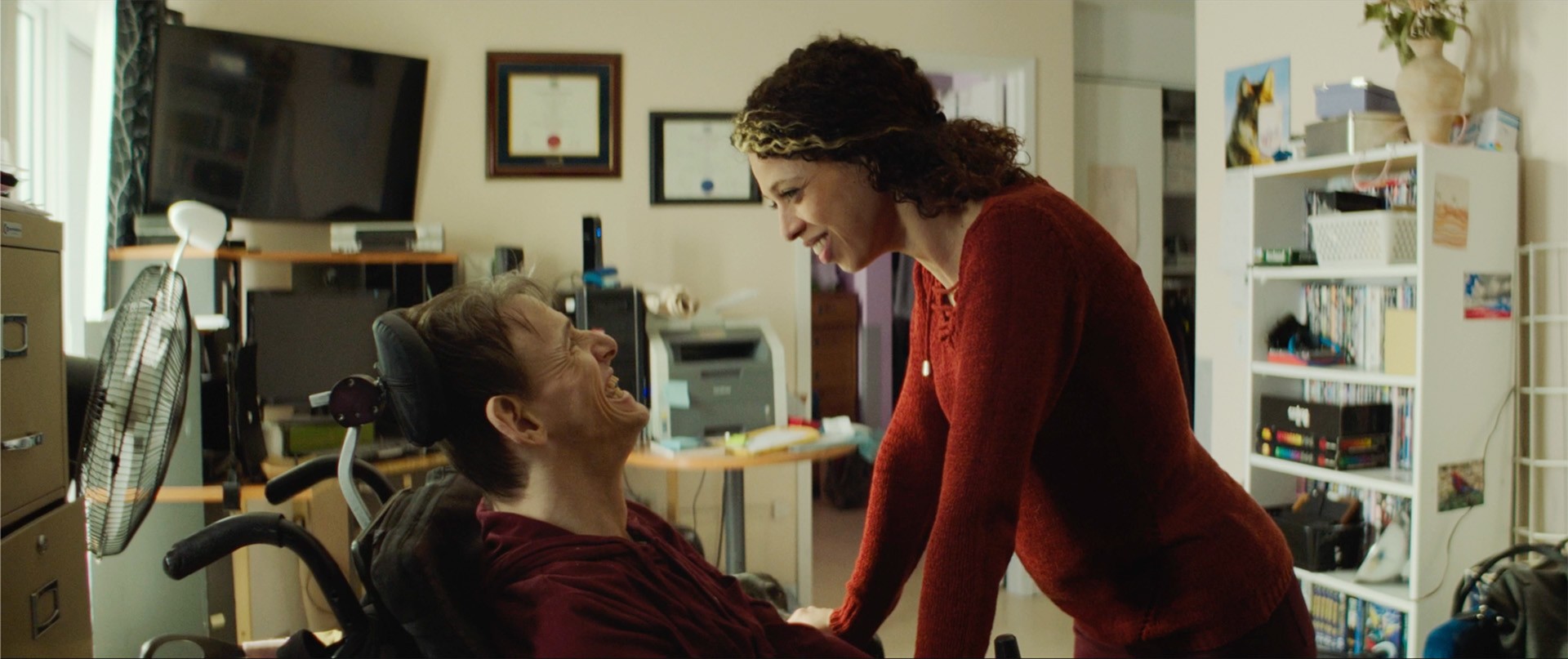 The fictional drama follows a Montreal sex worker who begins working with clients with disabilities, only to confront her own assumptions about intimacy, autonomy and visibility.
“We already see a lot of exploited sex workers in the media,” Chif says. “I met strong women who want to do that job. And we always depict people with disabilities as needing help — but they’re people like anyone else.”
The film’s intimate scenes were developed from a feminist perspective and fully choreographed with consent protocol. A sex worker consultant was present on set throughout production.
Shifting perceptions
Chif credits her time at Concordia with teaching her the essential skill of how to receive feedback. “When I get feedback, I don’t answer. I just listen,” she says. “It’s a good process to learn a lot about your work.”
Her path to Invisibles also ran through Concordia directly: the university selected her project for Telefilm’s Talent to Watch program, opening the door to the financing that made the film possible.
With Invisibles now on the precipice of reaching wider audiences, Chif hopes it sparks conversation. “I don’t think a film can change laws,” she says. “But to change our perception of a society? I think this is a good start.”
Chif is already looking ahead, keeping busy with a new feature about a grandmother and granddaughter navigating death and generational divides currently in development, as well as a feature on human trafficking and another on domestic violence.
Concordia students and the general public can attend a special screening of Invisibles at Cinéma du Parc on March 16 at 6:30 p.m. (tickets are $8 for students), followed by a Q&A with Junna Chif.