

How a fine arts grad built the world’s largest collection of Andy Warhol’s commercial and design work


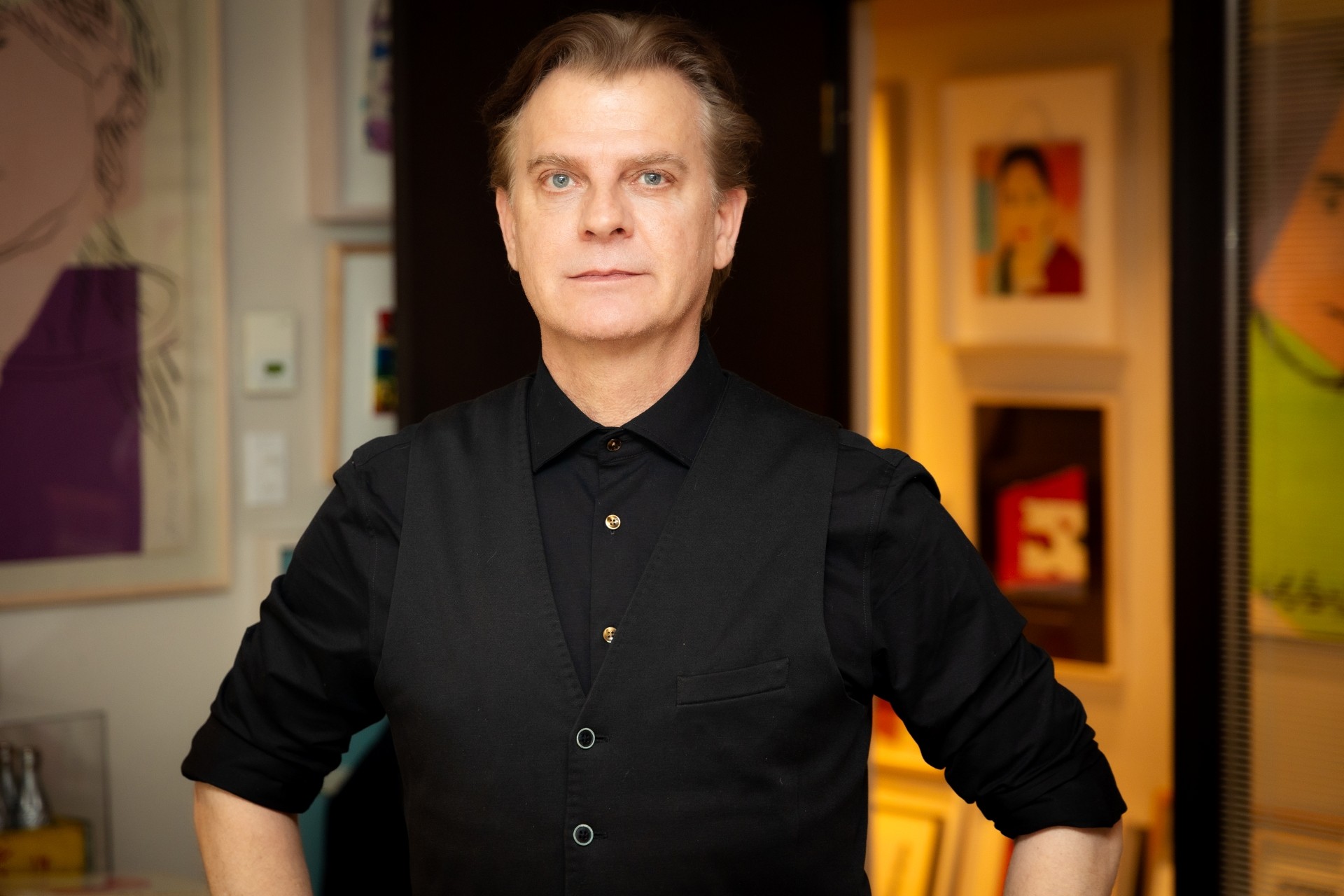 Nearly half of Paul Maréchal’s collection will be shown publicly for the first time in an exhibition this spring.
When Paul Maréchal, BFA 88, isn’t managing one of Canada’s most impressive corporate art collections, he’s hunting for overlooked works by Andy Warhol.
Since 1993, Maréchal has served as curator of the Power Corporation of Canada collection. Beyond his day job, he has become one of the world’s leading experts on Warhol’s commercial and graphic-design work — and its foremost collector.
That passion began three decades ago in a record store, when he stumbled upon Paul Anka’s 1976 album The Painter, which featured a portrait by Warhol.
“I thought, ‘How could that be possible?’” he recalls. “An artist who was so famous doing an obscure album cover.”
At the time, many believed that Warhol had left commercial art behind in 1962 when he transitioned to fine art with his iconic Campbell’s Soup Cans series. But what Maréchal kept finding in the second-hand market told a different story.
“In the first two decades, I found a new work — a record cover or a wine label — every two or three months,” he says. For Maréchal, those discoveries reframed the artist entirely — Warhol never left commercial art behind, he redefined it.
“What happened in the early 1960s is that Andy Warhol starts controlling the medium,” he explains. “He does silkscreen, buys a 16-millimetre movie camera, co-founds Interview magazine and becomes a publisher. He understood that the more an image circulates, the more value it gains over time.”
That insight has helped shape decades of scholarship. Maréchal has published four catalogues raisonnés documenting Warhol’s commissioned work: Andy Warhol: The Complete Commissioned Posters (2014), Andy Warhol: The Complete Commissioned Magazine Work (2014), Andy Warhol: The Complete Commissioned Record Covers (2015) and Andy Warhol Ephemera (2018).
His newest volume, Andy Warhol: The Complete Textiles and Fashion, 1955-1987, will be released by Prestel, an imprint of Penguin Random House, next month, indexing everything from screen-printed garments to homemade dresses made from Warhol-designed fabrics.
A full-circle moment
The idea of writing a catalogue raisonné first came to Maréchal while he was a student at Concordia. “I was starting to collect books on artists I was interested in,” he recalls. “Concordia helped me develop a curiosity for an artist we thought we already knew everything about.”
Like Warhol, Maréchal explored a variety of media, studying film and studio art at Concordia’s Faculty of Fine Arts before pursuing a master’s degree in art history at the Université du Québec à Montréal.
“Studying art at Concordia was great because you had this real who’s who of artists teaching there, including Yves Gaucher, Guido Molinari [LLD 04], and Jean McEwen,” he adds.
One student memory would come full circle. During a trip to New York City, Maréchal spotted a Mick Jagger screenprint by Warhol in a gallery window. Priced at $5,000, the piece was far beyond his means at the time. Its value has since multiplied 20 times over, but Maréchal finally acquired it five years ago. Today, it is a standout in his collection.
“Art historians and collectors were uncertain about how to categorize Andy Warhol’s work,” he says. “In the late 1980s, it was still possible to purchase an important screenprint for just $5,000. Then, in 1997, the Whitney Museum of American Art hosted The Warhol Look exhibition, exploring his influence on fashion and pop culture. It was as if everyone suddenly realized the true impact of Warhol’s art.”
Warhol’s enduring appeal, Maréchal believes, lies in his commentary on consumer culture.
“He was holding up a mirror to American consumerism, reflecting our fascination with celebrities, wealth and fame — all of which still captivate us today.”
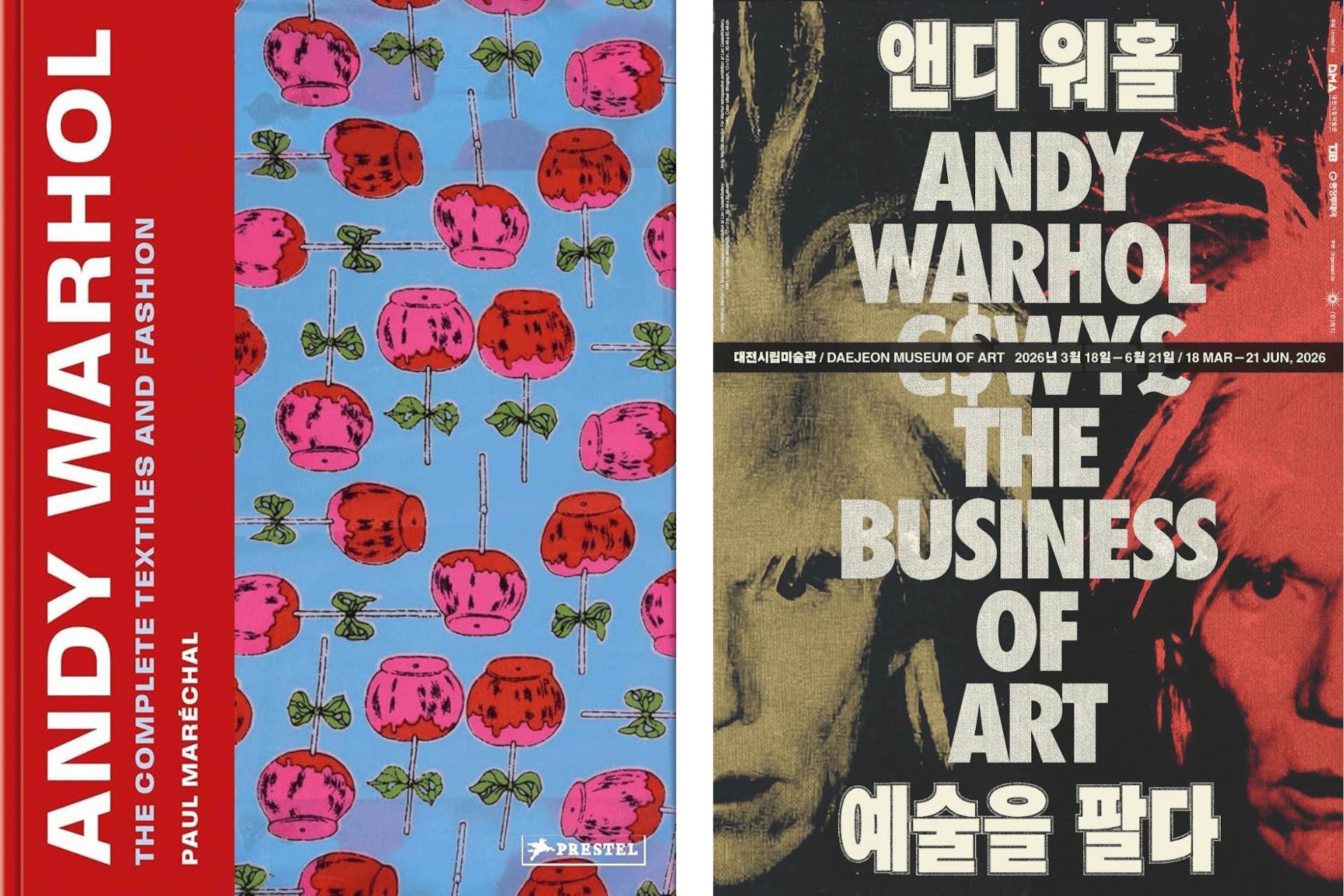 The cover for Maréchal’s new book, Andy Warhol: The Complete Textiles and Fashion, 1955-1987, and the poster for his upcoming exhibition, Andy Warhol: The Business of Art.
An ‘instantly recognizable’ brand
What began as a chance discovery has since grown into the world’s largest known collection on Warhol’s commercial and design output, spanning more than 700 items. This spring, nearly half of it will be shown publicly for the first time in the touring exhibition Andy Warhol: The Business of Art, accompanied by a new catalogue written by Maréchal.
Greeting visitors at the entrance of the exhibition will be one of Maréchal’s favourite works: a red, white and blue map of the United States commissioned by Mademoiselle magazine that playfully illustrates product exports across the country.
“Warhol entered the domestic space of everyday Americans through record covers, magazines, T-shirts and more,” says Maréchal. “His art became a brand — instantly recognizable.”
Maréchal has also brought his expertise to the classroom, teaching a course on the art market at Université du Québec à Montréal. His research didn’t just document Warhol’s lesser-known material — it helped create a market for it.
“It would be impossible to recreate this collection today,” he says. “Not just for financial reasons, but because of the rarity of the works. I feel fortunate to have started collecting when it was still affordable, as that chance will never come again.”
“Andy Warhol: The Business of Art” will be on display at the Daejeon Museum of Art in Seoul, South Korea, from March 17 until June 22, 2026, and at the Daegu Arts Center in Daegu, South Korea, from July 7 to October 10, 2026. It will then head to the United States in 2027.