

How a real estate consultant broke into commercial dealmaking


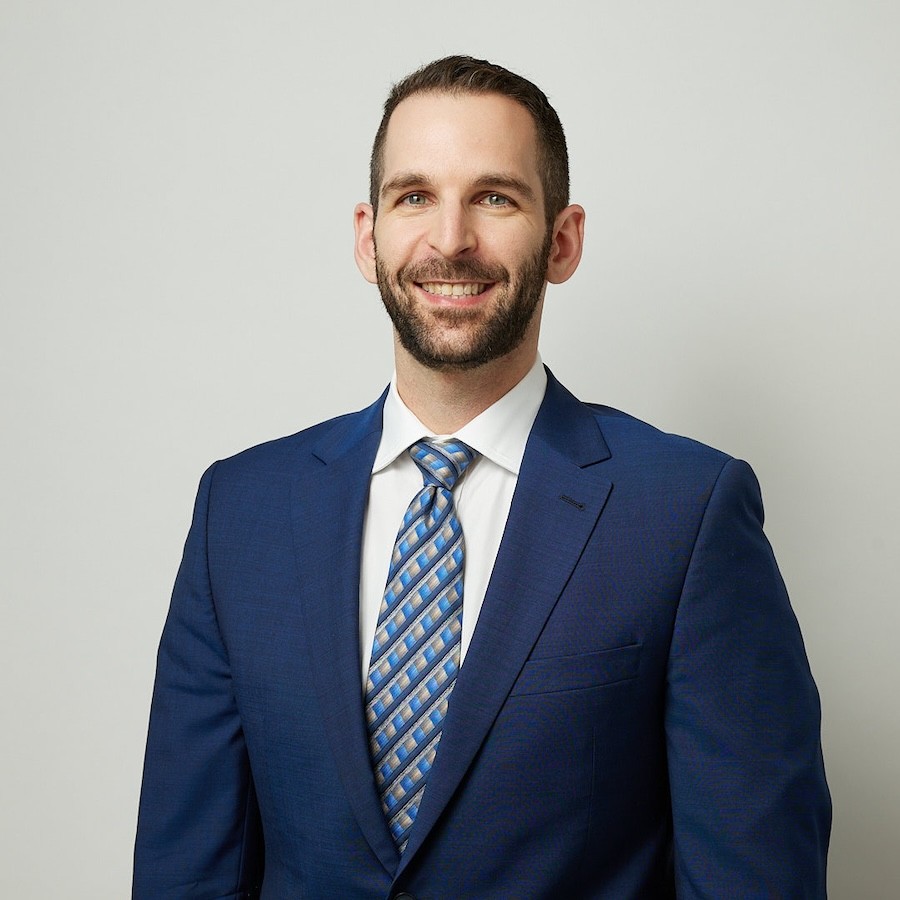 Philip Kligman: “I gained a better understanding of why things are done a certain way. Not just how, but why.”
Philip Kligman entered the commercial real estate industry from an unusual angle.
With a background in management and corporate strategy, he began as a freelance consultant for Broccolini, focusing on site identification for industrial projects. His analytical skills quickly led to market analysis work and a permanent role. Kligman reviewed acquisition files, contributing to early-stage analysis and working closely with experienced dealmakers.
But experience on the job wasn’t the same as understanding the full picture.
At Broccolini, he could assess the viability of individual sites but lacked insight into the full lifecycle of a development project, where decisions around zoning, approvals, financing, and other factors determine long-term feasibility.
“It was kind of the opposite of how people usually learn about real estate,” Kligman says. “I was looking to understand more of the development from the theoretical side, because I was already doing it from a practical side.”
Kligman enrolled in John Molson Executive Centre’s Commercial Real Estate Certificate program in 2022 to gain a working knowledge of how commercial deals succeed.
Understanding how to project value
At Broccolini, Kligman worked with financial data based on other people’s models. At JMEC, he learned how models are built from the ground up: projecting revenues, working through costs, and identifying the variables that shape assumptions.
“You start to understand how everything connects,” Kligman notes. “A small change in one assumption can completely shift the outcome.”
He could now stress-test valuations against market trends and expectations and question the logic behind them, giving him a better sense of how value is determined.
“You realize there’s a lot more that goes into it than just the numbers,” Kligman explains. “There are many moving parts that affect whether a project actually comes together.”
Putting the program straight to work
The program’s Introduction to Commercial Real Estate course gave Kligman a foundation inreal estate finance he could apply directly in his role at Broccolini.
“But I wanted to understand more of the development side, too,” he said.
The program’s instructors, all active practitioners in the Montreal real estate community, used real transactions they had been personally involved in to guide classroom experience. For Kligman, that method helped him gain a clearer view of how specialists make decisions across the different stages of a deal.
During the Real Estate Development course, Roger Plamondon, then president of Groupe Immobilier Broccolini, presented a case study involving a former Broccolini site in Montreal’s West Island. Zoned industrial, the property had faced significant development challenges more than a decade earlier, the type of situation Kligman frequently encountered in practice.
The case explored Broccolini’s initial effort to reposition the site for residential use, an initiative that ultimately stalled due to insufficient stakeholder and municipal support at the time. Years later, Broccolini undertook selective demolition to make the property more shovel ready. That strategic groundwork proved worthwhile: the site was subdivided and sold to Montreal-based developer Prével, which succeeded in obtaining approvals for a residential conversion on part of the land, while the remaining industrial parcels were sold to a bathroom-products manufacturer and a pharmaceutical company.
“It was interesting to see what Broccolini’s initial challenges were and what happened,” Kligman says. “Fast forward 10 years, and seeing how these projects eventually came together gave me an idea of what could have been done differently to secure buy-in from the relevant stakeholders. Learning from one of the industry’s greats was amazing. Roger is a really knowledgeable, well-connected professional with a very sharp way of looking at things.”
Learning with like-minded people
Since the program covers every stage of a real estate deal, Kligman's cohort included professionals from across the industry, which gave him the chance to see how peers from different backgrounds approached the same problems.
“Those perspectives are just as valuable as the course material,” Kligman notes. “I gained a better understanding of why things are done a certain way. Not just how, but why.”
Putting it together on complex deals
Kligman became a licensed real estate broker in 2021 and completed his Commercial Real Estate Management Certificate in 2024. After working at Broccolini, he joined the team at CBRE, a global commercial real estate services and investment firm where he now works at the intersection of the disciplines he spent years learning to connect.
“As a real estate broker, my role is to collaborate with the full range of professionals involved in commercial real estate projects, whether they are clients, brokers, engineers, lawyers, biologists, or urban planners,” Kligman explains. “I do everything I can to keep a transaction moving from start to finish.”
With the guidance of more experienced colleagues, Kligman has also begun running deals of his own. The rush of getting deals across the finish line in a high-stakes environment means his job never feels like work.
“The problem solving involved is part of the fun,” Kligman laughs. “My role today is all about untangling uncertainties in a transaction. And the JMEC program helped me develop those reflexes.”
Related program