

How creative risk-taking can build students’ confidence in the art classroom


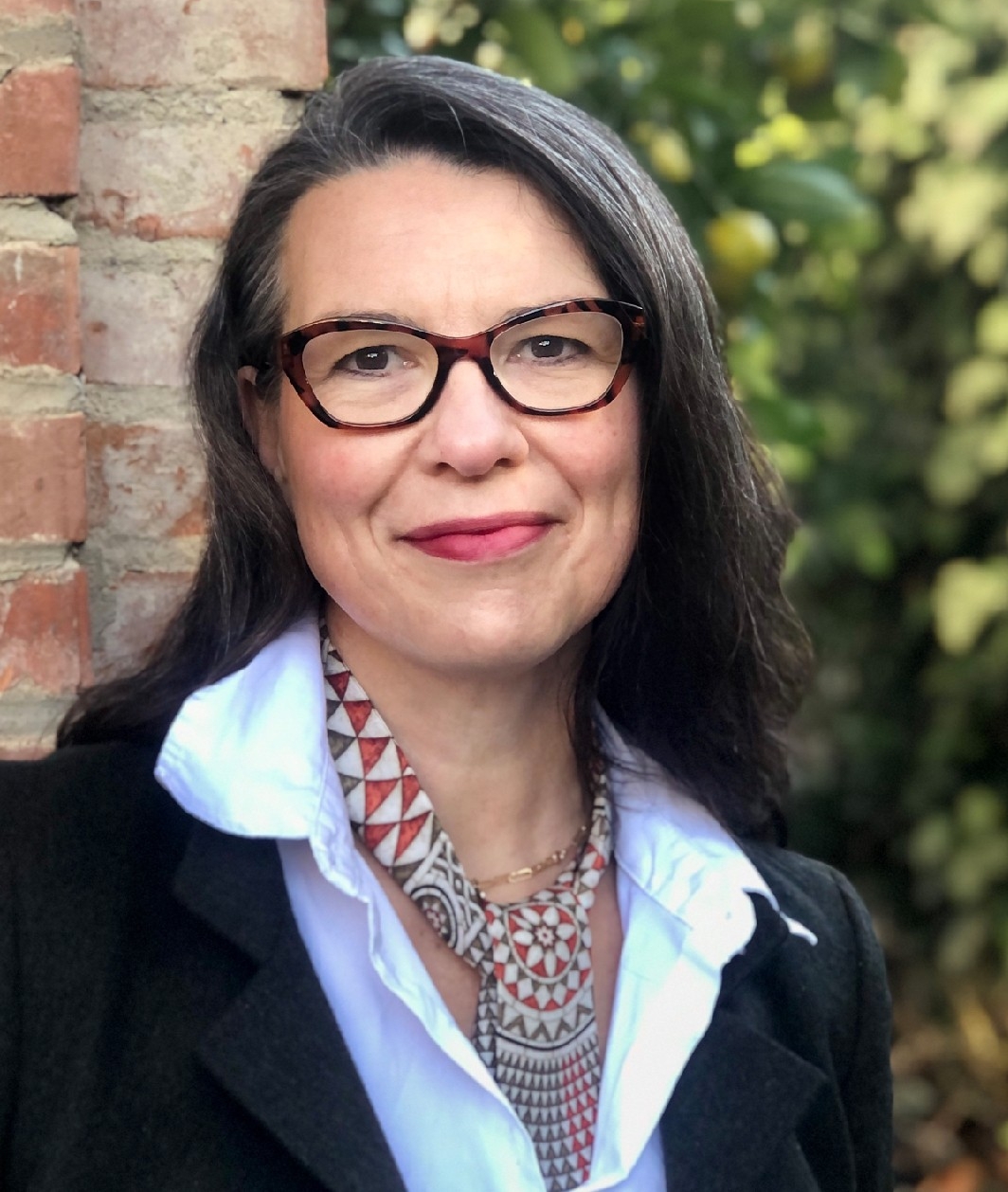 Art Education alumna and former Art Education instructor, Nancy Long.
“Is this good?”
“Will I lose marks if I …?”
These are questions Nancy Long regularly heard from high school art students, revealing the tension between creative exploration and an education system that often rewards conformity.
Long, a former instructor in Concordia’s Art Education program, wanted to understand what happens when students are given greater freedom to experiment — without a prescribed end result or a grade attached to their finished work.
We spoke to her about her doctoral thesis, “Developing a pedagogy of ambiguity: Risk-taking and process in the high school art classroom”, and learned just how deeply the unwritten rules of schooling can shape students’ creative confidence — and what can be done about it.
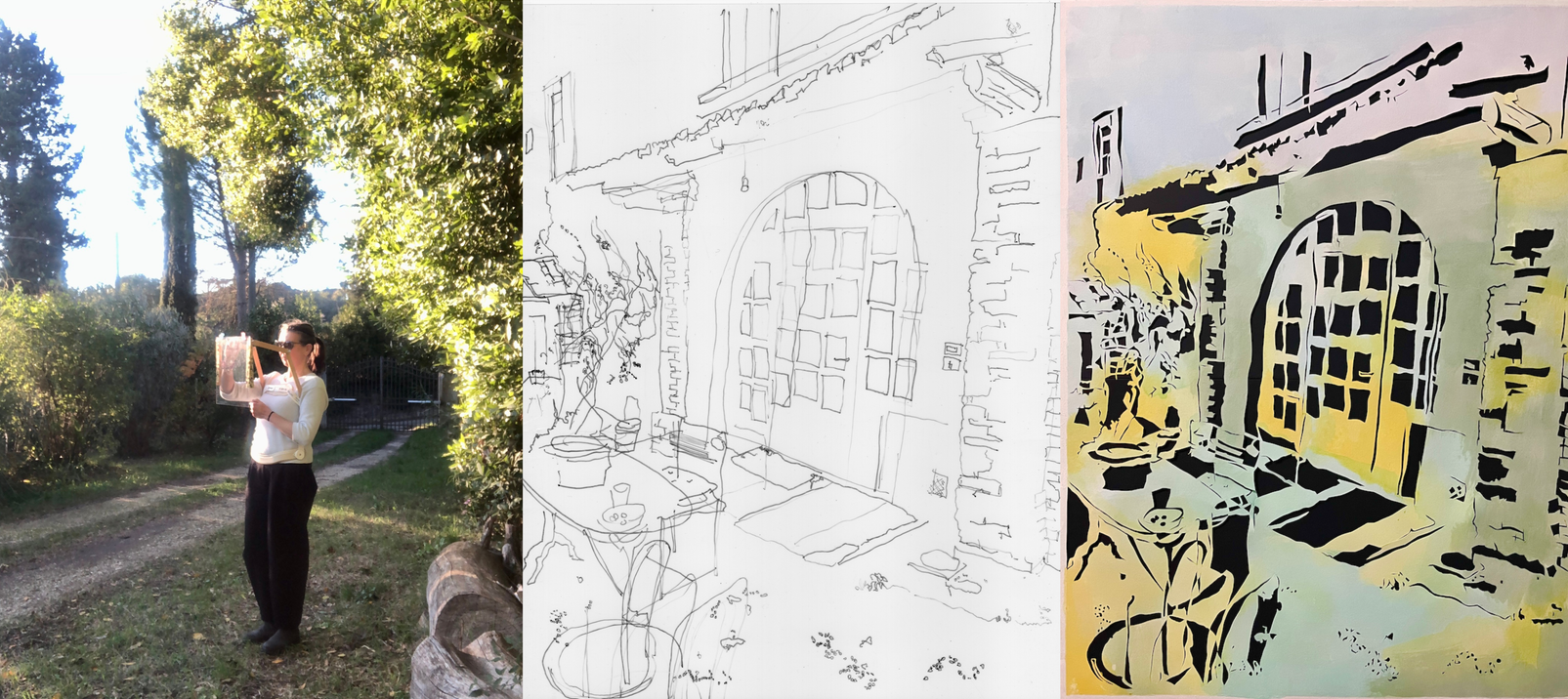 Working with a viewfinder, Long traces the scene onto clear acetate in a process she calls tracing in stillness, then develops the initial drawing into a more detailed work. Entrance (2023), permanent marker on acetate, and Entrance (2025), cut paper and watercolour, illustrate this progression.
What first drew you to explore creativity and risk-taking in the high school art classroom?
Nancy Long: I noticed that my high school art students, as well as my colleagues’ students in other subjects, regularly asked questions about specific and restrictive outcomes: “Is this good?” or “Will I lose marks if I …?”
None of this is the teachers’ fault; we operate in a system that rewards a certain conformity. This became glaringly obvious when I began to understand the clash between making rubrics that I thought would help students explore creative decisions while getting good grades and the reality that, when a student did not perform the criteria in a specific way, they were penalized by losing marks.
Since risk-taking is so tied to creativity and innovation, and students seemed not to know how to approach risk in most of their schooling, I wanted to create an intervention to explore risk specifically from the students’ perspective.
How did you create that space?
NL: I worked with a high school art teacher, and together we led her students to focus on risk-taking by having them define it for themselves and determine how they were going to take risks while working from ambiguously defined creative prompts.
Students could take their work in any direction, using any materials available in the art room, and I had a small budget to purchase items outside of this. The art teacher and I regularly assured students that there was no “wrong” way to interpret or create something for this project.
We guided the students to create criteria for self-assessing creative risk-taking in their process and moved away from assessing the final artwork. In other words, no grade was given to the product.
What surprised you most about the experience?
NL: I knew students might be a bit stressed about working on an assignment with no prescribed end result, but I was surprised at just how much the hidden curriculum — the unwritten rules and values schools promote that affect how and what students are learning — impacted the students’ confidence in their own decisions.
Despite decentralizing power as much as possible, promoting student agency, constantly reassuring students that they were all working well and answering “yes” to questions about whether they could do this or that, most students still believed they were doing something wrong.
Why is it important to evaluate the creative process rather than just the final artwork?
NL: What stood out as a positive for the students in my classroom intervention was that they were self-evaluating only the process. We did not negate the final artworks, but the tactic of grading the process had students recognize the merits of their trajectory, that is, the “behind-the-scenes” of what they are used to seeing: a polished, often professional piece of art that seems unattainable.
How do you hope your research might influence the way art is taught?
NL: When students are so used to working toward a prescribed solution, and more and more of them are used to having answers at their fingertips, it is difficult for teachers to foster creativity where learning comes from ambiguity.
We are not going to do away with grades overnight, but we can work with current and future teachers to create school environments where being “wrong” is not a negative, where creating something does not have to be matched to a standard, and where process is considered equally important — sometimes more important than the product.
Read Nancy Long’s doctoral thesis, “Developing a pedagogy of ambiguity: Risk-taking and process in the high school art classroom,” in Concordia’s Spectrum research repository.
Learn more about Concordia’s Department of Art Education.