

Date & time
Tuesday, March 24, 2026
12 p.m. – 1 p.m.
12 p.m. – 1 p.m.
Registration is closed


Registration is closed
Michele Fiedler, Graduate student member of the Caribbean Studies Working Group
This event is free.
Henry F. Hall Building
1455 De Maisonneuve Blvd. W.
Room 629
Yes - See details
In Familiar Stranger, Jamaican cultural theorist Stuart Hall chronicles how his feelings and experiences of being out of place as a colonial subject in England, because of both race and cultural difference, became a drive to conceptualize the field of cultural studies. Like Hall, many other decolonial, anti-racist, feminist and queer scholars, writers and artists across cultures have found theoretical grounding in following feeling, wonder, skepticism, objection, and experiential knowledge when thinking within western academic settings like ours.
This workshop will look at examples of such generative intimate resources, as places where to theorize from and generate new knowledge, with the aim of finding ways to encourage students to employ these personal sources as sites to think from or to relate to theories and ideas they are learning in the classroom. Furthermore, we will consider how including materials like images, interviews, songs, memes, poetry and video can help mobilize learning from intimate and humorous extra-theoretical sources. Our final intent is to generate deep engagement between lived experience and non-academic knowledge and the historical, cultural and theoretical material taught in the classroom.
By the end of this workshop, participants will be able to:
Recognize the importance and relevance of feeling and difference in theoretical work.
Formulate experience, non-academic knowledge, and positionality that may go against the grain, into strong research questions and methods.
Audience: Undergraduate/Graduate students, TA's and Caribbean working group members
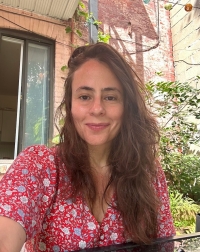
Facilitator bio
Michele Fiedler is a curator, researcher and PhD student at the Center for Interdisciplinary Studies in Society and Culture at Concordia University. Her research combines the fields of art history, affect studies and decolonial theory from a Caribbean perspective in her reading of a group of experimental films made by interdisciplinary female, queer, and non-binary artists from Puerto Rico, as a counter archive of feelings. She is specially interested in exploring the materiality of affects, meaning both a historical-materialist account of their production and the concrete social forms they take in everyday life, in relation to colonial histories.