

Date & time
Wednesday, January 28, 2026
12 p.m. – 1 p.m.
12 p.m. – 1 p.m.
Registration is closed


Registration is closed
Tesfa Peterson (Graduate student member of the Caribbean Studies Working Group)
This event is free.
Henry F. Hall Building
1455 De Maisonneuve Blvd. W.
Room 629
Yes - See details
This workshop invites participants to explore speculative storytelling as a Caribbean pedagogical method that disrupts colonial inheritances and expands what counts as knowledge in the classroom. Drawing on the work of Erna Brodber, Katherine McKittrick, Édouard Glissant, and Sylvia Wynter, we will distinguish between fiction as a crafted narrative form and speculative storytelling as a relational, community-grounded practice that emerges from the silences, gaps, and opacity of Caribbean history. Through guided exercises, small-group discussion, and collective reflection, participants will consider how speculative storytelling, rooted in oral history, landscape, intergenerational memory, and everyday forms of knowing, can inform anti-colonial teaching practices.
Together we will ask: How can relational storytelling serve as a grounding practice in communal learning spaces? How might opacity, uncertainty, and the unarchivable become pedagogical resources rather than obstacles? And what does it mean to design syllabi or community projects that take seriously the imaginative, geographic, and spiritual knowledge practices of Caribbean people? Finally, participants will reflect together on strategies for integrating speculative storytelling into curriculum design, classroom facilitation, and public scholarship, opening pathways for pedagogies that are precise, poetic, and expansive, foregrounding the Caribbean as a method that disrupts the colonial academy.
By the end of this workshop, participants will be able to:
Distinguish and critically analyze the difference between fiction and speculative storytelling as a Caribbean pedagogical method.
Explain how speculative practices emerging from oral history, opacity, and relational knowledge disrupt colonial definitions of evidence, archive, and curriculum.
Audience: Undergraduate/Graduate students and Caribbean/Black faculty or Caribbean working group members
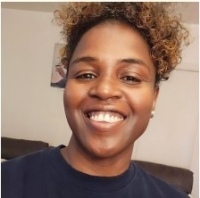
Facilitator bio
Tesfa “Aki” Peterson
I am a public humanities researcher and community-based scholar whose work centers Caribbean history, feminist postcolonial thought, and participatory storytelling. As a student in the PhD Humanities program at Concordia University, my current project traces the life and legacy of Helen Louise Langdon Norton Little, a woman born in LaDigue, Grenada in the late nineteenth century, whose life connected Grenada, Montreal, and the American Midwest. Helen Little was active in the Universal Negro Improvement Association (UNIA) in Montreal and was the mother of eight children, including civil rights leader Malcolm X.
Grounded in community knowledge and Caribbean feminist and postcolonial perspectives, my work asks how public humanities can preserve and honor lives that have been marginalized by colonial archives, while creating inclusive, intergenerational spaces for learning in both Grenada and the diaspora. Since 2020, I have collaborated with the Institute for People’s Enlightenment in the Grenadian village of LaDigue to organize lectures, storytelling sessions, and public conversations that center local voices and oral histories. Additionally, the project also extends to Montreal through an oral history and ritual storytelling podcast documenting Grenadian women’s community organizing. Across storybooks, podcasts, workshops, and public events, my work models a decolonial public humanities rooted in care, collaboration, and community memory.