

Concordia releases guide for ethical research with Indigenous communities


How can non-Indigenous researchers build respectful, reciprocal and mutually beneficial research partnerships with Indigenous communities?
A new guide from Concordia’s Office of Community Engagement offers practical guidance for the university community on how to approach this question with greater awareness, accountability and respect.
The guide, Dewemaagannag / My Relations: A Guide for Research with Indigenous Peoples and Communities, is the second resource in the Dewemaagannag / My Relations series. Grounded in Indigenous knowledge and expertise, the series supports Concordia’s commitments to the Truth and Reconciliation Commission's Calls to Action and broader efforts toward Indigenization and decolonization.
The first resource in the series, the Indigenous Engagement Guide, was launched in 2023. It introduced principles such as listening, reciprocity, accountability, consent and positionality.
“This new guide focuses specifically on building ethical research partnerships, with guidance on community engagement, research ethics and data sovereignty,” explains Geneviève Sioui, Indigenous community engagement coordinator.
Community-based research in action
The guide is particularly relevant to Concordia’s research community, where researchers regularly work alongside community organizations, groups and knowledge holders to address real-world issues and generate knowledge together.
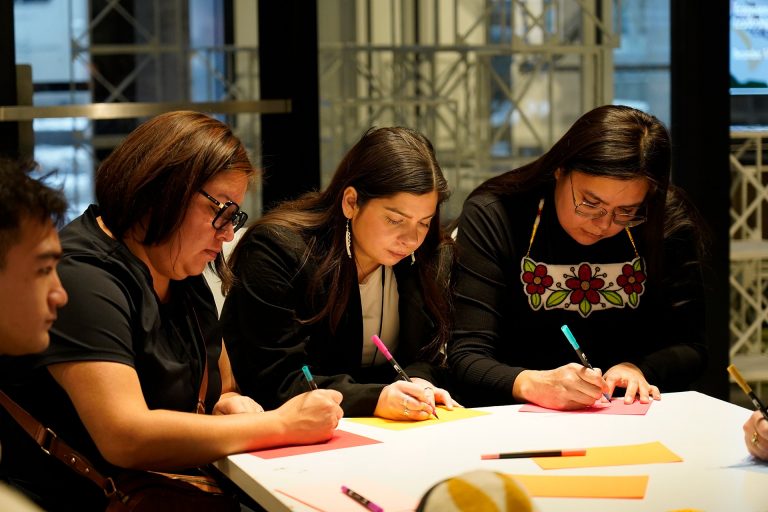
One example of this research is the Indigenous Youth Stream of the Youth Research Network Chair of Quebec. Hosted at Concordia, the project is led by Natasha Blanchet-Cohen, professor in the Department of Applied Human Sciences. It brings Indigenous youth, researchers and community partners together to explore how to support meaningful youth leadership and how communities can create stronger opportunities for young people.
The project illustrates an approach recommended in the new guide: involving Indigenous youth and communities as partners throughout the research cycle, rather than simply subjects.
Blanchet-Cohen says this approach can help produce research that reflects community knowledge, experiences and aspirations.
“This way, research can be about restoring voice and legitimacy to Indigenous youth and communities who have been silenced or disembodied,” she says. “By working together, we can develop innovative methodologies that best reflect and respond to their realities, ways of knowing and aspirations, making research more meaningful for moving forward. It’s a small part of reconcili-ACTION.”
The guide’s emphasis on partnership and shared decision-making is reflected in the experience of Susie-Ann Kudluk, vice-president of the Qarjuit Youth Council, which represents Inuit youth in Nunavik. As a partner in the research project, she highlights the importance of ensuring that all voices help shape the work.
“We like to have discussions and consensus-based decisions and try to make sure that everyone’s perspective and voice is included,” she says. “That way, we can all collectively lead each other toward a common good.”
Explore Dewemaagannag / My Relations: A Guide for Research with Indigenous Peoples and Communities.