

Quebec wildfire smoke left forest moths with deformed wings, Concordia research finds


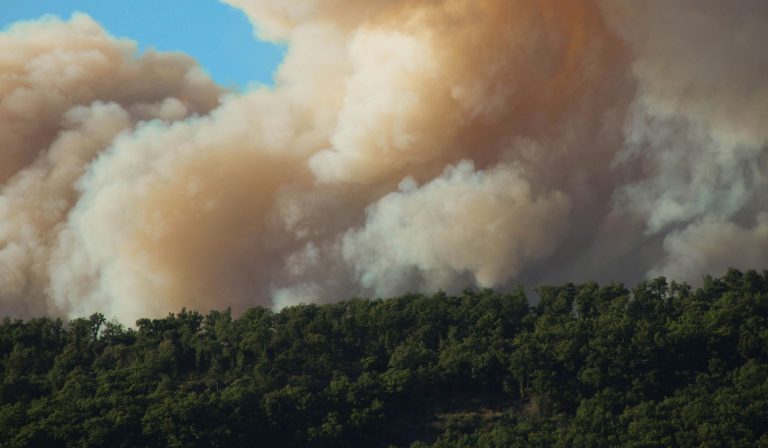
Over the course of the summer of 2023, Quebec experienced its worst wildfire season on record. By its end, some 4.5 million hectares of the province’s boreal forest were burned. While the effects of the toxic smoke on humans have been thoroughly studied, our knowledge of the impact on local fauna — including insects — is lacking.
A new study led by Concordia researchers is among the first to look at how exposure to wildfire smoke affects the development of lepidoptera: the order of winged insects that includes moths and butterflies.
The paper, published in the journal Environmental Science and Pollution Research, shows that smoke exposure during larval development caused significantly higher rates of wing deformities in spruce budworm and forest tent caterpillar moths, two species that periodically strip the leaves off millions of hectares of Canadian forest when the insects’ populations boom.
“These insects are important because they are considered pests, meaning they have outbreak seasons, where the population density becomes very high,” says Rosa Alicia Castillo Salazar, MSc student and co-author. “We do not yet know how forest fires and climate change will affect them in the long term. However, there was no significant change in their population the following year.”
Smoke-exposed spruce budworm moths were twice as likely to develop wings that the researchers classified as folded, crumpled or missing. Roughly 30 per cent of the larvae collected post-fire exhibited wing malformation, compared to roughly 11 to 15 per cent from the previous year.
Forest tent caterpillars showed a similar pattern, though males appeared to have been disproportionately affected, with more malformations and reduced flight activity than clean-air lab and field samples collected later.
Pheromone field traps, which only captured moths that could fly, yielded fewer moths with damaged wings, suggesting that the deformities impaired flight.
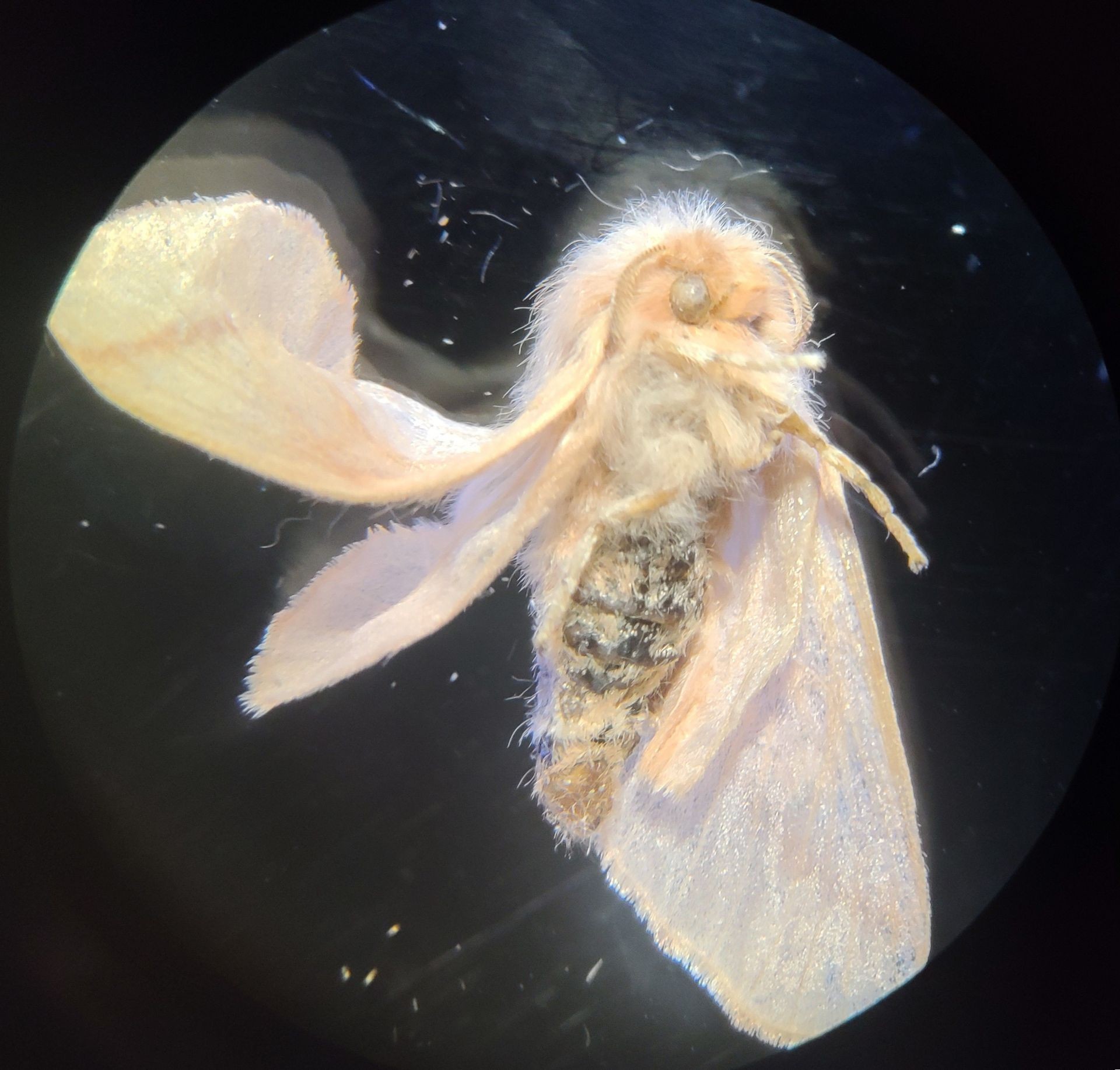 Folded wings on a forest tent caterpillar (Malacosoma disstria). Image Rosa Alicia Castillo Salazar
An ‘accidental’ study
The researchers had already been collecting spruce budworm larvae and monitoring forest tent caterpillar populations in the province’s Abitibi region for unrelated projects when surging fires forced them indoors. That interruption effectively split their samples into "before" and "after" smoke exposure, which the team used to compare wing morphology, body mass and flight capacity.
The exact mechanism connecting smoke to wing malformation also remains unclear, but they speculate that it may have to do with hormonal disruption during metamorphosis or altered breathing habits resulting from poor air quality.
Oddly, moths with deformed wings of both species were consistently heavier than normal ones, a result the researchers cannot yet explain. They suspect it may reflect higher mortality among smaller, weaker individuals, leaving only the larger ones to survive to adulthood.
 Emma Despland, left, with Rosa Alicia Castillo Salazar: “What are the emerging dynamics between pest insects and forest fires — the two main drivers of natural disturbance in boreal forests?”
Population remains steady
The researchers further note that despite the spike in wing malformations in 2023, the moth population in the region remained stable the following year.
As wildfires grow more frequent and intense across Canada's boreal forest, the authors say more research is needed to understand how smoke-driven effects shape forest ecosystems in the long term.
“In some ways, this study asks more questions than it answers, and it leads us in two different directions,” says Emma Despland, a professor in the Department of Biology and the paper’s supervising author.
“On the one hand, what are the effects of wildfires on biodiversity away from the actual flames? And on the other, given that insect outbreaks and fires are the two main natural disturbances in boreal forests, what do these findings mean for the dynamic between them? We just don’t know.”
Former postdoctoral fellow Sabina Noor is the paper’s lead and corresponding author. Miguel Montoro Girona at the Université du Québec en Abitibi also contributed.
This study was funded by the Ministère des Forêts, de la Faune et des Parcs and the Natural Sciences and Engineering Research Council of Canada.
Read the paper: “Wildfire smoke exposure impacts wing development of two pest outbreaking moths in boreal forests”