

Some Canadians are willing to eat insect-based food — but conditions apply


Going to the grocery store these days can be a painful experience, with record-high price hikes biting into Canadian food budgets. However, as many societies around the world already know, a cheap, plentiful source of protein is literally at our feet: insects, especially crickets, grasshoppers, ants and beetles.
While entomophagy — the eating of insects — has lagged in the U.S. and Canada, a new study by Concordia researchers found that there is some interest in the dietary practice, with some demographic groups showing more openness than others.
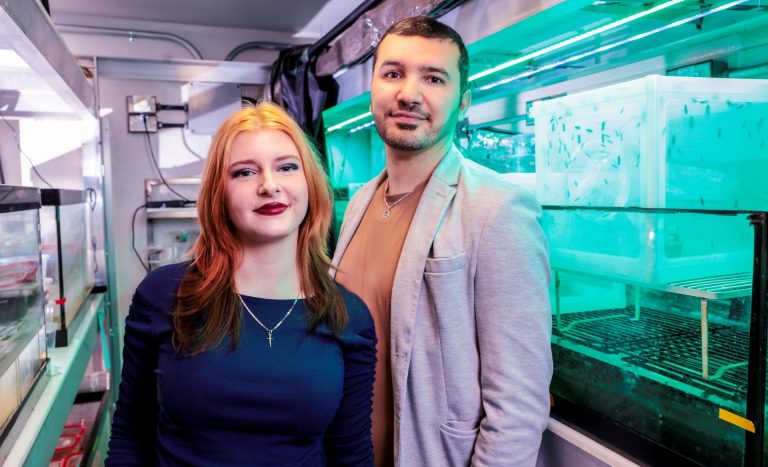
Nadezhda Velchovska, an Honours undergraduate in the Department of Psychology, approached 252 adult visitors to the Montreal Insectarium between October 2024 and February 2025. She used a structured online questionnaire to evaluate participants’ willingness, motivation and barriers to trying insect-based food.
After analyzing the results, Velchovska and her supervisor Rassim Khelifa, an assistant professor in the Department of Biology, found 44 per cent of respondents reported being open to trying insects, though only 27 per cent were willing to include them in their regular diet.
Men were more willing than women to consume insect-based food and were more likely to have tried it in the past. Higher educational achievement was also a factor: participants with graduate degrees were found to be more likely to experiment with insect-based ingredients at home, and prior insect consumption among women increased with education. Age alone was not found to be a consistent predictor.
The paper was published in the Nature journal Scientific Reports.
Powdered is better
Curiosity was the strongest motivator in getting people to try insect-based foods, accounting for almost 42 per cent of respondents. Other factors include perceived health and nutritional benefits, environmental sustainability and taste.
The biggest barrier was disgust, as noted by 70 per cent of respondents. It was followed by fear of the insects, uncertainty about safety and health concerns.
Presentation and packaging were also important: 87 per cent of respondents preferred products where the insect component was not visible. Two-thirds of respondents said they might or certainly would try eating baked goods made with cricket-based flour. Almost half would try a cricket protein bar and powdered cricket bread. On the other hand, 82 per cent said visible larvae in a muffin would make them less likely to eat it.
“The motivators and barriers reveal an interesting interplay,” Velchovska says. “If we want to encourage entomophagy, the best way would be to convince the public of the health benefits and sanitary conditions in which these insects are farmed. We should also emphasize the huge difference in the amount of greenhouse gas emissions produced when farming insects versus raising livestock.”
Khelifa adds that farming insects can help upcycle the 40 per cent of food that goes to waste in Canada. The practice could also contribute to more sustainable agricultural production — including feed for farm animals.
“If we feed our food waste to insects, they will increase in body mass, giving us more insect protein and more insect excretions, which makes excellent fertilizer,” he says. “The protein would not even have to be for human consumption directly — it could be used as feed for chicken, pigs and aquaculture. Involving insects in our food system, either directly or indirectly, can yield enormous potential benefits.”
This research was supported by the Natural Sciences and Engineering Research Council of Canada.
Read the cited paper: “Acceptance of entomophagy among Canadians at an insectarium”