

ARTH 365 Studies in 17th and 18th-Century Art and Architecture
- Instructor: Dr. Laurence Garneau
This course offers an overview of the major artistic and architectural developments in Europe from 1600 to 1790, focusing on regions such as Italy, the Netherlands, France, Britain, Spain, and their American colonies. Students will explore the transformation of Baroque, Rococo, and Neoclassical styles in relation to European politics, scientific revolutions, cultural practices, and artistic institutions. The course also critically engages with traditional art historical narratives by incorporating feminist, decolonial, and interdisciplinary perspectives.
Through lectures, discussions, workshops, readings, and visual analyses, students will develop their critical thinking skills while examining topics such as the role of women in academia, the legacy of colonial architecture, the economics of art production, and the limitations of historical periodization. A key component of the course is also the exploration of how Baroque aesthetics continue to resonate in contemporary art and will offer students the opportunity to reflect on the relevance and reinterpretation of historical styles in today’s artistic practices. By the end of the semester, students will have mastered key terminology and be able to articulate the relationships between artistic production and historical events. They will also be equipped to analyze a range of 17th- and 18th-century artworks—including painting, sculpture, architecture, engraving, and textiles—and draw meaningful connections to contemporary visual culture.
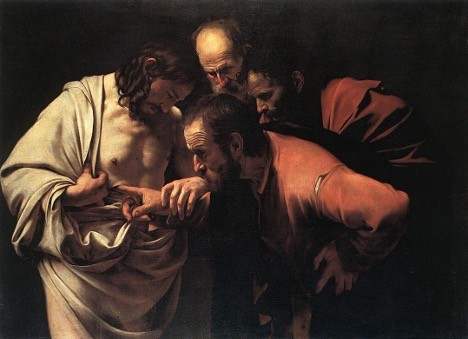 Caravaggio, The Incredulity of Saint Thomas, c. 1603, oil paint, Sanssouci Gallery (Potsdam)