

Meet Concordia's 2026–2027 SHIFT Research and Advocacy Fellows


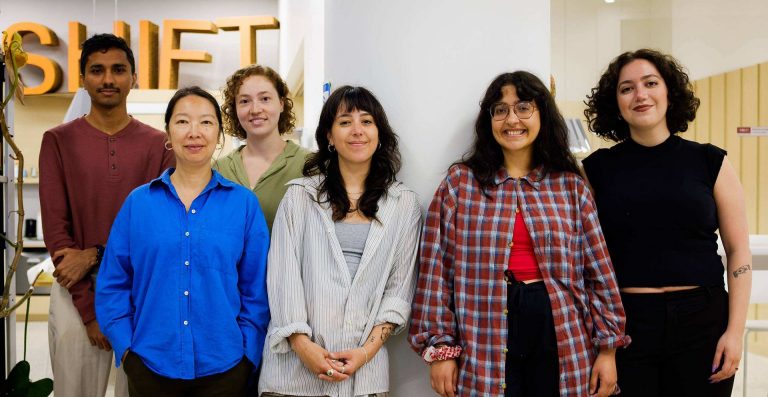
Concordia’s SHIFT Centre for Social Transformation is set to welcome a new cohort of master’s and doctoral researchers to its Research and Advocacy program. The year-long program allows students to work alongside Montreal community organizations in addressing local priorities and turning research into action.
The six research fellows will soon begin collaborating with Montreal community partners on projects designed to serve each organization’s goals for systems change, with support from faculty advisors.
This year’s research fellows will work with community organizations Comité d’Action Parc-Extension, Chinatown Round Table, JIA Foundation, Logifem, Climate Justice Montreal and Brique par brique.
Maximizing research impact
While well-intentioned, neighbourhood improvement initiatives such as adding greenspace, increasing public transit access, and upgrading housing conditions can negatively impact residents. These changes can attract rising costs that force long-term tenants and local businesses out of the neighbourhood: a process known as development-driven displacement.
The 2026 Research and Advocacy fellows will collaborate with their community partners to address development-driven displacement from a variety of approaches. The fellows will work on projects including developing non-profit housing, supporting low-income residents in new transit hubs, and advocating for greater resources for unhoused women.
Meet the fellows
Jing Wang is an anthropologist and current Master of Arts student in Applied Linguistics. Drawing on her academic research and experience working and volunteering with underserved communities, Wang is increasingly committed to applied and advocacy-oriented research that supports community-led change.
Dalia Assi is currently pursuing a Master of Science in Geography, Planning, and Environmental Studies. Their research focuses on developing community-led urban planning scenarios that respond to local needs while supporting the long-term health of urban ecosystems.
Marylin Chahine is a doctoral student in Geography, Urban and Environmental Studies. Her research explores how different policy frameworks mediate the relationship between transit investment, housing and displacement.
Irtaza Hussain is a Master of Science student in the Department of Geography, Planning and Environment. His work centers on housing justice, tenant rights and urban inequality. It is shaped by close collaboration with community organizations engaged in housing and tenant-rights advocacy.
Noah Benoit is a PhD candidate in Political Science who studies the emotional dimension of political science. Benoit is writing their thesis on the role of nostalgia in Quebec's contemporary political landscape. They are also a co-coordinator at the Consent Collective.
Luisa Kraft is a PhD candidate in Geography, Urban and Environmental Studies. Her research explores the intersection of climate change mitigation, transit-oriented planning and housing policy. Her work focuses on who benefits from urban development, who is excluded and how we can change the systems that produce inequity.
Building on last year’s success
Social change requires innovative thinking and experimentation. For research to effectively accompany this work, it needs to be adaptable and solution oriented.
Last year, SHIFT research fellow Erykah Yasmine Kangbeya worked with DESTA Black Community Network. She collaborated with the organization to develop programs that expand employment opportunities for people in Quebec who were formerly incarcerated or soon to be released, with a focus on Black communities.
“Other research enquiries I have undertaken have been centered around understanding an issue or concept, not solving a problem or responding to a community need,” says Kangbeya. “The advocacy component of this work grounds the research in something more meaningful.”
DESTA was looking for new approaches to the persistent employment challenges faced by their membership. The SHIFT collaboration allowed them to identify a gap in the research: while employment barriers faced by formerly incarcerated people has been well documented, limited research exists on the experiences of potential employers.
Kangbeya used community-based research methodologies to document common obstacles that prevented employers from hiring people with a history of incarceration. She presented these findings at a public event and created an employer’s guide to hiring and supporting formerly incarcerated people.
"Erykah’s research allowed us to lay the foundation for new programming that draws on data we could never have gathered ourselves,” says Olivia Dumas, re-entry social worker at DESTA. “She always respected our participants’ lived experiences. Her thorough and dynamic research has been invaluable in validating and uplifting our experiences while guiding our projects in new directions."
DESTA has since incorporated the outcomes of Kangbeya’s research into their employment program.
A tradition of community engagement
Research and Advocacy Program manager Elisabeth Cramer says these research collaborations are part of a rich tradition of innovative approaches to community engagement at Concordia.
“It's been rewarding to see the impact of last year's projects for participating organizations and researchers alike,” she says. “The strong interest we continue to see from both sides is a testament to the program's potential to prepare graduate students for meaningful careers while making valuable contributions to society."
Join last year’s research fellows on Sept. 30, 2026, from 5:30 to 7 p.m. at the SHIFT Centre for Social Transformation, 1400 De Maisonneuve Blvd. W. (LB-145) to explore and celebrate the fruits of their research collaborations.
Visit the event page to register for free.
Discover Concordia’s SHIFT Centre for Social Transformation.