

How creative writing helped a neurodivergent veterinarian connect with people


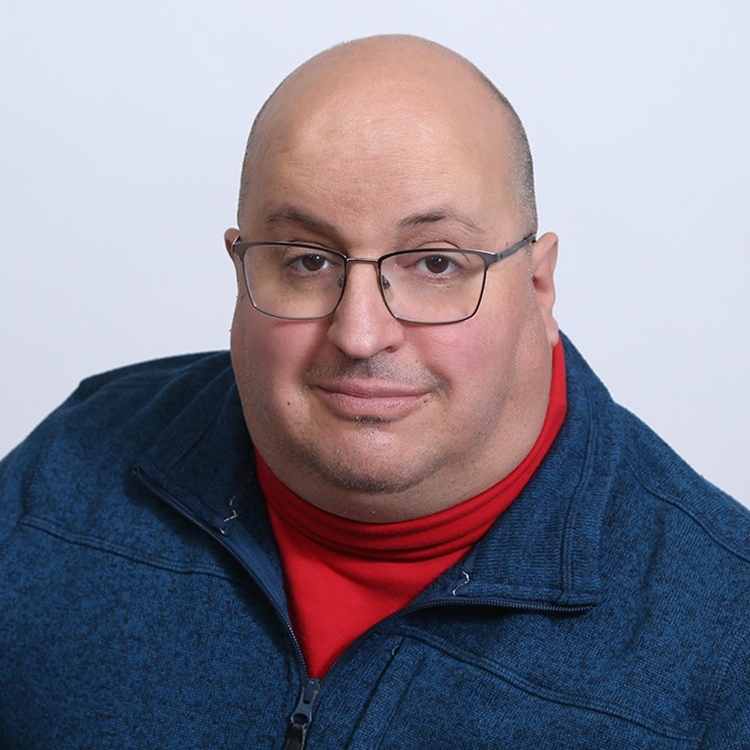 Dr. Serge Deuvletian: “My writing makes sense to me. But to bring it to life, I have to find ways to make it make sense to others.”
Growing up in the 1970s, veterinarian Dr. Serge Deuvletian followed Saturday morning cartoons: Fantastic Voyage, The Hardy Boys and his favourite, Journey to the Center of the Earth.
And though he was less interested in another Saturday cartoon, Doctor Dolittle, rescuing a stray cat at age five set him on the path to a career in veterinary medicine.
But connecting with other humans was often difficult in ways he couldn't explain. His own world made sense to him, and he found ways to relate to the world around him through characters from films, television and the larger-than-life personalities of professional wrestlers.
At age 35, Deuvletian was diagnosed with autism, a moment that changed his life and opened the door to new treatments. He discovered therapeutic writing helped him work through his experiences.
“I needed it to put on paper everything I went through,” he reflects.
With over 60 pages of memories and ideas on paper, he enrolled in the Creative Writing program at Concordia Continuing Education, hoping to find a way to share his perspective through stories.
Giving purpose to basic details
Deuvletian had spent years making sense of the world in his own way. Now he had to find the words to let readers see it through his eyes.
In an early assignment, he was tasked with describing a place. He went to a local park and wrote down exactly what he saw.
“If I'm sitting in a park, I look around and I think, ‘There's a fence, there's a tree,’” he explains. “So that’s how I wrote.”
His instructor encouraged him to go further, using more expressive language and techniques such as metaphor to bring his descriptions to life. Instead of simply mentioning a tree, he could describe its appearance, the sunlight falling on it, and even how it made him feel, giving readers a clearer sense of the scene.
“If something makes sense to me, I write it the way it makes sense to me,” he explains. “But to bring it to life, I have to find ways to make it make sense to others. It's like translating Martian language. I'm a Martian, and I have to make myself understood by the earthlings.”
Turning memories into a memoir
Because he'd already written extensively about his life, Deuvletian was especially drawn to the Writing Your Memoir course. He was surprised when his instructor assigned a 10 double-spaced-page project.
“I thought a memoir meant writing everything, your whole life, from beginning to end,” he says. “How am I going to fit everything into ten pages?”
In class, he learned techniques to choose the experiences that mattered most, deciding on the story he most wanted to tell and how best to tell it.
Through peer feedback, he also learned to edit his own writing critically, cutting details that distracted from his main ideas and strengthening what he wanted to say.
“I learned to ask myself how to turn my freewriting into something publishable,” he says. “What I realized was that my memoir wasn't so much about my life but a way to tell a story about the adventure I went through during all those years (without a formal diagnosis).”
Using characters to relate to circumstances
The fictional characters he'd related to throughout his life gave Deuvletian a way to make sense of his own experiences. He jokes that opening a clinic with his father was like Deliverance, a film about a harrowing river trip.
His father, he describes, was the tough, determined Burt Reynolds character. He was the guy who wanted to turn back.
“I was like, ‘Look, let's just go home, play golf,’” he laughs. “Dad said, ‘No, we're opening a clinic!’”
Deuvletian mentions another film that resonated with him, Ben X, a fictionalized retelling of the tragic, true story of a young man with autism, reimagined as a character with a more hopeful outcome.
In Writing a Novella, he’d learned how to create characters based on real people. Inspired by the way Ben X was written, Deuvletian created a fictional version of himself, a man whose former identity no longer existed.
“I want a reader to understand that guy I used to be, who couldn’t make eye contact with you—he doesn’t exist anymore,” he says. “Today, I'm the guy on the cover of Insights Success Magazine.”
On to the next chapter
Deuvletian has recently completed a book, A Clinic Born Out of Autism, about how his love of sports, inspiring athletes and treating animals helped him make sense of his life. He credits his creative writing instructors for helping him develop his skills and his voice.
“Five years after my diploma,” he says. “I have become a published author.”
As retirement from his veterinary practice approaches, Deuvletian has no immediate plans to write another book, but he won’t rule it out.
“I didn’t believe this book would ever happen, either. To quote Tom Selleck’s autobiography, ‘You never know,’” he says. “For me now, it's just about legacy and what I want to leave behind for future generations of people on the autism spectrum so they don’t have to go through the things I went through alone.”
Related programs