

Benoît Lamontagne: Bringing clarity to complex projects


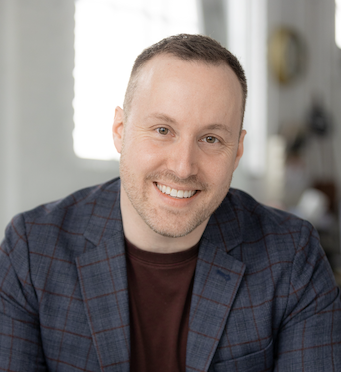 Benoît Lamontagne, management consultant and facilitator
After years of managing complex projects in the aerospace industry, Benoît Lamontagne saw firsthand how teams struggle with efficiency, alignment, and unclear deliverables. Now, as a management consultant and Concordia Continuing Education facilitator, he helps teams avoid the same mistakes. Through his company, Services-conseils BL, and as the instructor of CCE’s Integrated Project Management workshop, he guides organizations toward more efficient workflows and better solutions that move their projects ahead.
What inspired you to start teaching in addition to your professional work?
Benoît Lamontagne: I worked in the aerospace industry for almost 15 years before transitioning to a role that leaned more towards continuous improvement. That’s when I started to facilitate workshops and provide coaching. I thought to myself, I have all this expertise in project management; 'why shouldn't I share that with others?'
Then around eight years ago, I decided to start coaching on my own, which led me to Concordia. My main focus there is our project management training. I think it’s one of the most popular corporate training workshops. So that’s what I do now.
What unique experiences do you bring to your classes at CCE?
BL: I'm actually an engineer by training. Early in my career, I was working for a company that's now called CMC Electronics, which would be considered a large company with about 1,500 employees. I started as a developer and tester but eventually became a project manager for small, mid-sized, and large projects.
How has your industry evolved over the years?
BL: All organizations want to manage their projects better. But they all face the reality of needing to balance operations with day-to-day tasks. On top of that, they often have several smaller projects that they’re not exactly sure how to tackle. So it's all about both individual and collective efficiency. You need to have both hands on the wheel.
What real-world challenges do you help your students tackle?
Benoît Lamontagne: Some organizations think project management just means working more efficiently. Others feel overwhelmed but aren’t sure why.
So we look at those types of challenges. Are they actually overwhelmed or not? Is it something else? How do we manage the team’s capacity to move forward?
You don't necessarily need to apply project management processes to everything you're doing. There are big projects and there are small projects. For example, planning a personal trip is a project one individual can easily manage.
But if you’re building a bridge — you won’t accomplish that with a to-do list. So we look at where and how to apply the right solutions effectively.
Related workshop