

Germany’s Advisory Commission on Nazi-Looted Art brokers unprecedented agreement between museum and heirs of Jewish dealer and Jewish client


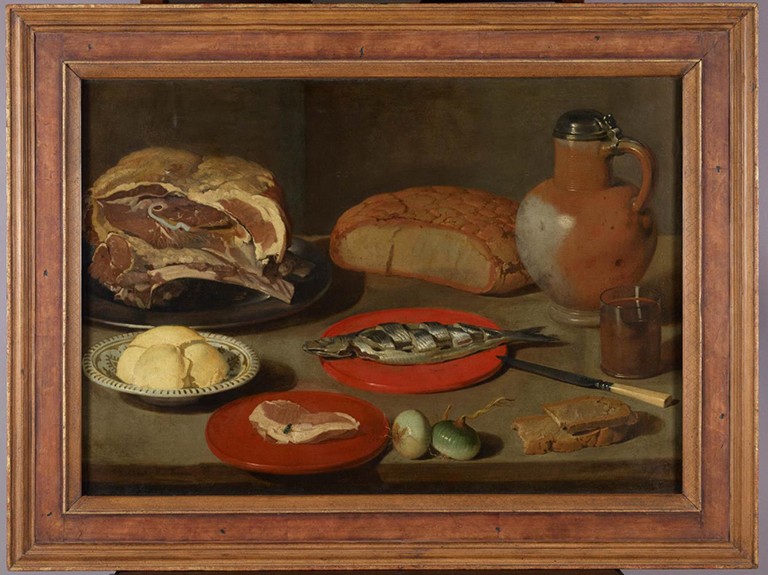
On November 14, 2025, the State Museum Bonn returned “Peasant Breakfast”, a Dutch still-life painting by Pieter van Plas (c.1595-1650) to the heirs of art dealer Dr. Max Stern, owner of Galerie Stern in Dusseldorf until forced to leave in 1937, and the heirs of Hugo Heinemann, a client of Galerie Stern who was murdered in a Nazi concentration camp.
Following four years of discussion, the return was brokered by Germany’s Advisory Commission on Nazi-Looted Art (Beratende Kommission NS-Raubgut). For the first time in its 23-year history, rather than arriving at a non-binding recommendation, the Commission helped all parties reach an amicable agreement through mediation.
According to the Commission’s guidelines, since the dealer that sold the painting was the primary victim, he is the rightful owner. But the Commission found that restitution to the primary victim was not consistent with the 1998 Washington Principles on Nazi Confiscated Art, which recommends a fair and just solution for all victims of National Socialist policies.
This rationale was bolstered by the findings of an ongoing research project at Dusseldorf City Museum funded by the German Lost Art Foundation (Deutsche Zentrum Kulturgutverluste) on the Galerie Stern’s client base.
Having identified over 150 Jewish customers with whom Stern conducted business after 1933, “such transactions raise critical questions on how the relationship between two victims of Nazi persecution should be assessed in a restitution case,” said Robert Vineberg, Trustee of the Dr. & Mrs. Max Stern Foundation which benefits Concordia University in Montreal and Hebrew University in Jerusalem.
The recommendation for the van Plas painting could become a benchmark for future cases. However, as the Stern/Heinemann case is the last official act of the Commission before it dissolves at year end, there is growing concern that the revised process of decision-making by the German government will favour museums and not Jewish victims.
“It is the sincere hope of many claimants that the new Arbitration Tribunal (Schiedsgerichtsbarkeit NS-Raubgut) will continue to render decisions guided by the ethical and moral frameworks entrenched in the Washington Principles,” noted Dr. Willi Korte, chief investigator of the Max Stern Art Restitution Project.
The Spoils, a documentary that examines the global efforts to recover art looted by the Nazis, is now available to stream on CBC Gem.
Learn more about the Max Stern Art Restitution Project.