

article
Understanding Greenhouse Gas (GHG) emission scopes
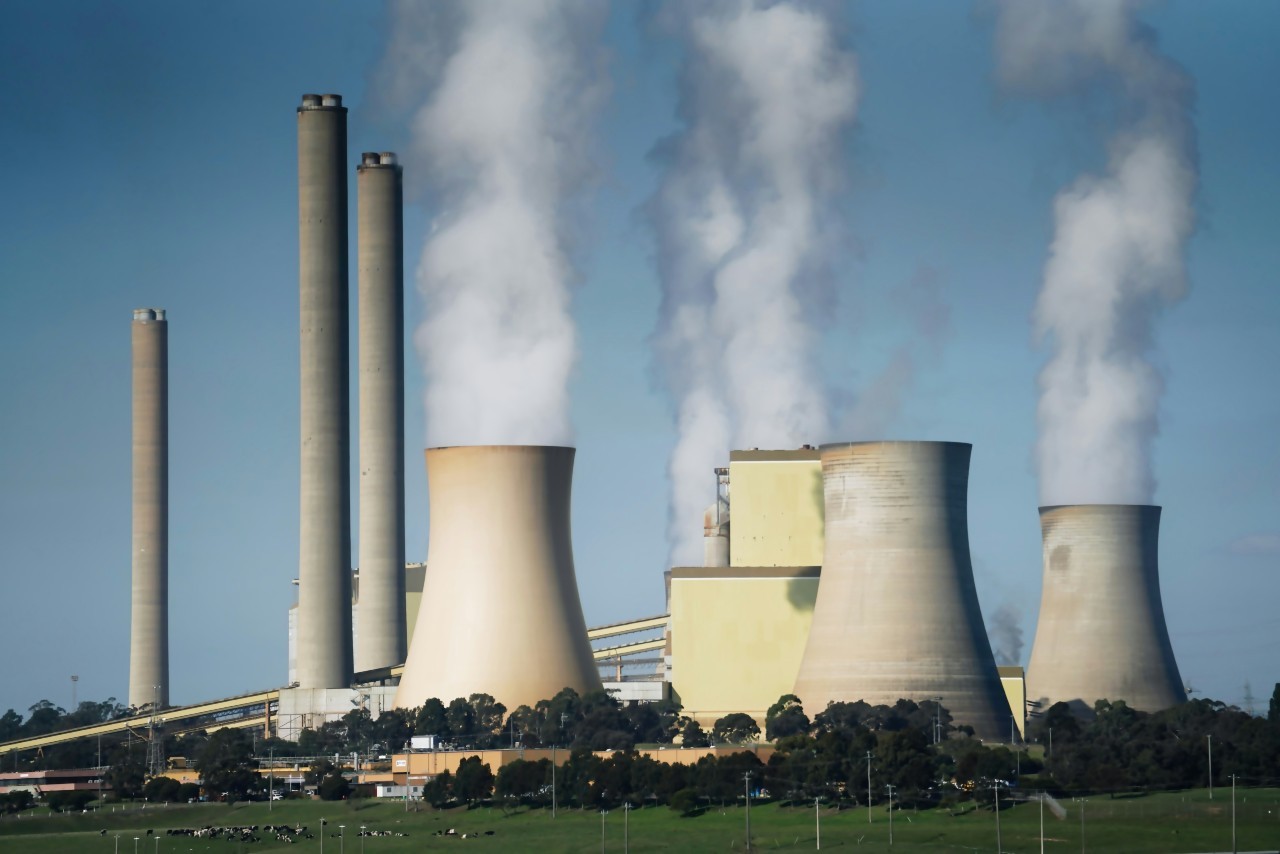 Photo by Billy Joachim on Unsplash
When we think of the environmental impact of multinationals, greenhouse gas (GHG) emissions are always front and center. In a growing economy, it is natural that with greater sales there is a greater need for energy consumption, and subsequently, higher emissions resulting from our prevalent use of fossil fuels.
What is not immediately intuitive is the fact that a company’s activities would lead to emissions by others, including suppliers, but also clients. These are the different scopes of emissions identified by the Greenhouse Gas (GHG) Protocol, a standard setting body that defines the accounting guidance for how to identify and report on emissions by organizations.
Corporate reporting on three scopes of emissions
Naturally, companies need to report direct emissions from their own operations (Scope 1), as well as indirect emissions associated with the generation of electricity they consume from a utilities supplier (Scope 2). However, companies should also consider indirect emissions across their value chain, including from suppliers, transportation and logistics, and the use of their products and services by customers. These are classified as Scope 3. Recognizing the different scopes is important because it allows companies to better identify emission sources, improve operational efficiency and support more sustainable growth.
In Canada, the major listed companies in the TSX 60 take different approaches to reporting their emissions. While the majority (45 of the 58 companies that provide sustainability reports) indicate all three scopes, four companies settled for only scopes 1 and 2, presumably because of the complexity of identifying and quantifying the various scope 3 emissions. Six companies elected not to provide exact values of any emissions, a reflection of the voluntary nature of reporting emissions in Canada. Interestingly, three of these six companies operate in the energy sector, though another seven energy companies did provide details for all three scopes.
Categories of scope three emissions
The complexity in identifying and reporting Scope 3 emissions stems from the diversity of activities included in this scope, and the challenges associated with measurement and attribution. Scope 3 is an umbrella category encompassing activities leading into and out of a company’s operations. From the supply of materials to the use and eventual disposal of a product or service, these emissions occur outside the firm’s direct operations and control, increasing measurement uncertainty. Consider a smartphone manufacturer. The company purchases batteries from a supplier; the emissions generated in producing and transporting these batteries are upstream Scope 3 emissions for the phone maker. Transporting the finished products to retailers constitutes downstream Scope 3 emissions. This extends further: the use of phones by consumers and the disposal of old phones creates emissions that companies must consider.
In a report by a TSX 60 company, it is common to find about five categories of scope 3 emissions. One exception is a company that identified all 15 categories according to the GHG Protocol. On the other end of the spectrum is a company which listed a single category. The most common category is business travel, with more than half of the group (35 companies) reporting emissions from this activity. This reflects Canada’s shift to the service industry at the expense of manufacturing over the past 30 years. Two other prevalent categories are the purchase of goods (think battery suppliers), and fuel and energy (think diesel from freight trucks), with 32 companies reporting each category. Only nine (9) companies consider end-of-life activities in their scope 3 emissions, again, due to the complexity in finding an exact value.
Implications
What does reporting on emissions and scopes mean to us? It is important to make sense of what processes are bottlenecks when it comes to pursuing a net zero business model. This starts with Canada’s largest companies, which act as leaders in their respective sectors. It is also important to identify areas with greater complexity to find out emissions blind spots that can be addressed. Companies that avoid guiding and holding their suppliers to strong standards may reduce or even eliminate all of their scope 1 emissions. However, they would still be responsible for high greenhouse gas emissions if their operations do not support an infrastructure that encourages smaller companies to adopt more efficient and sustainable processes.
Read the full article in 2025 ESG Reporting Radar: Al Maleh, H., Ben Ali, C., He, L., & Jiang, Y. (2025). Scoping the GHG Scopes. In H. Al Maleh et al. (Eds.), 2025 ESG Reporting Radar: TSX 60 Spotlight (pp.32-35). Climate Business Institute, Concordia University, John Molson School of Business, Montreal, Canada.
About the John Molson Climate Business Institute
The John Molson Climate Business Institute (CBI) focuses on rethinking how businesses operate to better align with environmental goals, social well-being and organizational principles. By conducting practical research, collaborating with stakeholders and offering educational programs, the institute drives meaningful change and helps businesses tackle the challenges of the modern world.
About Climate Measures and Reporting Impact Lab
The Climate Measures and Reporting Impact Lab drives business decarbonization and environmental progress through research, teaching and community engagement. It focuses on improving climate-related communication, guiding businesses in transitioning to sustainable models and enhancing methods for measuring and managing emissions. By aligning strategies with sustainability goals, the lab helps organizations meet stakeholder expectations, improve decision-making and build trust in their environmental performance.


