

Curatorial Studies student Aaron Rice explores Indigenous feasting during MOA residency


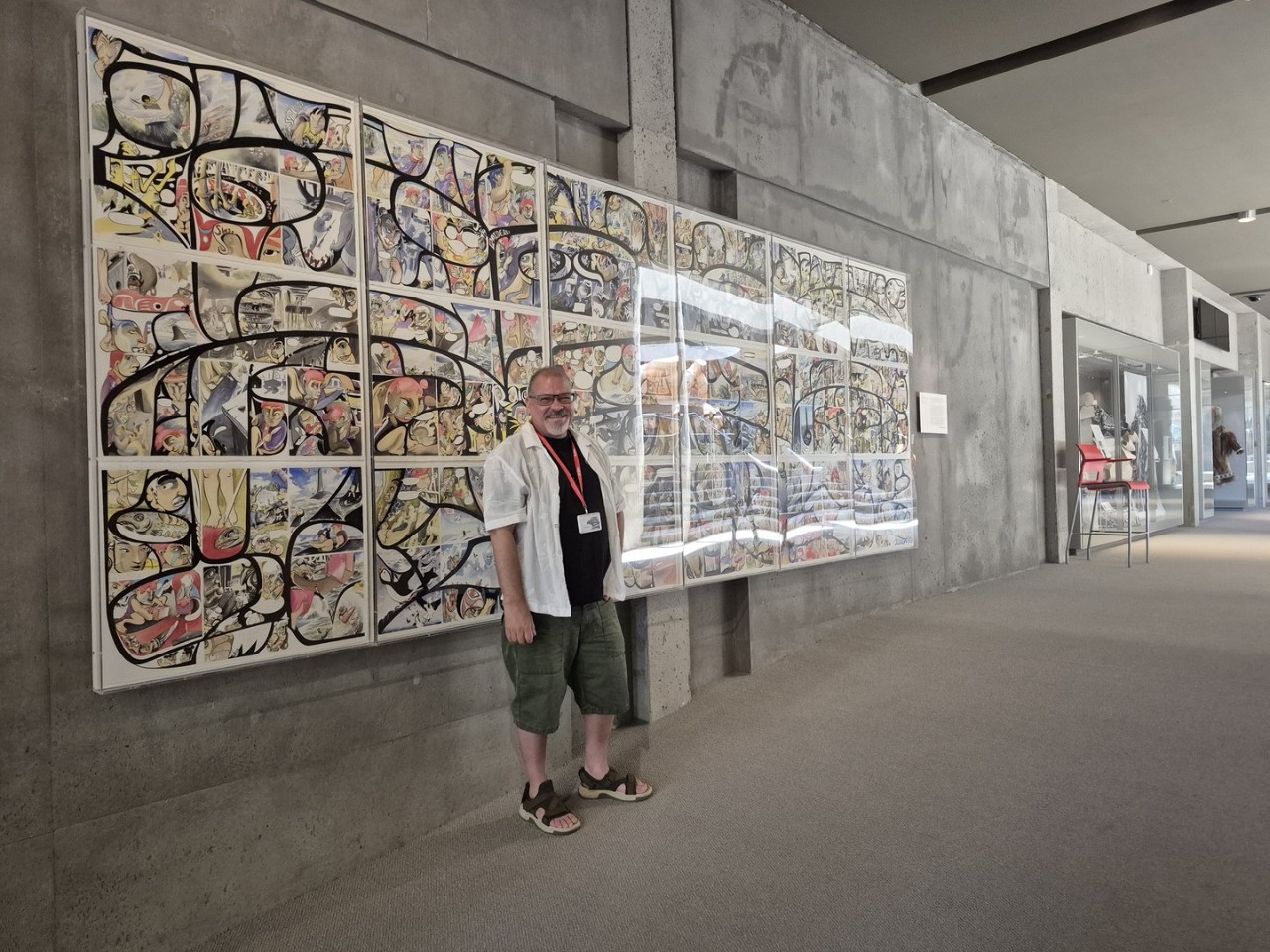 Aaron Rice at the University of British Columbia’s Museum of Anthropology (MOA)
A residency at the University of British Columbia’s Museum of Anthropology (MOA) took Concordia student Aaron Rice from museum collections to movement workshops, revealing unexpected connections between sculpture, performance and Indigenous cultural knowledge.
Rice, who is completing his Graduate Certificate in Curatorial Studies and Practices, undertook the residency as the practicum component of the program. Supported by the Bill McLennan Northwest Coast Travel Award, he engaged with MOA's renowned collections, observed museum practices and connected with artists, researchers and cultural interpreters. the residency as the practicum component of the certificate.
“My artistic practice is based in sculpture and the activation of spaces through installation, performance and engagement,” says Rice. “The residency allowed me to strengthen my work with research while helping frame my thinking around curation, performance and spaces for exhibition and cultural engagement.”

Rice focused his research on Indigenous foodways and the practices and protocols surrounding potlatch and feasting. Access to the museum’s collections allowed him to closely examine objects connected to these traditions, including feast bowls, spoons and serving dishes.
“Seeing the feast bowls, spoons and serving dishes up close allowed me to imagine the artistry, skill and intentional making that each vessel is imbued with,” he says.
Rice’s residency also marked a return to MOA, following a previous residency at the museum in 2023. Having worked on the University of British Columbia campus for 20 years, he describes the experience as both familiar and welcoming, while offering new opportunities to connect with museum staff, visiting artists and Indigenous cultural interpreters.
During his time, Rice engaged with cultural interpreters who develop and lead tours connected to the museum’s collections, learning more about how research, storytelling and personal relationships can shape public engagement with cultural belongings.
“I interacted with them and gave feedback on their tours—how they research, write scripts and insert personal stories and relations to ancestors within the collection,” he says.
Another highlight of the residency was participating in a four-day workshop led by Māori choreographer Charles Koroneho, exploring breath, movement, somatic theory and the body as a vessel.
These experiences continue to inform Rice’s artistic practice and his approach to exhibition-making and cultural engagement. The residency also builds on his ongoing work, including a residency at Artexte concluding in September 2026, where he is developing a presentation involving feasting and performance.
“The connections and experiences that were made are invaluable and provide inspiration for future projects,” says Rice. “This residency also helps to build my profile as a researcher and maker.”
The Award, administered by Concordia University’s Faculty of Fine Arts and funded by the Doggone Foundation, honours the legacy of the late Bill McLennan (1948–2020), curator emeritus of MOA and a passionate advocate for Indigenous Northwest Coast arts.
The $10,000 award supports a four-to eight-week summer residency at MOA for Fine Arts students whose research or artistic practice intersects with Northwest Coast Indigenous art and cultures. Applications are reviewed by a panel comprising Indigenous faculty members, MOA curators and MOA’s director.
The next call for submissions will be announced later this fall.
Discover the Curatorial Studies and Practices program.