

Each year, the Faculty of Arts and Science recognizes students who have achieved the highest academic standing in their respective programs through its annual Scholars List. We spoke with Emma Quỳnh Liên Wong, Double Major Political Science and Liberal Arts, and one of this year's honourees, about her academic journey, what motivates her and the experiences that have shaped her time at Concordia.
The Faculty of Arts and Science unveils its Scholars List
Meet Emma Quỳnh Liên Wong, one of the students recognized for outstanding academic achievement
November 4, 2026
|


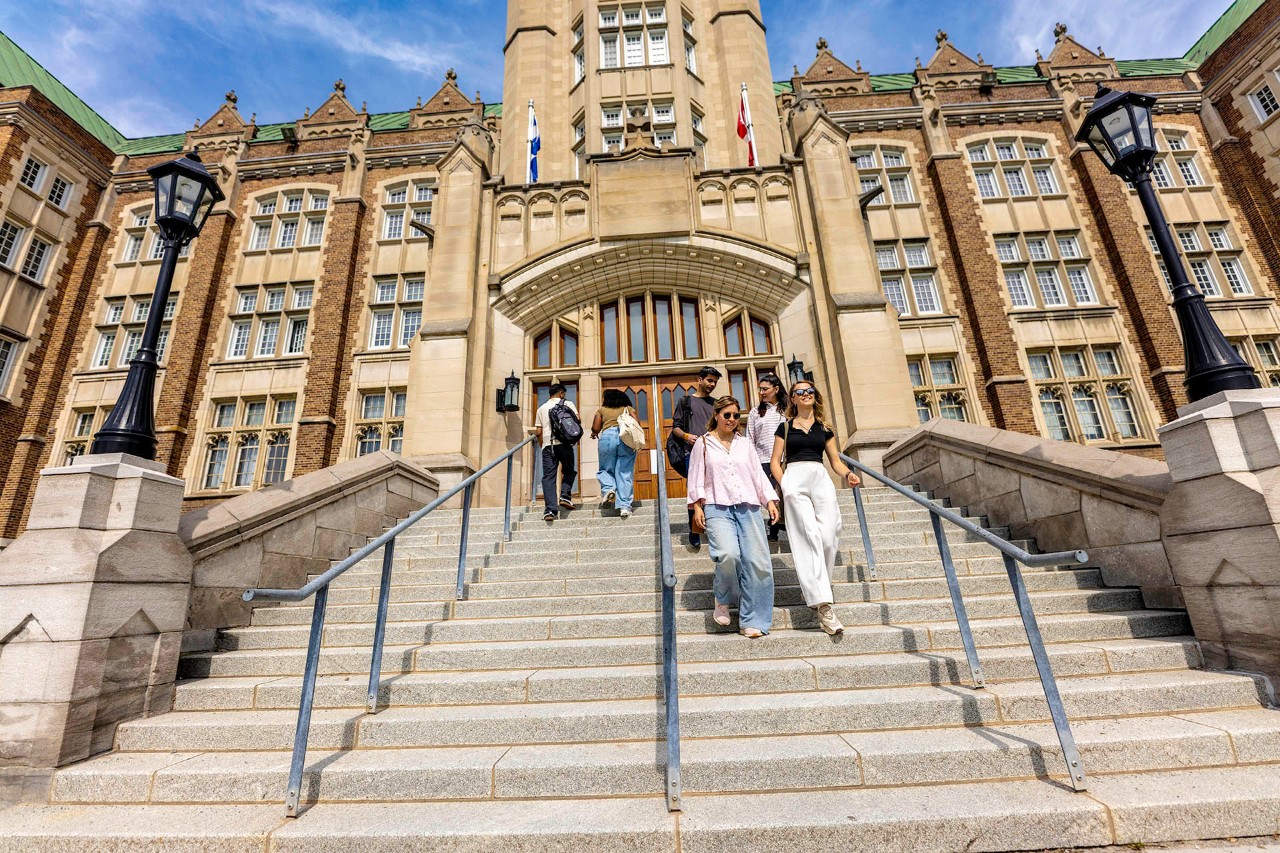 Each year, the Faculty of Arts and Science recognizes students who have achieved the highest academic standing in their respective programs through its annual Scholars List.

Emma Quỳnh Liên Wong
Double Major Political Science and Liberal Arts
What does being named to the Scholars List mean to you?
Emma Quỳnh Liên Wong: Being named to the Scholars List at Concordia is an honour, and I am beyond grateful for the recognition. To me, it is less a personal achievement than a reminder of why I pursue my education: I want to contribute to a world that is more informed, equitable, and intellectually engaged.
That belief informs and guides my involvement in both the Garnet Key Honour Society and the Athenae Initiative, a non-profit, non-governmental organization I co-founded this past year. Through Garnet Key, I have the privilege of representing Concordia and supporting a community that values academic excellence and service. Through Athenae, I work toward a future in which the humanities and classical education are valued not simply for the knowledge they preserve, but additionally for the nuance, interpretation, and intellectual independence they cultivate. In an age increasingly shaped by artificial intelligence (AI), access to information is no longer the only barrier to knowledge. What matters just as much is our ability to question assumptions, engage with complexity, and develop our own perspectives. Both organizations share the conviction that academic excellence carries a responsibility to foster these qualities beyond the classroom.
The Scholars List reflects this same commitment. At a forward-thinking institution like Concordia, learning means more than acquiring knowledge; it means developing the capacity to challenge established ideas and imagine new possibilities. As AI continues to reshape how we access and produce information, I believe the distinctly human ability to interpret, reason, and think independently will become all the more important. This recognition motivates me to continue working toward a future in which education does not only inform us but teaches us how to think.
What are your aspirations for the future?
EW: I hope to become a full-time researcher and university professor, dedicating my career to the pursuit of knowledge for its own sake. This aspiration is rooted in my own experience as a member of the Vietnamese diaspora, which has shaped the questions that drive my work.
I am interested in how philosophy, religion, and politics intersect with the stories communities tell about themselves, particularly among displaced diaspora communities and refugees. My double major in Political Science and Liberal Arts has allowed me to approach these questions from complementary perspectives, examining both the political structures that shape people’s lives and the philosophical and cultural traditions through which they make sense of their lived experiences. At Concordia, I have been able to bring these broad interests together into a more cohesive intellectual pursuit: understanding how stories preserve traditions, transmit values, and shape a community’s sense of identity across generations. I aspire to contribute to this field by exploring how the narratives we inherit influence our understanding of ourselves and the world around us.
In this way, my academic pursuits and personal history lead to the same goal: building a future in which education and understanding help communities heal and make sense of where they come from.
What advice would you give to other students who want to make the Scholars List?
EW: While academic accolades play a meaningful role in recognizing hard work, I prefer to lead with curiosity as it provides a stronger foundation than the pursuit of recognition. A genuine interest in learning sustains effort over time and tends to produce better work, both theoretically (i.e. through papers and research) and tangibly, through the contributions we make to our communities. Ambition and hard work are valuable but are best treated as tools in service of a larger purpose. When our work is guided by conviction, curiosity, and a desire to contribute meaningfully to the world around us, recognition tends to follow as a natural result rather than a goal.
My experience at Concordia has been shaped by this philosophy. Over the past few years, I have gradually risen through the ranks of the Concordia Global Affairs Association (CGAA), growing alongside its three independent branches. As Chairperson, I now have the privilege of leading the organization into its next chapter: the Concordia External Delegation, our competitive team, now ranked #15 in North America and #2 in Canada; Concordia Model United Nations, our annual conference, which welcomes over 350 delegates from around the world and ranks among the top ten conferences; and the Concordia Humanitarian Initiative Project, our philanthropic branch. Each reflects a different expression of the same commitment to intellectual growth, leadership, and service. Having progressed through the organization myself, I see my current role not simply as a position of recognition, but as an opportunity to build on the work of those who came before me and help each branch reach new heights.
Ultimately, I see both my work with CGAA and my place on the Scholars List as natural extensions of the same conviction: that learning is most meaningful when it moves beyond the individual and becomes something we can share, build upon, and put to use in service of others.