

Date & time
Friday, March 27, 2026
3 p.m. – 5 p.m.
3 p.m. – 5 p.m.


Sean Kelsey, Professor of Philosophy, University of Chicago
This event is free.
Department of Philosophy
514-848-2424 ext. 2500
J.W. McConnell Building
1400 De Maisonneuve Blvd. W.
R. Howard Webster Library
Room 362
Yes - See details
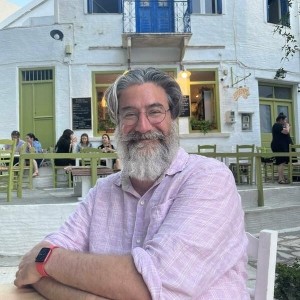 Sean Kelsey
Abstract: In De Anima III 5 Aristotle distinguishes two forms of ‘understanding’ (νοῦς). One of them he characterizes as (merely) ‘capable’ (δυνατός) and as ‘passive’ (παθητικός) and ‘receptive’ (δεκτικός); his image is of a wax tablet on which nothing has been written. The other he characterizes as ‘essentially activity’ (τῇ οὐσίᾳ…ἐνέργεια) and as ‘productive’ (ποιητικός); his images are, first, of ‘craft’ (τέχνη), and second, of light, which in a way (he says) makes colors in power to be colors in act. The commentary tradition has been much occupied with this distinction: in particular, with the question of whether (and if so, how, and with what implications) the second form of understanding is a form of our (human) understanding. This is not the question I want to pursue in this talk, at least not directly. Instead I want to ask whether the distinction is supposed to teach us anything about the character of our intellectual life, specifically about the processes whereby we acquire ‘understanding’ or ‘insight’ (νόησις). My proposal will be that there is a lesson in this area, namely that all understanding or insight presupposes and is gained from some prior understanding or insight. But my approach will be crabwise, via some concerns that I have about his ostensible solution to a problem he develops towards the end of De Anima III 4.
Sean Kelsey is Professor of Philosophy at the University of Chicago. He specializes in Ancient Philosophy, especially Plato and Aristotle.
© Concordia University