

Concordia student Marion Thénault is flying high ahead of her second Olympics


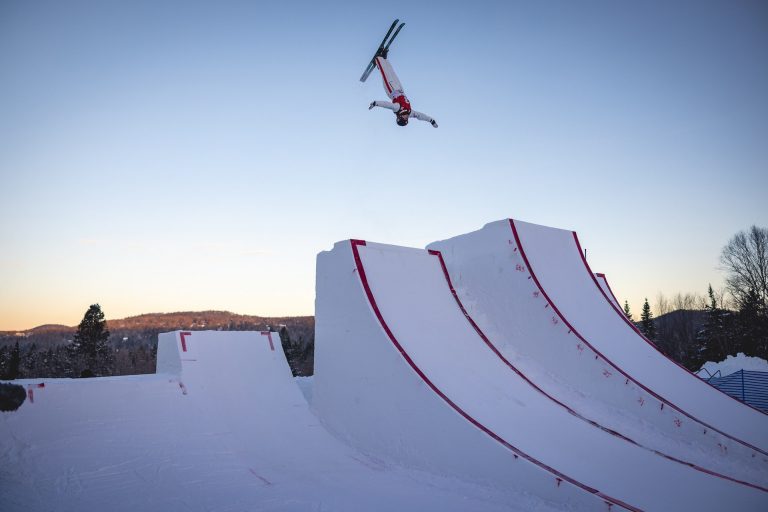
When aerial skier and Concordia student Marion Thénault launches into a jump at more than 60 kilometres an hour, hesitation isn’t an option.
“Facing a wall that comes at you fast, you have to stand tall,” she says.
Thénault is among the few women in the world capable of performing triple backflips on snow. Since winning bronze at the 2022 Winter Olympic Games, the pressure has grown along with the complexity of the jumps she plans to attempt this year.
"I am among the best in the world in my discipline. People expect me to perform to the level of my abilities," she says.
That mindset shapes not only her approach to skiing, but how she meets challenges off the hill as well. During a training session in December 2023, she suffered a heavy fall that caused a concussion and bone contusions between her vertebrae. Two years later, in December 2025, she sustained a second concussion during another training session. Still, she remains determined to confront her fears.
"It’s scary, so I work on it. But I like the challenge,” she says. “That’s what keeps me attached to this sport."
Dedicated to her studies
Alongside her athletic career, Thénault is pursuing a part-time bachelor's degree in aerospace engineering at the Gina Cody School of Engineering and Computer Science.
She describes her path as one that requires a high degree of autonomy. Over time, she has developed her own learning tools and identified her go-to contacts. But she says her professors’ flexibility — such as accommodating her competition schedule and supervising exams remotely — has been key to her success.
"My studies are important to me. I miss a lot of classes, but it’s my responsibility to cover all the material and understand what other students are doing. I would not be able to do both school and sports at the same time without that openness from the School," she explains.
She recalls the support offered by one of her teachers, Hany Gomaa, a professor in the Department of Mechanical, Industrial and Aerospace Engineering. Gomaa agreed to meet with her one-on-one remotely during his office hours — normally held in person — to help her understand a concept she had missed because of competition-related absences.
"I really felt that he wanted me to understand and that he wanted to support me. It was a very kind gesture, and it left a strong impression on me," Thénault says.
"Marion is a remarkable example of an elite athlete who is also a brilliant, thoughtful and conscientious engineering student,” Gomaa adds,
“She is, without a doubt, a future engineer with exceptional potential. I am convinced that she will make significant and lasting contributions to any organization she joins," he says.
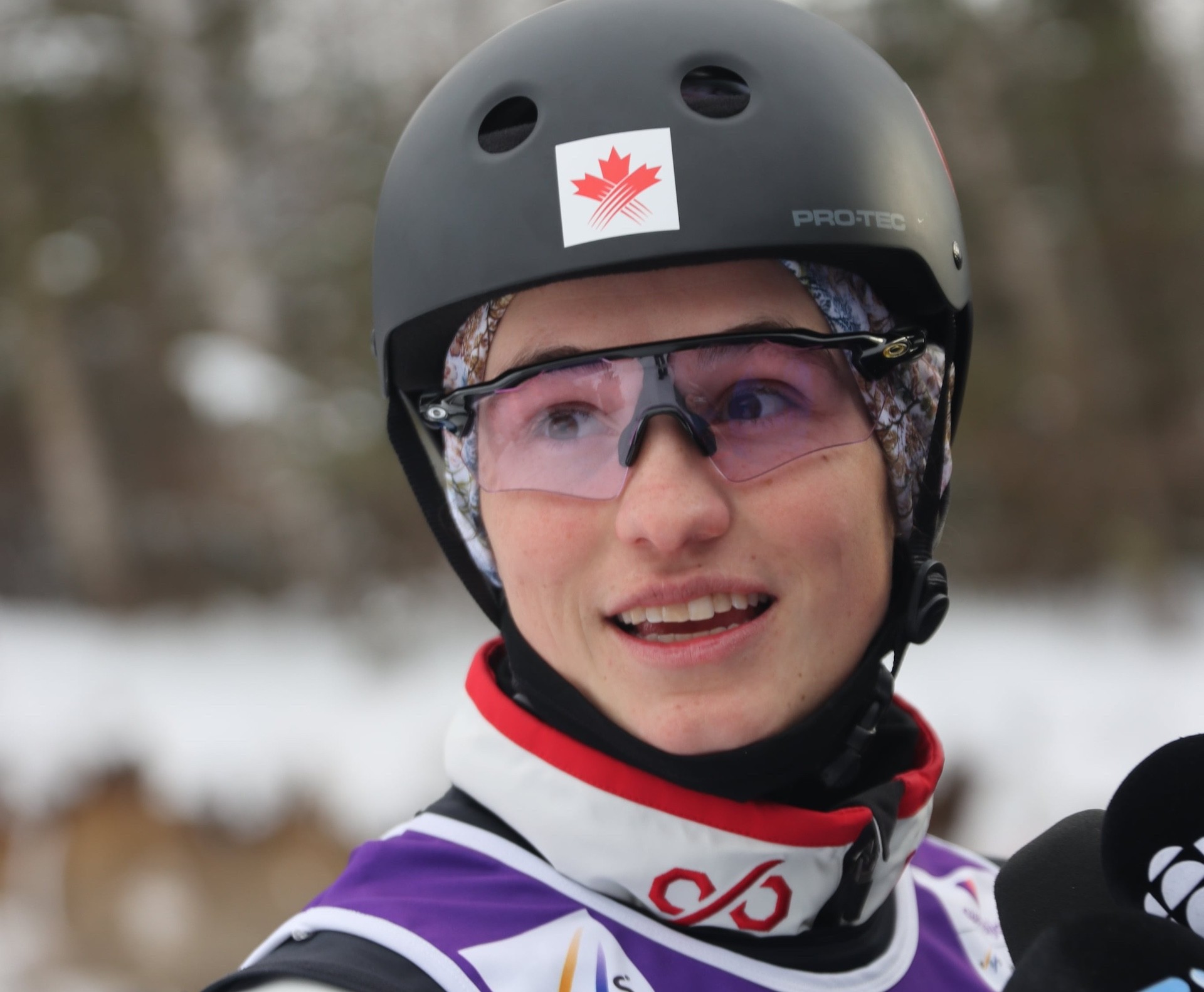 Marion Thénault: 'You have to stand tall in the face of the things that intimidate you.' | Photo by Jean-Yves Gauthier
Driven by discipline
That same discipline shows up in Thénault’s commitment to environmental sustainability. She completed an internship in sustainable development at CAE, a flight training company, and is involved with non-profit organizations such as Protect Our Winters.
Plus, since 2022, she has led an initiative to reduce and offset the carbon footprint associated with her athletic career. In partnership with engineering firm WSP, she measures travel-related emissions for herself and other athletes.
This work has led her to reach out to various sports organizations, with the goal of sharing the data she collects to help them rethink competition schedules. She says the idea is to reduce travel overall and, in turn, greenhouse gas emissions.
Thénault credits her time at Concordia with giving her the confidence and tools to tackle environmental issues.
"What’s helped me the most is the confidence I’ve gained in my abilities during my bachelor's degree. My studies also enabled me to secure my internship at and collaboration with CAE,” she says.
“Pursuing my studies while competing also resonates with people. It matters to me, but I would not be able to do both at the same time without Concordia's support."
When asked what she hopes non-elite athletes take from her journey, Thénault returns to the image of standing tall.
"The jump is something that scares and intimidates me, but it’s also a message I like to carry with me: you have to stand tall in the face of the things that intimidate you,” she says.
“For me, it is a jump — but the idea applies to many parts of life."