Commercial teams know bookings and customers but may not see how weather, congestion, or regulatory checks reshape schedules.
The certificate program, Kancens and Hall explain, doesn’t try to turn a policy analyst into a port engineer or a commercial manager into a master mariner. It instead shows how these roles influence one another so participants can understand where their responsibilities connect. That broader picture becomes the starting point for better questions, clearer decisions, and fewer surprises.
Global events, local consequences
A further challenge stems from how the shipping industry reacts when global forces shift quickly.
“Shipping exists to move the world’s trade and to serve all the economies that depend on it,” Kancens says. “Everything that happens in the world geopolitically impacts shipping.”
For example, in the wake of jarring U.S.-imposed tariffs, countries around the world have reconsidered trade partnerships, causing changes to long-standing shipping routes.
A conflict can disrupt a familiar passage. A decision made far from Canada can change which ships arrive and when, and what they carry.
For a shipping professional focused only on a schedule or a contract, those changes can feel arbitrary. The program gives learners a grounded sense of how operational problems often originate far beyond the local port.
Reading risk, rule, and regulatory fine print
Another major challenge is the web of rules and liabilities behind every voyage. International conventions provide common standards, but each region adds its own requirements.
These layers influence insurance conditions, documentation, port state inspections, and commercial risk. Without context, it is easy to misread where responsibility lies or why a particular step is required when something goes wrong.
“No words can describe how complex it gets,” Hall says. “It is infinitely complex.”
The Certificate in Marine Transportation program helps participants understand the structures that govern shipping so they can trace a problem back to its source rather than treat every disruption as a surprise.
With the right context, people gain the confidence to ask sharper questions and look beyond the limits of their job description.
Learning what works across the industry
No one can solve these challenges alone, which is why the program brings people from different parts of the industry into the same room. Shipboard officers, shore-based staff, commercial teams, government employees, and legal and insurance professionals learn side by side. The instructor anchors discussions in real cases and invites guest speakers whose experience spans the system.
Kancens sees how quickly this mix shifts the conversation.
“The various perspectives and levels of experience that everyone brings are hugely important,” she says.
The goal is not to collect facts about each role but to build a shared mindset. When challenges arise, participants can locate how a problem actually begins and move toward solutions more quickly. The pace of trade demands it, and understanding the system makes that possible.
Hall puts it simply.
“We always say in our industry the way people learn is on the job,” he says. “And while that is not unusual, it is also not the most efficient way to get better at your job. This certificate is the antidote to that.”





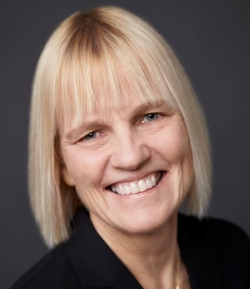 Karen Kancens, Vice President of the Shipping Federation of Canada
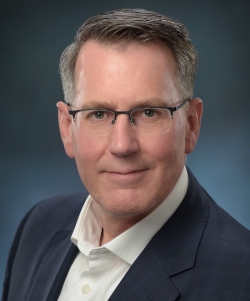 Chris Hall, President and CEO of the Shipping Federation of Canada