

How Antoine Labranche went from Concordia student to Royal Canadian Air Force squadron commander


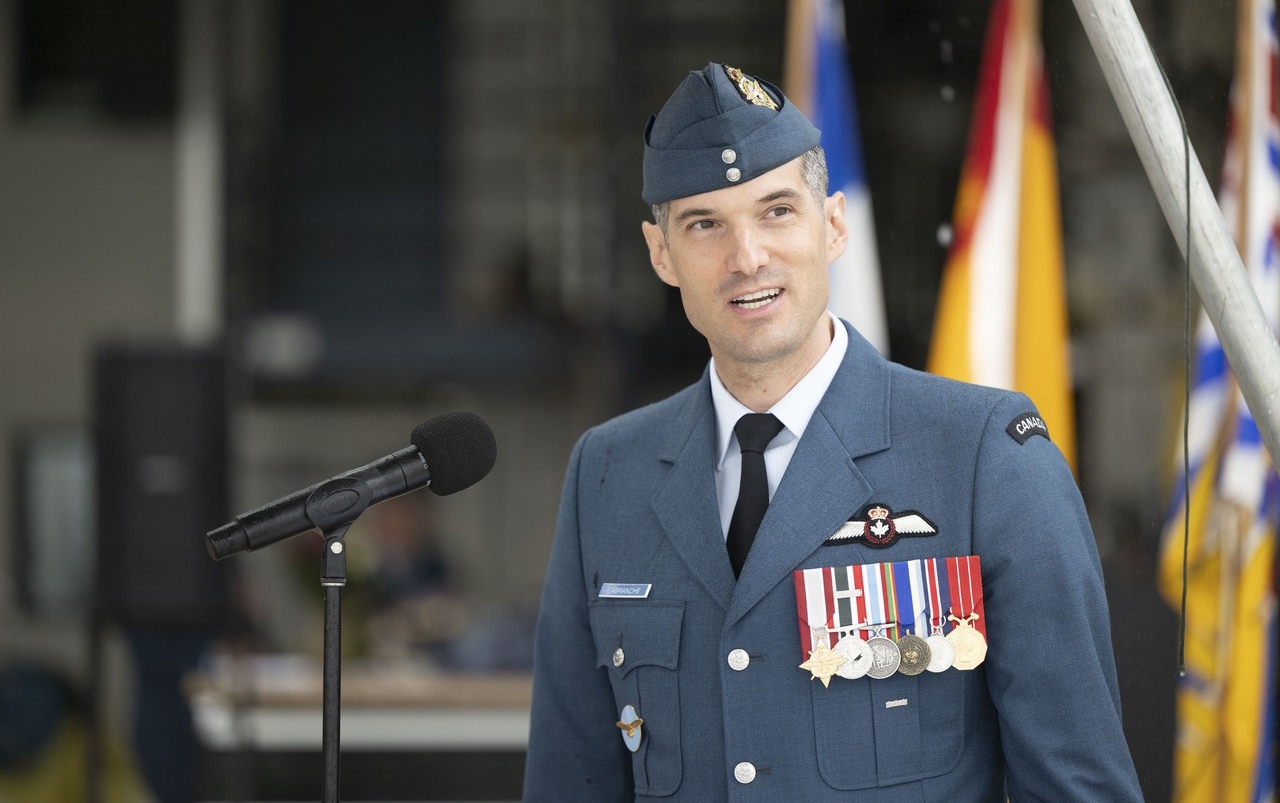 Lieutenant-Colonel Antoine Labranche delivers remarks during the 430 Tactical Helicopter Squadron Change of Command ceremony in Valcartier, Que., on 3 September 2026. | Photo: Sergeant Geneviève Lapointe, 2nd Canadian Division Valcartier Imaging Services
Antoine Labranche, BA 09, wrote his undergraduate honours thesis on the Crimean War and why the Russian army struggled against French and British forces in 1854. He was interested in how leadership and decision-making could shape the outcome of a conflict — a subject that would take on new meaning in his military career.
Seventeen years later, Labranche now commands 430 Tactical Helicopter Squadron at Canadian Forces Base Valcartier, where nearly 300 personnel fly and maintain the CH-146 Griffon helicopters. He took on the role in September, with a detachment in Latvia as part of Canada’s contribution to the North Atlantic Treaty Organization (NATO).
Labranche’s first act as commander was to listen, he says.
“Not just shaking hands, but taking the time to hear how things were, how the tempo was, how their families were.”
The lieutenant-colonel set three priorities for the squadron: strengthening esprit de corps, preparing personnel for a changing battlefield and maintaining the readiness to respond. He also knows that leadership means investing in people, a lesson he learned at Concordia.
Faculty member Alison Rowley encouraged Labranche to enter the honours History program, supervised his research and helped him to develop as a writer.
“She gave me confidence in my research and writing, and she advocated for me,” says Labranche who received an Alumni Recognition Award — Young Alumnus of the Year from the Concordia University Alumni Association in 2019.
When Labranche wanted to explore military history, Rowley adapted one of her courses to focus on Russia and later the Soviet Union. Other professors also found ways to accommodate his interests, while cross-country team coach John Lofranco helped shape his understanding of leadership and the importance of investing in young people.
Labranche’s academic interests also extended to China, where he studied Mandarin and Chinese history on an exchange in 2008. His focus on Russia and China was unconventional at the time, but both subjects would prove relevant to his military career.
“If there’s a lesson to be learned, it’s that when an opportunity comes up and you’re interested, apply yourself completely,” he says. “It may turn out to matter later on.”
The weight of command
Labranche joined the army reserve as an infantry officer in 2006, while still a student, and transferred to the air force to train as a pilot two years later. Since then, he has held several operational and leadership roles — learning from colleagues along the way — before returning to 430 Squadron as deputy commanding officer.
Taking command is different, he says.
“It’s the weight of carrying responsibility for the welfare of everyone,” Labranche says. “What you do in command is take executive decisions, and those come down to risk.”
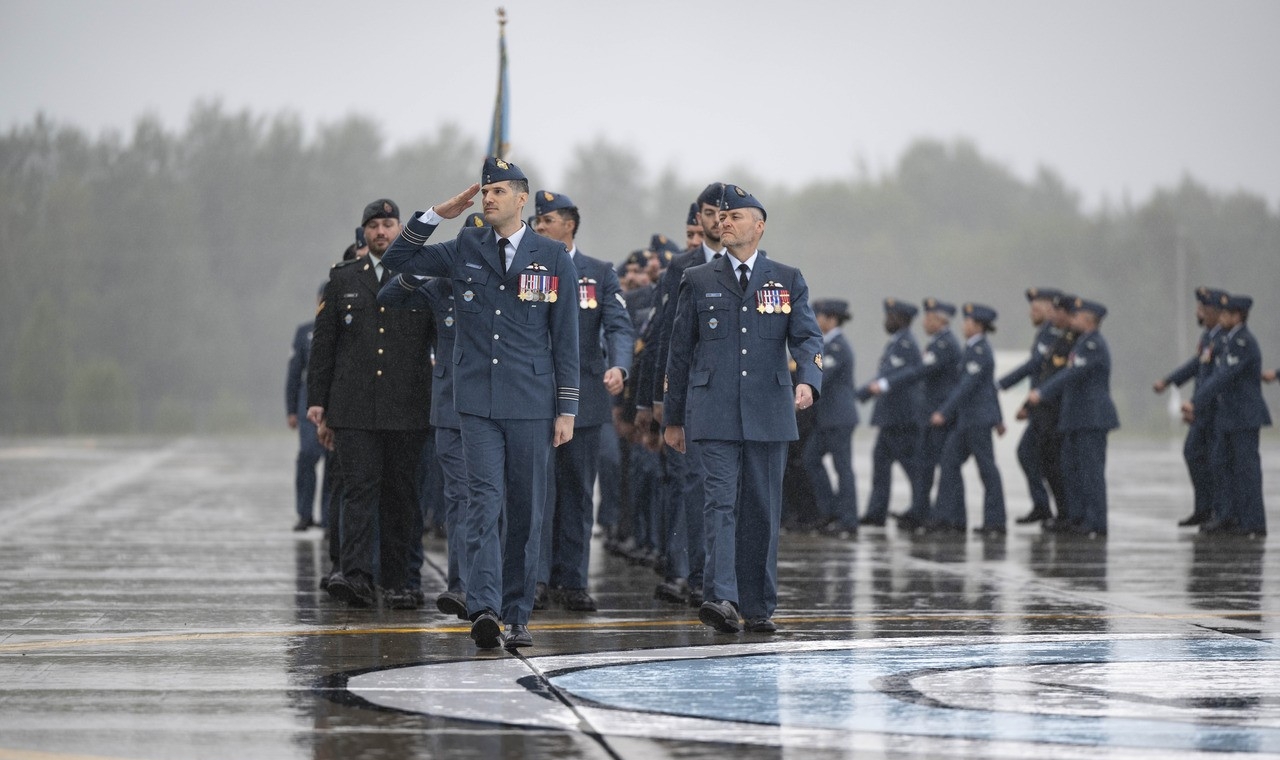 Lieutenant-Colonel Antoine Labranche and Chief Warrant Officer Eric Gelly of 430 Tactical Helicopter Squadron lead squadron members during the Change of Command ceremony in Valcartier, Que., on September 3. | Photo: Sergeant Geneviève Lapointe, 2nd Canadian Division Valcartier Imaging Services
Outside of his military training and duties, Labranche spent his twenties climbing mountains, including Kilimanjaro, Aconcagua and Matterhorn. He hasn’t climbed since 2016, as deployments and promotions took precedence, but mountaineering continues to inform his approach to leadership.
“A leader has to take more risks, because you’re trying to move people somewhere. A commander has to be decisive about it.”
That doesn’t mean having all the answers.
“I wish someone had told me it’s okay not to know everything,” he adds.
For Labranche, effective leadership means knowing when to listen, learning from others and drawing on the expertise of the team, rather than being the most knowledgeable person in the room.
He also emphasizes authenticity. Rather than adopting a leadership persona, he believes leaders should remain grounded in their values while adapting their approach to the people and circumstances before them.
It additionally means making time for the next generation, just as his professors and coach once did for him.
“What’s hard is taking the time to give back,” he says. “If I can invest in the next generation the same way others did for me, that’s a win for everyone.” For Labranche, the examples set by Rowley and Lofranco represent a legacy passed from one generation to the next.