

A cultural strategy without universities misses the mark


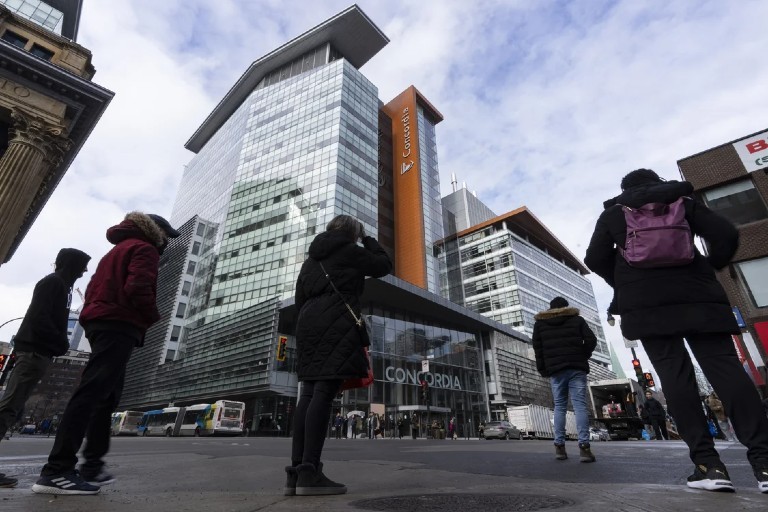 PHOTO CHRISTINNE MUSCHI, LA PRESSE CANADIENNE "In the past year alone, Concordia students and alumni took home a Félix, an Oscar and multiple Grammys and Emmys," writes the authors.
The original French version of this article was published in Le Devoir.
On the evening of May 4, Concordia officially launched its new School of Performance during a celebratory event at Place des Arts.
Place des Arts, of course, is a pillar of the Quartier des Spectacles. Located in the heart of Montreal, this carefully planned area serves as both the artistic epicentre and an economic engine for our city. Quartier des Spectacles is also the best-known accomplishment of Montréal, métropole culturelle.
Originally created in 2007 and revitalized by Mayor Soraya Martinez Ferrada in February, the Montréal, métropole culturelle initiative aims to position our city among the world’s great cultural centres.
I strongly support how the mayor is prioritizing the arts and other creative industries. At the same time, I would hope that Montréal, métropole culturelle 2.0 applies an important lesson from the previous iteration: involve universities early and often.
It would be a huge missed-opportunity if the initiative overlooks the enormous role universities and CEGEPs play in the cultural vitality of Montreal.
Most visibly, the city’s postsecondary institutions and the artists associated with them produce thousands of concerts, exhibitions and every type of performance imaginable each year. From Ville-Marie to Outremont, NDG to Hochelaga-Maisonneuve, universities function as cultural hubs for their immediate communities and all Montrealers.
Our students also flock to Montreal’s venues, from Casa del Popolo to the Bell Centre, generating buzz for emerging performers and helping to attract established acts to the city.
Artists educated at Montreal universities are ubiquitous on the cultural scene in Quebec and Canada as well as internationally. For example, in the past year alone, Concordia students and alumni took home a Félix, an Oscar and multiple Grammys and Emmys.
But Montreal’s universities don’t only produce incredible artists. We develop the entrepreneurs who are continually reimagining what’s possible at the intersection of creativity, design, technology and community engagement.
One such entrepreneur and artist is Luca “Lazylegz” Patuelli. A graduate of our John Molson School of Business, Patuelli received the 40th Grand Prix du Conseil des arts de Montréal just last month for his breakdancing project No Excuses, No Limits Movement.
Another case in point: Vincent Leclerc, Concordia alumnus and founder of Pixmob. Whether you’ve heard of Pixmob or not, you probably know the company’s production work from Super Bowl halftime shows, Taylor Swift’s Eras Tour and opening ceremonies of the Olympic Games. Like Ubisoft, Moment Factory and Cirque du Soleil, Pixmob has revolutionized how audiences experience art, technology and performance in a way that feels uniquely montréalais.
The city’s artists have always shown a rare talent for moving seamlessly between disciplines, industries and languages. Concordia is now formalizing and strengthening how we teach aspiring artists to do just that by bringing together our departments of music, theatre and contemporary dance into a single School of Performance.
Here, students will learn from top practitioners in disciplines outside their own. They will also benefit from opportunities to gain hands-on experience through the school’s wide-ranging collaborations with leading producers, events and festivals. In fact, much of the inspiration for the school came from consulting with our partners, who repeatedly identified a more cooperative approach to education as fundamental to helping the next generation of artists flourish.
The School of Performance will therefore prepare students not only for the stage but for a wide range of career paths in culture and beyond. These could include administrative and leadership roles, outreach, research, education, and even health care by setting them on the path to music therapy and drama therapy.
Faced with artificial intelligence, economic uncertainty and geopolitical turmoil, society’s challenges have never been more pronounced, which means the questions artists ask have never been more relevant.
In this environment, universities aren’t merely watching from the balcony. They’re attracting new talent, building the ecosystem and shining the spotlight on the artists and entrepreneurs Montreal needs now and in the future.