

This article was originally published in EdCan Network authored by Marketing student Michael Lecchino.
How transforming school libraries boosts literacy, digital citizenship, equity, belonging, and student well-being for today’s learners.
Imagine a corner of a school library at lunchtime. A once-shy 7th grader proudly shows off a 3D-printed keychain she made in the library’s maker club, while across the room a group of newcomer students flip through graphic novels featuring heroes who look like them. Nearby, the teacher-librarian chats with some students about their favourite books while also coaching others on how to fact-check an online video for a class project. It’s a far cry from the hushed, musty bookrooms of the past. This is the modern school library in action, one that has evolved into a learning commons that’s changing lives. If you want better readers, safer digital citizens, more inclusive school communities – and even calmer, more curious kids – start with the library.
Yet in many Canadian schools today, the library is an endangered species. In Ontario, only about 52% of elementary schools have a teacher-librarian on staff (down from ~80% in the late 1990s), and in some regions, like Northern Ontario, only around 11% of elementary schools have any librarian at all. In many communities, learning commons facilitators or other dedicated staff work hard to create rich, welcoming spaces for students, even if they are not certificated specialists. But without stable, dedicated staffing, whether teacher-librarians, trained library technicians, or learning commons facilitators, students can lose access to current books and technology, guidance on navigating information, and a safe, enriching space beyond the classroom. Meanwhile, in schools that have been able to invest in a vibrant library learning commons, students benefit from curated resources, up-to-date technology, and a central hub for reading, creativity, and collaboration. These differences are not a reflection of effort or care, but of broader structural realities. Ensuring that all students, regardless of where they live or what resources their school can currently access, have the support of a rich, well-staffed learning commons is ultimately a question of educational equity.
Why Libraries Matter More Than Ever
Research confirms what educators know: school libraries can be a game-changer for student success. Decades of studies in Canada and abroad have found that students tend to earn higher scores in reading and writing in schools with well-stocked, well-staffed libraries. As Dr. Dianne Oberg, a Canadian education expert observed, “the areas of concern that emerge [on assessments] are frequently library-related, particularly in the realm of information literacy practices.” A strong library or learning commons isn’t a frill. It’s foundational to learning in a knowledge economy.
But academics are only part of the picture. School libraries also support students’ social and emotional development. They’re often called a “third space.” Not home, not class, but a welcoming, quieter haven within the school, where the usual classroom pressures fall away. For a child who feels overwhelmed in class or lost on the playground, the library is a refuge, serving as a place to relax, explore personal interests, or find stories that reflect their identity. By providing a safe place to belong, libraries can improve school climate, with fewer lonely kids hiding in the washroom or wandering the halls because they have somewhere to go. One U.K. survey even found that students who use the library have higher well-being, while those who never do are almost twice as likely to report low well-being.
Then there’s the library’s fast-evolving role as the school’s digital compass. Young people today may be comfortable using apps, but recent findings from MediaSmarts’ 2022-2023 Young Canadians in a Wireless World (YCWW) survey of 1,058 Canadian youth caution against overestimating so-called “digital natives.” Despite near-universal internet access with 95% of Canadians aged 15+ using the internet, many youth report needing adult guidance to interpret and evaluate what they see online. According to MediaSmarts, a significant portion of young Canadians say they lack confidence in distinguishing trustworthy information from false or harmful content, especially around privacy, consent, and online harms. A skilled teacher-librarian or learning-commons facilitator can help students think critically about media: how to triangulate sources, recognize bias and bots, practice safe and ethical online behaviour, and even use new tools like generative AI responsibly. These aren’t one-off lessons but habits developed over years. The library is ideally positioned as the school’s media literacy “lab” to cultivate them.
In short, a great school library promises a triple win: stronger literacy and learning, greater equity and belonging, and more informed digital citizens. So, what makes a library great? Experts often point to five key pillars: staffing, collections, space, programming, and media/technology literacy. Each pillar reinforces the others, and together they create a library that helps students flourish.

Staffing: Library Staff as Literacy Leaders
At the heart of any thriving library is qualified staff. You can repaint a library or fill it with new Chromebooks, but without someone whose role includes supporting literacy, technology use, and resource navigation, it’s hard for the space to reach its full potential. In many provinces, this role is filled by a certified teacher-librarians, library support specialists, learning commons facilitators, or library technicians who work hard to curate resources, welcome students, and collaborate with teachers when possible. Regardless of job title, the work is multi-layered: guiding students in inquiry and research, supporting reading engagement, helping classes navigate digital tools, and connecting learners with materials that deepen their curiosity. Not surprisingly, studies show that schools with dedicated library personnel tend to see better student achievement and higher library use by both students and teachers. When library staff have the time and support to do this work, they’re not just minding a desk, they’re co-teaching, coaching, connecting kids with learning, and opening doors for students.
To truly revitalize school libraries, experts urge reinvesting in staffing so that every school has at least one full-time staff member dedicated to running the library or library commons (national standards have historically recommended a ratio of roughly one teacher-librarian per 567 students). When a school has a qualified library professional with time to teach, the library can fulfill its promise as a hub of learning.
Collections: Windows to Diversity and Delight
A school library’s collection is its lifeblood. A modern collection must be diverse, inclusive, and up-to-date, serving as a mirror in which every student can see themselves, and a window into experiences far beyond their own. That means culturally responsive and multilingual materials reflecting the identities and age-appropriate needs of the school community, as well as books by Indigenous authors and knowledge-keepers to support Truth and Reconciliation commitments. It also means high-interest, accessible formats to entice every kind of reader, from graphic novels and audiobooks to “hi-lo” books (high interest, low reading level) for those who need them. A well-curated collection doesn’t shy away from tough topics, either; it offers age-appropriate resources on mental health, identity, and current issues, giving kids a safe space to learn and ask questions.
Keeping the collection fresh and relevant is another must. In many schools, limited budgets mean collections age quickly. It’s not unusual to find outdated encyclopedias or science books that still list Pluto as a planet simply because there hasn’t been funding to replace them. Great libraries constantly weed out outdated materials and bring in new ones. Of course, that requires funding, and in many schools, the library budget for new materials is limited, in part because priority must be placed on ensuring every classroom has a teacher before allocating funds elsewhere. Too often, library staff have to rely on parent fundraisers or book fairs to buy new books. These efforts are generous and often essential, but they can unintentionally create disparities: wealthier school communities can raise money for shiny new titles, while high-needs schools may be stuck with aging collections. Ideally, stable funding should be dedicated to library resources (some experts suggest dedicating about 5% of per-pupil spending to library needs). The exact figure can be debated, but the principle is that every school should have a budget to update and diversify its collection.
Space: From Library to Learning Commons
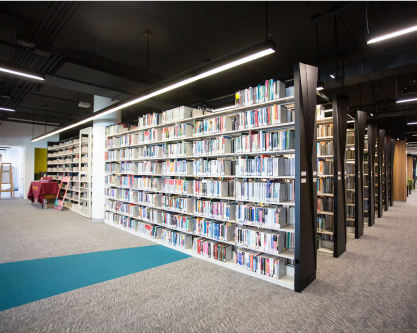
Modern school libraries are designed as flexible, vibrant learning commons rather than silent bookrooms. Instead of rigid rows of desks, they feature cozy reading nooks, movable furniture for group work, creative maker spaces, and other zones that invite students to explore and collaborate. The space says “welcome.” Students can find a quiet corner to read or a table to work on a project with friends. Keeping the library open during lunch and after school (with supervision) is also key, so students can use it on their own time. In some communities, school libraries even share facilities with public libraries, serving both students and the wider community. The goal is a library that’s truly the heart of the school. A place where learning is comfortable, accessible, and always happening.
Programming: Beyond the Bookshelves
A great school library isn’t quiet. It’s buzzing with activities that enrich learning. Teacher-librarians organize all kinds of programs: author visits, school-wide reading challenges, coding and robotics clubs, poetry slams, maker workshops… you name it. They find fun ways to get students reading for pleasure. Maybe a school-wide “Drop Everything and Read” day or a friendly reading contest, so that reading becomes social and enjoyable, not just an assignment. Libraries also give students opportunities to create and lead. A news literacy workshop might have teens debunking fake news and then teaching their classmates. A library makerspace club or student podcast project lets kids explore new skills and share their voices. Perhaps most importantly, these programs help students find belonging. A shy teen might discover friends in the Dungeons & Dragons group or gain confidence by helping run a library event. In short, library programming makes learning fun, hands-on, and inclusive. It turns the library into a place where students want to be.
Investing in Libraries: A Roadmap for Renewal
Realizing the full potential of school libraries will require concrete support in funding, policy, and mindset. First, dedicated funding allows schools to staff their libraries or learning commons appropriately and to maintain updated collections and technology. Provinces or districts can explore ways to support staffing and resource renewal, recognizing that some jurisdictions like Sweden, whose Education Act now requires a library in every school, have chosen to enshrine access in policy. Second, we can amplify impact through partnerships. Public libraries can share resources with schools. In Toronto, the public library lends out Wi-Fi hotspots to students who lack internet at home, bridging the homework gap. Local businesses and non-profits can also sponsor library programs or donate equipment.
Most of all, we need a mindset shift. The library should no longer be seen as a “nice-to-have” luxury or a dusty relic. It must be recognized as essential infrastructure for modern, equitable education. We won’t hit our literacy, equity, or well-being targets by cutting libraries. Indeed, we should double down on them as one of the smartest investments in our schools. Education leaders at every level must champion the library’s role and protect it, even when budgets are tight. In education, as in life, we get what we pay for, and investing in school libraries will pay dividends in more joyful readers, critical thinkers, and flourishing students.


