

How a Canadian ambassador found a new kind of leadership in executive coaching


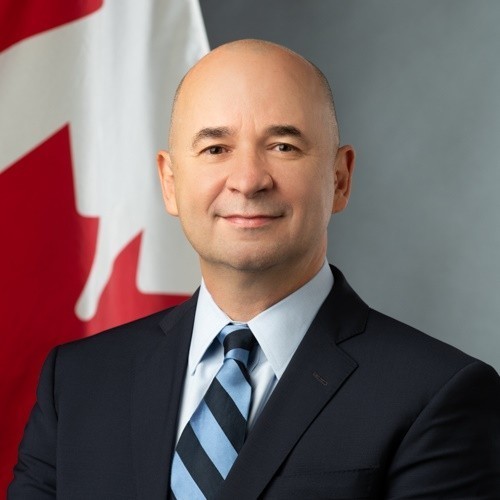 Louis Dumas: “Looking back, I think I was instinctively coaching while managing. I had always tried to help others perform at a higher level.”
As Canada’s ambassador to Egypt, Louis Dumas led Canadian and foreign embassy teams through high-risk situations in conflict zones and at the country’s borders. While leading them, he made a habit of explaining the reasoning behind the big calls.
“You want them to understand not only what the right decision is, but why it’s the right decision,” he says.
It’s an instinct that goes back further than his final posting. Throughout his 35-year career with the Canadian federal government, Dumas was often told by colleagues and peers that he had the management style of a coach.
As a Canadian Foreign Service officer and later with Immigration, Refugees and Citizenship Canada, he led teams responsible for complex immigration and refugee cases at home and abroad. While posted to Tel Aviv, he pursued master's studies in management and began to define his own leadership values.
“Looking back, I think I was instinctively coaching while managing,” Dumas says. “I had always tried to help others perform at a higher level.”
Understanding the coach’s role
With retirement approaching, Dumas enrolled in the Professional Goal-Centric Certified Coach program at Concordia's John Molson Executive Centre.
“I would say I didn’t come in with many expectations about where we were going to go,” Dumas recalls. “I was hoping I would understand and learn the framework of how to be a good coach.”
Taught by International Coaching Federation-certified instructors, program participants are encouraged to work with real challenges from their professional and personal lives. Through one-on-one sessions with instructors, peer coaching exercises, and group discussions, they experienced both sides of the coaching relationship.
Dumas decided to explore a longstanding family conflict he had carried for most of his life. By allowing himself to be coached, he was guided away from treating it as one overwhelming problem and toward considering which parts belonged to him, what still required his attention, and what he wanted to do about them.
Sitting in the client's chair showed Dumas how coaches create space for vulnerability, build trust, and help people work through challenges to arrive at their own decisions.
He also learned the limits of coaching.
“One thing that was constantly reinforced throughout the program was that we’re not therapists,” Dumas says. “If you encounter someone with a deeper issue, a mental health issue that goes beyond coaching, you have to pull back and perhaps refer them to the appropriate professional.”
Learning to listen as a coach
Dumas had always considered himself a good listener, someone who could pick up on other people's cues and read a room.
Through peer coaching exercises, he learned to elevate that skill: to recognize when someone was circling an important issue, gently bringing them back to it and creating the space for them to work through it themselves.
Program co-founder Jim Gavin shared a simple idea that has stayed with Dumas.
“If there’s silence, be comfortable with it. Allow the person to reflect. Allow them to come up with their own answers. The capacity to uncover what isn’t being said is gold,” Dumas recalls Gavin saying.
Building rapport through adaptation
Dumas’ diplomatic career also taught him the importance of adapting to the person in front of him.
With some hosts, it took hours of drinking tea, talking about soccer, and sharing family stories before they could get down to business. Elsewhere, people wanted to get straight to the point.
Coaching requires the same flexibility.
“You have clients who are straight to the point and others who take a lot of time to get to the story of where they want to go and what they want to talk about,” he says. “You have to be flexible and adapt yourself to whatever client you’re dealing with.”
A coaching mindset for complex decisions
After completing the program, Dumas accepted one final overseas assignment as Canada’s ambassador to Egypt. There, he used the techniques he had learned in coaching to help teams think through their roles, anticipate challenges, and understand how their decisions affected one another.
Rather than focusing only on what needed to be done, he encouraged people to examine why they were making certain choices and how they might respond if circumstances changed.
“I don’t think coaching changed the way I managed,” Dumas says. “I think it enhanced the way I managed.”
Coaching others to think for themselves
After leaving government, Dumas began coaching one-on-one to complete the pro bono hours required for ICF certification. He worked with people facing career decisions, leadership challenges and periods of transition.
From time to time, former government colleagues and contacts who knew Dumas had served as an ambassador approached him hoping he could coach them toward a similar path.
“Sometimes, people come to me and say, ‘Show me how to become an ambassador!’” Dumas laughs. “That’s mentorship. That’s not what coaching is about. What coaches try to address are the issues, obstacles and new ways of thinking that allow people to move forward and arrive at their own conclusions. I'm not going to create a path for someone. They have to create their own path.”
Related program